When FIFA bows to politics, football loses: The dangerous precedent of the Balogun decision
For decades, FIFA has proudly presented itself as the uncompromising guardian of football’s independence. Its message has been simple and consistent: keep politics out of football. National associations have been suspended for government interference. Players have been sanctioned for political statements. Teams have be...
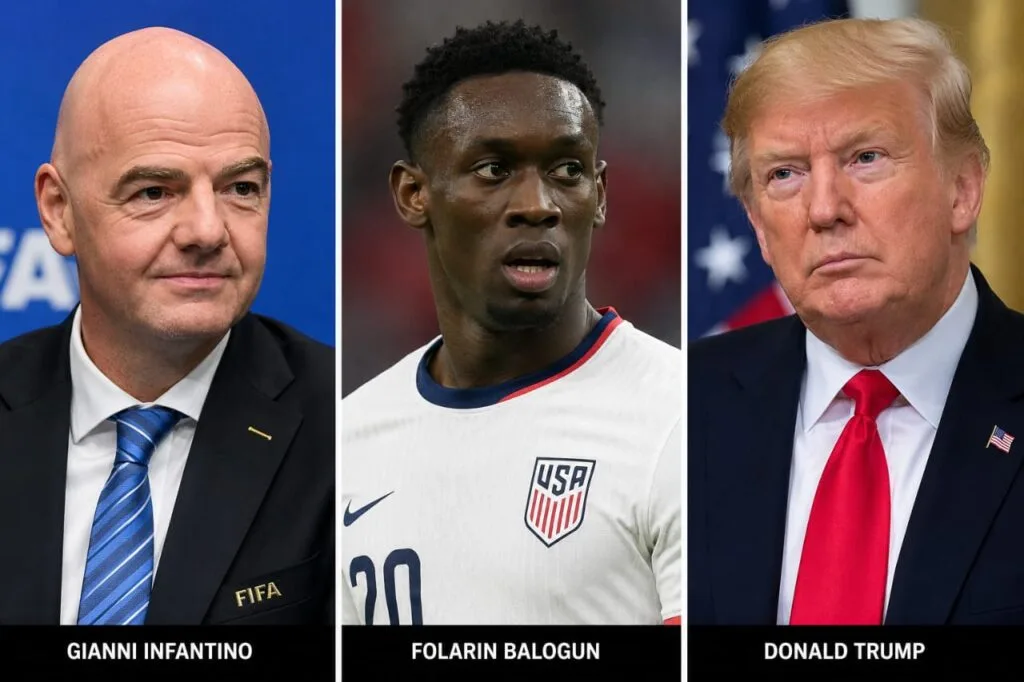
For decades, FIFA has proudly presented itself as the uncompromising guardian of football’s independence. Its message has been simple and consistent: keep politics out of football.
National associations have been suspended for government interference. Players have been sanctioned for political statements.
Teams have been forced to alter their kits, remove symbols and even abandon armbands because FIFA insisted that football must remain politically neutral.
Yet, in one astonishing decision, FIFA appears to have undermined the very principle it has spent years defending.
The decision to suspend the automatic one-match ban handed to USMNT striker, Folarin Balogun after his red card has created a credibility crisis that extends far beyond one player or one World Cup match.
Reports indicate the decision followed direct lobbying by political figures in the United States, including calls from the White House to FIFA President Gianni Infantino.
FIFA insists it acted within its disciplinary code, but the timing and circumstances have inevitably raised uncomfortable questions about political influence.
The issue is not whether Balogun deserved the red card. Reasonable football people can disagree on that.
The issue is whether the rules should suddenly become flexible because the player represents the tournament hosts and influential political figures decide to intervene.
For years, FIFA has demonstrated remarkable rigidity whenever politics intersect with football.
European teams at the 2022 FIFA World Cup were prevented from wearing the “OneLove” captain’s armband after FIFA threatened sporting sanctions.
National federations have repeatedly been warned against displaying political messages on shirts.
Teams have been instructed to remove symbols and insignia deemed political or contrary to FIFA regulations.
Even governments have seen their football associations suspended whenever political interference was judged to have crossed FIFA’s red lines.
The message has always been unmistakable.
Politics must never dictate football. Unless, it now seems, the politics come from Washington. That is what makes this episode so troubling.
Only days earlier, FIFA’s own regulations were being interpreted as leaving no avenue to overturn Balogun’s automatic suspension.
Then came reported political lobbying. Suddenly, a disciplinary solution emerged through Article 27 of the FIFA Disciplinary Code, allowing the sanction to be suspended on probation.
UEFA has described the move as “unprecedented” and warned that it undermines the integrity of the competition.
Rules are only respected when they are applied equally. The smallest football nation deserves the same treatment as the tournament host.
The least influential federation deserves the same hearing as the most powerful government.
Once football supporters begin to believe that phone calls from politicians can achieve what appeals and regulations cannot, confidence in the game’s governance begins to crumble.
Imagine if this precedent had involved a smaller football nation. Would the same discretion have been exercised?
Would FIFA have searched for the same legal flexibility? Those are questions FIFA has unfortunately invited.
The governing body now finds itself caught in its own contradiction.
It cannot continue preaching political neutrality while appearing to bend when political pressure comes from the world’s most powerful office.
Football survives because its rules are bigger than its stars.
FIFA survives because its credibility is bigger than its president.
Both principles have been weakened by the Balogun decision.
The greatest threat to football is not a controversial red card.
It is the perception that justice wears different colours depending on the flag involved.
The writer, Joshua Tigo, is a football enthusiast and journalist.