Paul Adom-Otchere Tips Goosie Tanoh for NDC Chairmanship as Mahama–Asiedu Nketia Power Struggle Looms
The Good Evening Ghana host claims forces aligned with President John Mahama could turn to Augustus “Goosie” Tanoh as a possible challenger for the NDC national chairmanship, setting the stage for what he describes as a major internal proxy battle.
Felicia Afunyabea
View author profile 11h ago·113views·5 min read
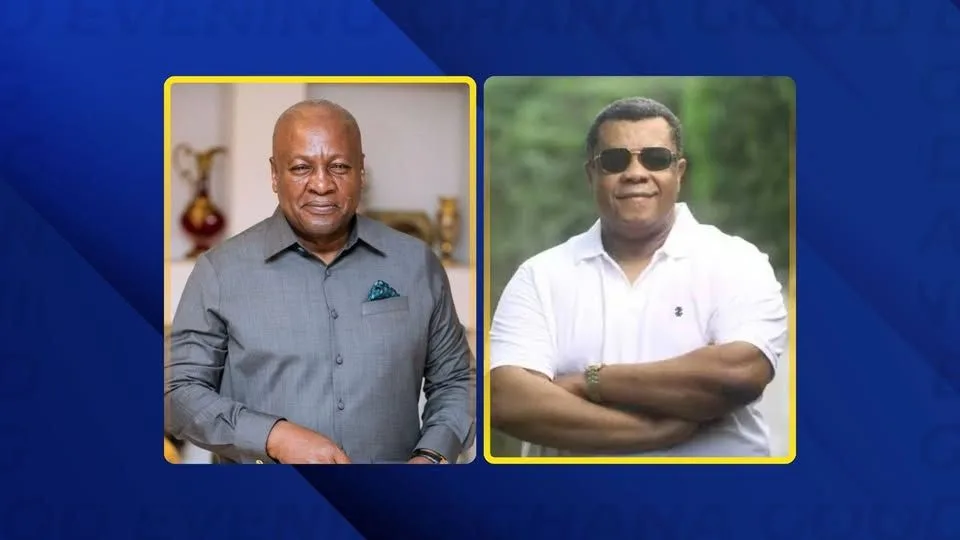
Veteran broadcaster Paul Adom-Otchere has offered a dramatic assessment of the emerging power dynamics within the National Democratic Congress (NDC), suggesting that Augustus “Goosie” Tanoh could become a key figure in a potential contest for the party’s national chairmanship.
Speaking on Metro TV’s Good Evening Ghana, Adom-Otchere argued that forces within the NDC aligned with President John Dramani Mahama may be searching for a candidate capable of challenging the influence of the party’s current National Chairman, Johnson Asiedu Nketia.
According to the broadcaster, such a contest could develop into an important proxy battle between competing power centres within the governing party.
Adom-Otchere stressed that his comments were an analysis of the political manoeuvring he believes is taking place within the NDC rather than an announcement from the party or the individuals involved.
‘The apology is not going to work’
Adom-Otchere's analysis comes amid controversy involving Nii Lantey Vanderpuye and Sammy Gyamfi, Chief Executive Officer of the Ghana Gold Board (GoldBod).
Vanderpuye recently apologised to the NDC and Sammy Gyamfi after publicly chastising the GoldBod CEO over the manner in which he responded to Minority Leader Alexander Afenyo-Markin following claims by the Minority that GoldBod had lost $1.7 billion under the Domestic Gold Purchase Programme.
Vanderpuye's concern was largely about communication. His public rebuke, however, angered sections of the NDC, with some party supporters taking issue with Vanderpuye for openly criticising Gyamfi. Vanderpuye subsequently apologised, but the episode has become significant because of his reported interest in becoming the next NDC National Chairman.
According to Adom-Otchere's analysis, Vanderpuye is believed to be the preferred candidate of current National Chairman Johnson Asiedu Nketia, and some opponents are now using the Sammy Gyamfi controversy against his candidature.
It is against this backdrop that Adom-Otchere argued that the apology may not be enough to end the political fallout.
“I'm saying to you viewers that the apology is not going to work,” Adom-Otchere said, claiming that a group supporting President Mahama remained determined to prevent Asiedu Nketia from having his way in the chairmanship contest.
The broadcaster then turned his attention to the different historical blocs and traditions within the NDC, arguing that understanding those factions is essential to understanding the battle for influence in the party.
The different power blocs inside the NDC
According to Adom-Otchere, the NDC contains several overlapping political traditions, including figures associated with former President Jerry John Rawlings, the Cadres, the late President John Evans Atta Mills and President Mahama.
He argued that while these groups are not always formally organised factions, their historical loyalties continue to influence internal party politics.
Adom-Otchere identified personalities including Koku Anyidoho, Nii Lantey Vanderpuye and Kojo Bonsu among figures historically associated with the Mills tradition.
He further argued that President Mahama now commands a broad coalition cutting across some of these traditional blocs.
It is within this internal political arithmetic, he said, that the race for the NDC national chairmanship could become particularly significant.
Search for a chairman who will back Mahama?
Adom-Otchere claimed that people around President Mahama are looking for a national chairman who would be politically aligned with the President.
“We are noticing that the people around John Mahama are desperate to find a party chairman,” he said, suggesting they want a chairman who would support Mahama's political direction rather than follow Asiedu Nketia's leadership.
That claim has not been independently established and Adom-Otchere did not present an official statement from President Mahama or his aides confirming such a strategy.
Nevertheless, he argued that winning the support of the NDC's Cadre tradition could be crucial to any attempt to change the balance of power.
And that, according to his analysis, is where Goosie Tanoh comes in.
Enter Goosie Tanoh
Adom-Otchere named Augustus “Goosie” Tanoh as a potential figure around whom such a coalition could be built.
The 24-Hour Economy Secretariat boss has deep historical roots in the NDC tradition and Ghana's broader progressive political movement, making him, in Adom-Otchere's estimation, potentially attractive to the party's Cadre constituency.
He argued that some within that tradition have long viewed Tanoh as presidential material. If the presidency is no longer the immediate political destination, they believe the national chairmanship could offer another powerful role.
According to Adom-Otchere, a Tanoh chairmanship could be marketed internally as an attempt to return the NDC to values historically associated with its Cadre tradition, including “probity, accountability” and transparency.
Such a candidacy, he argued, could also potentially draw Cadre support away from Asiedu Nketia.
“If Goosie is good with the Cadres, then they can win the Cadre votes away from Asiedu Nketia,” he said.
Mahama vs Asiedu Nketia proxy battle?
Adom-Otchere believes the significance of the chairmanship contest could extend well beyond who occupies the party's top organisational position.
In his assessment, a competitive race involving candidates perceived to be aligned with Mahama and Asiedu Nketia could become an early test of strength between the two political camps.
Under Adom-Otchere's analysis, Vanderpuye's expected candidature is particularly important because he is believed to have Asiedu Nketia's backing. A rival candidate supported by forces around Mahama could therefore turn the election into a proxy contest between the President's political bloc and the current National Chairman's camp.
He described such a contest as a potential “proxy battle” over the future direction and control of the NDC.
The broadcaster, however, expressed doubts about whether forces seeking to defeat Asiedu Nketia would ultimately succeed.
He suggested that Asiedu Nketia remains a formidable political operator with significant grassroots support and strong links to important sections of the party.
But can Goosie Tanoh even contest?
There could also be a more immediate obstacle to the scenario outlined by Adom-Otchere.
He claimed that rules requiring government appointees seeking national party positions to leave their positions within a prescribed period could complicate any potential Tanoh bid.
Tanoh currently has a leading role in the government's 24-Hour Economy programme.
Adom-Otchere argued that, based on his understanding of the deadline, Tanoh had not resigned from that position in time to pursue the national chairmanship under the existing arrangement.
“Technically, Goosie Tanoh has run out of time,” he said.
He contrasted Tanoh's situation with Vanderpuye, who resigned as National Coordinator of the District Road Improvement Programme (DRIP) ahead of his expected bid for the NDC national chairmanship.
Adom-Otchere nevertheless suggested that internal party processes could potentially create an avenue for additional candidates, including through an extension, executive decision or reconsideration of the relevant requirements.
No official indication was presented that such an exemption or extension would be granted.
September could be crucial
Paul concluded by predicting significant political developments within the NDC beginning in September, although he declined to disclose details of information he claimed to have received privately.
“A lot of things are going to happen from September,” he said.
For now, there has been no confirmation in the analysis presented that Goosie Tanoh intends to contest the NDC national chairmanship or that President Mahama has selected him—or anyone else—as a preferred candidate.
But if Adom-Otchere's reading of the internal manoeuvring proves accurate, the battle for the NDC chairmanship could become much more than an ordinary party election.
It could become a test of who commands the grassroots, the party's historic blocs and, ultimately, the political machinery of the NDC.