26 Districts to discontinue Indoor Residual Spraying due to funding cuts
A total of 26 districts which have been benefiting from free Indoor Residual Spraying (IRS) since 2015 will no longer receive the service from 2027 due to a lack of funds. Ten of the districts being supported by USAID in the Northern and North East regions and the other 16 by the Global Fund in the Upper West, Upper Ea...
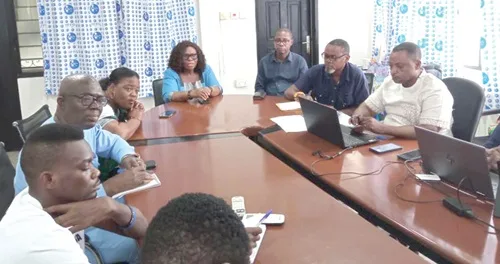
A total of 26 districts which have been benefiting from free Indoor Residual Spraying (IRS) since 2015 will no longer receive the service from 2027 due to a lack of funds.
Ten of the districts being supported by USAID in the Northern and North East regions and the other 16 by the Global Fund in the Upper West, Upper East and Ashanti regions will now have to use Insecticide Treated Nets (ITNs) to fight against malaria.
The last spraying for this year in the 26 districts ended in June; however, the discontinuation will not affect the Ghana Prisons Services which is also benefiting from the programme.
The Oversight Officer, Country Coordinating Mechanism (CCM) of the Global Fund, Ken Yeboah, who made this known at a meeting in Accra, said the worry now was how the 26 districts were going to accept and adapt to the usage of the ITNs so that it does not trigger a surge in malaria cases in those areas.
He also lamented about the fact that there were still a lot of ITNs stacked at the ports yet to be cleared because the government still owed the Ghana Supply Commission, although the Ministry of Health was in the process of contracting five more clearing agents to work on the clearing of such consignments.
The Founder and Executive Director, Hope for Future Generations (HFFG), Cecilia Senoo, in a remark, called on Civil Society Organisations (CSO’s) to intensify their advocacy on malaria and speak up for vulnerable populations, even as donor funding declined.
She expressed worry that malaria remained one of the key diseases killing children in Ghana, yet “you don’t hear anything about malaria” in public discourse compared to HIV and TB.
A major concern she raised was the withdrawal of USAID funding, which previously supported malaria programmes globally, saying, “With USAID resources now channelled directly to government, and limited Global Fund allocations, the country must increasingly rely on domestic resources.
“Malaria is rising because of the funding cuts. The country has to take charge,” she noted, adding that donors were now prioritising impact, transparency and accountability.
The meeting also focused on the role of civil society as a watchdog, where she lamented that CSOs have been working in silos and have not done enough advocacy.
“Our role, as CSOs, is to play our watchdog role. Unfortunately, we are not doing it,” she said.
She challenged CSO’s to distinguish themselves and continue speaking for beneficiaries, especially pregnant women and children, even “if people give you money to keep quiet”.
She mentioned “Smart Advocacy”, which is an initiative under the Global Fund Grant Cycle 7 (GC7) and Grant Cycle 8 (GC8) framework and asked the members at the meeting to define clear outcomes for the activity and to commit to actions that can continue after funding ends.
Reflecting on sustainability, she said donors and philanthropists were now monitoring social media and online activities to identify active CSOs to support and urged malaria advocates to position the current project well so it could attract alternative funding after December, when the project was scheduled to end.
She also highlighted a shift in donor strategy, with more funding expected to go through the government for CSO implementation.
“Global Fund thinking is that money should go to the government and government should work with civil society,” she said.
Therefore, she advised CSOs to build stronger bilateral relationships with the government to remain relevant in the new funding architecture.
She urged CSO’s working in the area of malaria to work together, saying, “The problem is that we are fighting each other.
We are knocking each other's heads. And destroying each other; we shouldn’t.”