Part 18: The man who counted the children: The currency of conscience
Setting: Accra, Greater Accra Region, Ghana Date: 7 September 2018 The recorder had stopped. Professor Henderson remained standing beside the desk. His eyes were fixed on the machine. The child’s voice still echoed in his mind. The senior investigator finally broke the silence. Henderson raised a hand. “Don’t.” “Don’t...
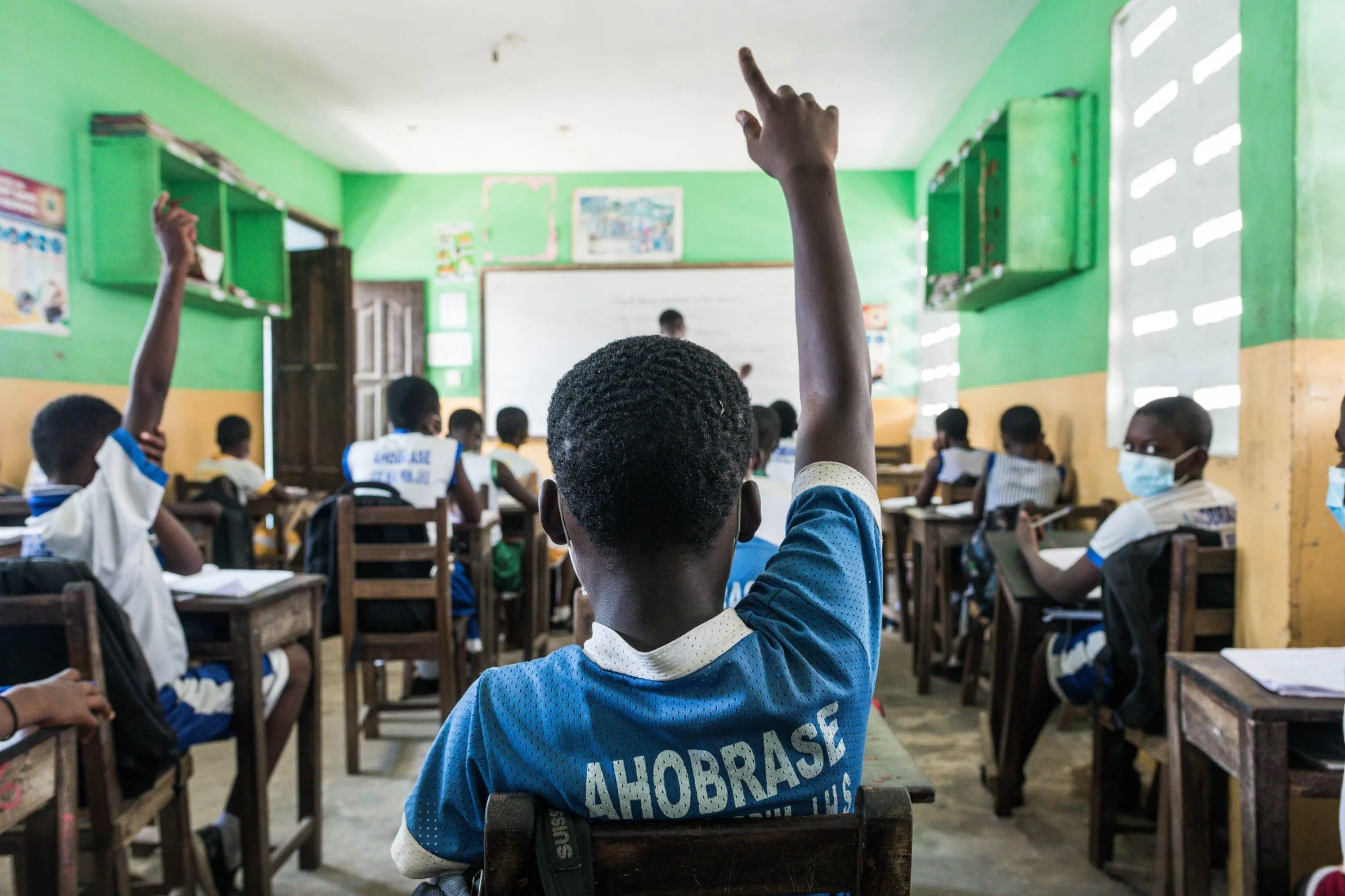
Setting: Accra, Greater Accra Region, Ghana
Date: 7 September 2018
The recorder had stopped.
Professor Henderson remained standing beside the desk.
His eyes were fixed on the machine.
The child’s voice still echoed in his mind.
The senior investigator finally broke the silence.
Henderson raised a hand.
“Don’t.”
“Don’t what?”
“Don’t tell me it was just a recording.”
The investigator frowned.
“But sir, we don’t even know who—”
Henderson turned around.
“We don’t know who the child was.”
He walked slowly to the window.
“We don’t know where the child came from.”
“And we don’t know how many children are still waiting.”
The investigator stared at him.
Professor Henderson looked at the brown envelope.
At 6:30 the next morning, the team arrived at the first school.
It was a small public school tucked behind a busy road.
Children were already arriving.
Some came in groups.
Some held the hands of younger siblings.
The investigator looked at the register.
“Three hundred and forty-two pupils.”
Henderson looked around.
The investigator smiled.
“Sir, the register says—”
“I didn’t ask what the register says.”
He handed him a notebook.
“I said count the children.”
By midday, the number was complete.
Two hundred and eighteen.
The investigator looked at the register again.
Henderson said nothing.
“It’s short by one hundred and twenty-four.”
The next school was worse.
The records showed 486 pupils.
The teachers insisted there were fewer.
Two hundred and ninety-six.
The investigator looked at Henderson.
“One hundred and ninety missing.”
Henderson corrected him.
The investigator looked confused.
“One hundred and ninety children who don’t exist in this school’s current population.”
He closed the register.
“That distinction matters.”
“Because somewhere, someone may have counted them.”
The investigator’s face hardened.
“And turned them into money.”
“Now you’re beginning to understand.”
At 4:15 p.m., they found him.
Not in a luxurious office.
Not hiding outside the country.
He was sitting quietly in a small accounting office in Accra.
His name was Daniel Mensah.
He had worked with several suppliers.
He had processed figures.
He had signed documents.
And according to the investigators, he knew more than he had ever admitted.
Henderson placed the brown envelope on the table.
Daniel looked at it.
“Where did you get that?”
Henderson leaned back.
“You didn’t ask what was inside.”
“You said you were investigating the feeding programme.”
Daniel looked toward the door.
“Because you don’t understand what you’re dealing with.”
Henderson smiled faintly.
“Then explain it to me.”
Daniel said nothing.
Henderson pushed a document across the table.
“Three hundred and forty-two children.”
“Two hundred and eighteen.”
“Four hundred and eighty-six.”
“How many children did you count?”
Daniel stared at him.
“Because that wasn’t my job.”
Henderson’s voice became quiet.
“Then whose job was it?”
“The people who wanted the money.”
Daniel finally reached into his briefcase.
He removed a folded sheet of paper.
Henderson opened it.
Beside each name was a date.
Beside the date was a number.
The investigator stared at the page.
Henderson looked up.
“The real list of what?”
“Children who actually received meals.”
The investigator began turning the pages.
“There are thousands here.”
“Those are the children we were supposed to feed.”
Henderson studied him.
“And what happened?”
“Somewhere along the way…”
“The children became inconvenient.”
Henderson’s eyes narrowed.
“You cannot steal from a child you can see.”
He looked directly at Henderson.
“But you can steal from a number.”
The room became silent.
“So the numbers became bigger.”
“Because bigger numbers meant bigger payments.”
“And nobody questioned them?”
Daniel laughed bitterly.
“People questioned them.”
“They were told to keep quiet.”
Daniel shook his head.
“I never heard the order directly.”
“Then how do you know?”
“Because orders don’t always come as orders.”
“Sometimes they come as promotions.”
“Sometimes as transfers.”
*THE NAME AT THE BOTTOM*
Professor Henderson turned the final page.
At the bottom was a single signature.
The investigator looked over his shoulder.
“Do you know that name?”
Henderson did not answer.
Henderson slowly folded the paper.
Henderson looked at Daniel.
Daniel’s face had gone pale.
“You know him,” Daniel whispered.
“Everybody knows him.”
The investigator looked confused.
“Then why haven’t we questioned him?”
Henderson walked toward the door.
“Because some people are never questioned.”
“Because they are usually the ones asking the questions.”
At 9:07 that evening, Henderson’s phone rang.
“Professor Henderson?”
“You have been asking questions.”
Henderson said nothing.
“You have been visiting schools.”
“You have been counting children.”
The voice became colder.
Henderson looked through the window.
“You don’t want to find out.”
Henderson laughed softly.
“You don’t understand.”
“I have spent seven years looking for the money.”
He looked at the brown envelope.
“Now I’m looking for the children.”
*THE CHILD WITH THE* *RED SHOES*
The following morning, Henderson returned to the first school.
A little girl was standing alone near the classroom.
She wore a faded uniform.
And bright red shoes.
“Good morning, sir.”
“What is your name?”
“Do you eat at school?”
“When don’t you eat?”
“When the food finishes.”
Henderson crouched beside her.
“Does everyone get food?”
“Because sometimes there isn’t enough.”
Henderson’s heart sank.
“Who doesn’t get food?”
She pointed toward a group of children.
“They are always late.”
“Why are they late?”
She lowered her voice.
“Because they don’t have breakfast at home.”
Henderson looked at her carefully.
“If you could tell the people who control the food one thing, what would you tell them?”
She thought for a moment.
“Don’t count us when you want money.”
“And don’t forget us when you have it.”
That afternoon, Henderson opened a fresh file.
He wrote across the front:
Underneath it, he wrote three words:
*COUNT. VERIFY. PROTECT.*
The investigator entered.
Henderson handed him the file.
“We are going to count every child.”
“And every supplier?”
Henderson looked at him.
The investigator smiled.
“This could take months.”
Henderson closed the file.
“Then we have months.”
“And if they try to stop us?”
Henderson looked toward the red shoes hanging beside the school door.
“Then we ask a very simple question.”
Henderson’s voice was almost a whisper.
“Who is afraid of the children being counted?”
That night, the sealed envelope produced one final surprise.
Hidden beneath the lining was a tiny memory card.
Henderson inserted it into the computer.
One folder appeared.
Inside were photographs.
Children sitting beneath trees.
Children holding empty plates.
Then one photograph made Henderson stop.
It showed a classroom.
Thirty-seven children.
He was standing at the back.
Holding a piece of paper.
Henderson enlarged the photograph.
The boy had written four words.
*“PLEASE COUNT ME TOO* .”
Henderson stared at the screen.
The investigator stood behind him.
Henderson wiped his eyes.
“We found the witness.”
Henderson shook his head.
He looked at the photograph again.
“We found the evidence.”
He pointed at the boy.
“Was here all along.”
Outside, Accra continued to breathe.
Officials signed papers.
Numbers moved from one account to another.
But inside a small office in Accra, a man sat before a photograph of a hungry child.
And for the first time, he understood something terrifying.
The greatest threat to a corrupt system was not an auditor.
Not even a journalist.
It was a child who could say:
“I was here.”
And suddenly…
the numbers had a face.
Thanks for reading.
Havillah Consultants
08082026
The Currency of Conscience is a work of fiction. The characters, dialogue, investigative team, documents, events and narrative connections are fictional or fictionalised for literary purposes. The story may draw thematic inspiration from publicly reported issues concerning public-sector accountability, school feeding and the management of public funds. References to real institutions, public figures, reports or allegations, where applicable, should not be interpreted as assertions of criminal conduct. Allegations remain allegations unless established by a competent court. The purpose of this series is to encourage reflection on integrity, accountability and the human cost of corruption.