Ghana needs more stroke centres to cut preventable deaths – Dr Darkwa Oppong
Ghana faces a major shortage of specialised stroke treatment centres, with only two hospitals currently offering advanced endovascular stroke treatment to a population of more than 30 million, neurosurgeon Dr Marvin Darkwa Oppong has said. He said the disparity was stark compared with Germany, where stroke treatment ce...
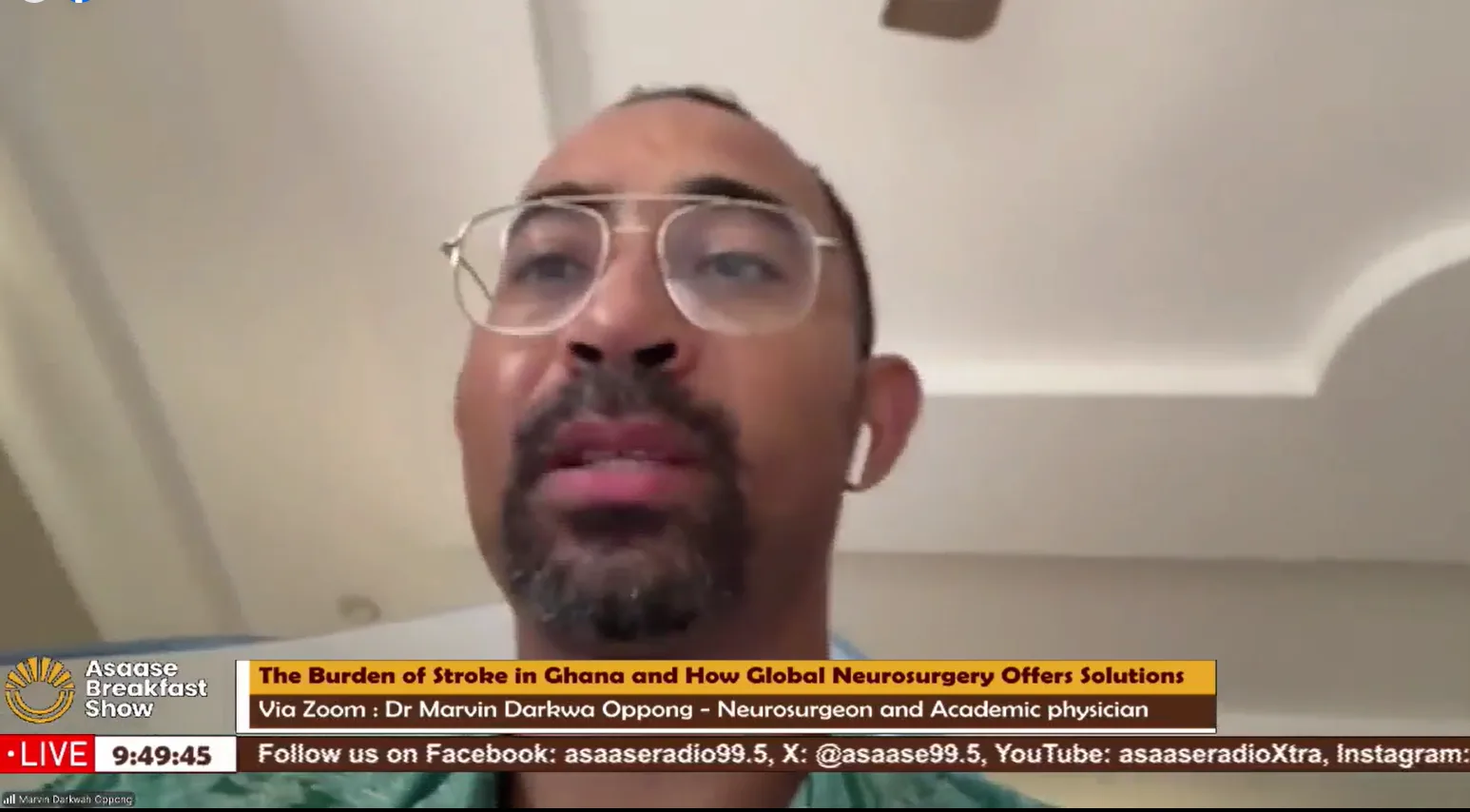
Ghana faces a major shortage of specialised stroke treatment centres, with only two hospitals currently offering advanced endovascular stroke treatment to a population of more than 30 million, neurosurgeon Dr Marvin Darkwa Oppong has said.
He said the disparity was stark compared with Germany, where stroke treatment centres are far more widely distributed and patients can receive clot-removal treatment within a tightly controlled timeframe.
Speaking on the Asaase Breakfast Show on Thursday (20 August) during discussions marking Neurosurgery Awareness Week, Dr Darkwa Oppong said the limited availability of specialised stroke services in Ghana meant patients faced potentially life-threatening delays in receiving treatment.
“The problem with Ghana is the fact that as far as that kind of service is concerned, we can only see it in two hospitals, one in the private sector and one in the public sector,” he said.
“That kind of ecosystem being available to 33 million people means that getting a stroke in Ghana is going to lead to most of the difficult challenges that we see around us.”
Dr Darkwa Oppong, who works as a senior neurosurgical attending in Essen, Germany, said stroke care required a coordinated system involving neurologists, radiologists, neurosurgeons, endovascular specialists and intensive care services.
He explained that many strokes occur when a blood clot blocks blood flow to part of the brain, while others result from bleeding caused by a ruptured blood vessel.
In Germany, he said, endovascular specialists can insert a catheter into a blood vessel and remove a clot, potentially restoring blood flow and reversing some of the effects of a stroke.
The treatment requires specialised expertise and must be available around the clock, he said.
Dr Darkwa Oppong said the situation in Essen illustrated the difference in access to stroke care.
Essen has about 600,000 inhabitants, but is part of the wider Ruhr metropolitan area with a population of more than eight million.
He said German regulations require stroke centres to have specialised stroke units, teams of trained experts and access to a hospital capable of providing neurosurgical or stroke-intervention services within about 30 minutes.
“In every major city at the size of Essen or down to 100,000 people there will be at least one clinic that offers interventions,” he said.
He said stroke patients in Germany could undergo initial imaging within minutes of arriving at a hospital, with the target time from arrival to administration of clot-busting medication being less than 30 minutes.
For patients requiring transfer to another hospital for specialised intervention, the process could take about one to one-and-a-half hours, he said.
“The main thing in stroke treatment is one, it’s like a heart attack: time is brain,” Dr Darkwa Oppong said.
“If you lose too much time, you can’t have the best team. It won’t help anymore.”
The doctor said delays could result in permanent brain damage, disability or death, making rapid access to treatment essential.
He also noted that the demographic implications for Ghana were significant.
Ghana has a much younger population than Germany, with a median age of around 18 to 19 years, compared with about 55 to 56 years in Essen.
Dr Darkwa Oppong said stroke-related disability among younger Ghanaians could impose a long-term burden on families, the healthcare system and the wider economy because affected patients could live for decades with disabilities.
He said Ghana could improve stroke outcomes through international partnerships focused on training, standardised treatment protocols and skills development.
“International corporations could step in and help, like teaching and developing standardized procedures,” he said.
He added that Ghana also needed investment in infrastructure, including intensive care beds and specialised equipment.
According to him, improving stroke care could ultimately reduce the economic burden associated with long-term disability.
“If a young patient has a stroke, there’s an enormous burden on society. So if you treat him better, you save that money and at the end it will more than even out,” he said.
He urged Ghana to build on the expertise of its young medical professionals and strengthen the systems needed to ensure that stroke patients receive timely care.
Dr Darkwa Oppong said he had encountered many young and motivated Ghanaian doctors capable of contributing to improvements in the country’s healthcare system if given the necessary opportunities and support.
The discussion comes amid growing calls for stronger stroke-care systems across Africa, with specialists emphasising the importance of reducing delays between the onset of symptoms, diagnosis and treatment.
For Ghana, Dr Darkwa Oppong said, the central lesson was straightforward: saving time in stroke treatment means saving brain function, reducing disability and ultimately saving lives.