Full Ruling: Why Supreme Court rejected Oppong Nkrumah’s injunction application
The Supreme Court has released the full ruling on why it dismissed the interlocutory injunction application by Member of Parliament Ofoase-Ayirebi, Kojo Oppong Nkrumah, seeking to halt criminal proceedings being conducted by some High Court judges during the legal vacation. Justice G. Pwamang, sitting as a single judge...
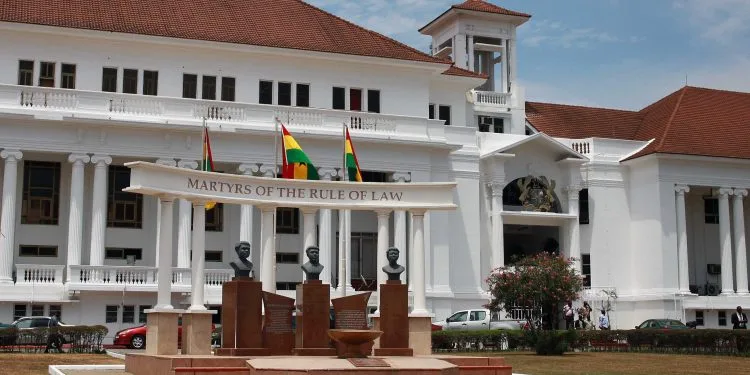
The Supreme Court has released the full ruling on why it dismissed the interlocutory injunction application by Member of Parliament Ofoase-Ayirebi, Kojo Oppong Nkrumah, seeking to halt criminal proceedings being conducted by some High Court judges during the legal vacation.
Justice G. Pwamang, sitting as a single judge of the Supreme Court, ruled that Mr Oppong Nkrumah had failed to demonstrate a serious constitutional question warranting an injunction against the Chief Justice.
The MP is challenging the constitutionality of warrants issued by the Chief Justice authorising some High Court judges to sit and conduct criminal hearings during the legal vacation.
In his substantive suit, Mr Oppong Nkrumah is seeking declarations that the warrants violate constitutional guarantees on equality, non-discrimination, the rights of workers and the proper exercise of discretionary power.
He also argues that the directive amounts to selective justice because it prioritises some criminal cases over others.
But Justice Pwamang rejected the argument that the warrants amounted to discrimination under Article 17 of the Constitution.
He noted that the warrants did not direct the judges to hear only “selected cases”, but authorised them to conduct hearings in all cases pending before their respective courts.
The court further held that Article 17(2) prohibits discrimination on specific grounds, including gender, race, colour, ethnic origin, religion, creed and social or economic status.
“The plaintiff in his statement of case has not alleged that the Chief Justice’s conduct in selecting the two Courts to give warrants to conduct hearings in the legal vacation was influenced by the gender, race, colour, ethnic origin, religion, creed or social or economic standing of the accused persons in those cases or their witnesses,” Justice Pwamang said.
Click the link below for a copy of the full ruling
NKRUMAH_v_CJ_AG_(Ruling)_Aug_21_26