World’s two most powerful countries chase $16 trillion deep-ocean minerals as Africa risks losing attention for its untapped resources
The US and China, the world’s two largest economies, are turning to the seabed for critical minerals estimated to be worth up to $16 trillion, raising concerns in Africa that deep-sea mining could draw attention away from the continent’s land-based mineral wealth.
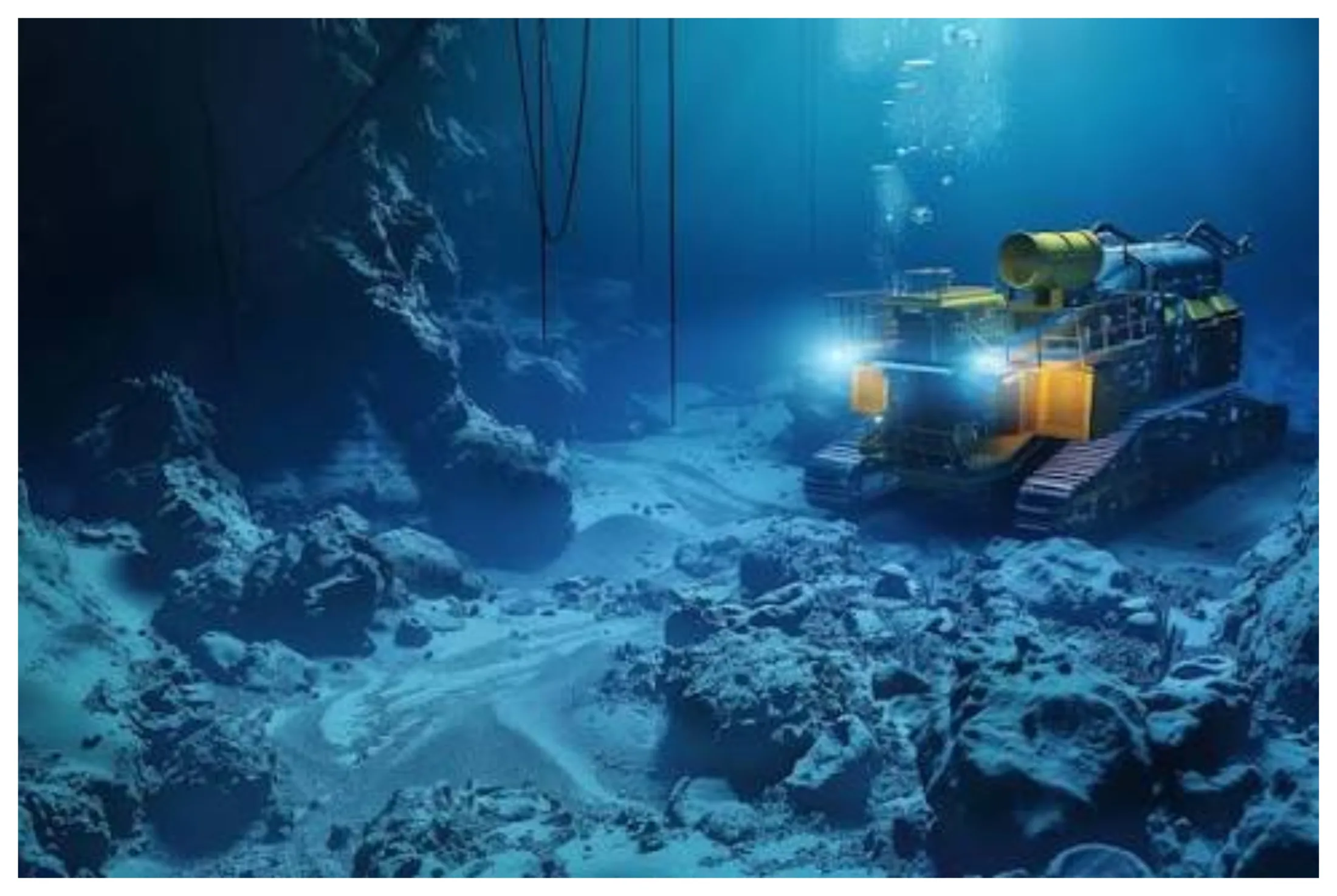
The US and China, the world’s two largest economies, are turning to the seabed for critical minerals estimated to be worth up to $16 trillion, raising concerns in Africa that deep-sea mining could draw attention away from the continent’s land-based mineral wealth.
- The US and China are intensifying efforts to mine the deep seabed for critical minerals worth up to $16 trillion, crucial for technology, clean energy, and defense.
- Key mineral targets include polymetallic nodules, polymetallic sulphides, and ferromanganese crusts, all rich in essential elements like cobalt, nickel, copper, and rare earths.
- China, meanwhile, is expanding its deep-sea exploration, developing marine research stations, and employing both scientific and strategic methods to secure future mineral supplies.
- African nations and environmental groups are calling for a moratorium on deep-sea mining, citing potential harm to marine ecosystems and concerns over diverting investment from Africa’s own mineral resources.
The deep ocean, often described as the planet’s “final frontier”, is one of the largest and least understood environments on Earth.
Increasingly, its mineral depositsare attracting interest from governments seeking resources to strengthen clean energy supply chains, advanced technologies and defence capabilities.
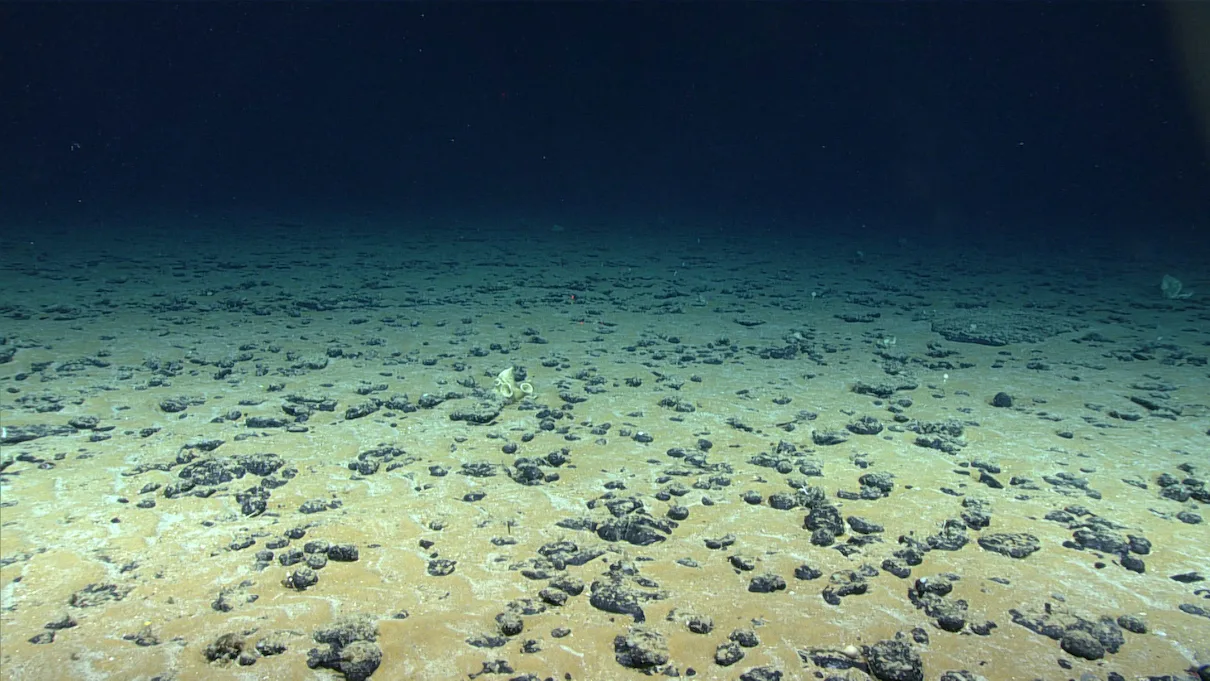
Research on seabed resources shows that the ocean floor contains three major categories of mineral deposits targeted for exploration: polymetallic nodules, polymetallic sulphides and ferromanganese crusts.
Polymetallic nodules are potato-sized formations found on deep ocean plains that contain manganese, nickel, copper and cobalt, while polymetallic sulphides contain copper, zinc, gold and silver.
Ferromanganese crusts found on underwater mountains contain high concentrations of cobalt, manganese, nickel, platinum and rare earth elements.
Amid growing global competition for these resources, a Pulitzer Center investigation highlighted how seabed minerals, estimated to be worth up to $16 trillion, have become a strategic focus for major powers seeking to secure future supplies of critical materials.
US-China rivalry drives seabed race
The competition is particularly visible between the United States and China, the world’s two largest economies, as Washington seeks to reduce its dependence on Beijing, which dominates the processing of several key critical minerals.
The RAND Corporation has described Pacific Ocean deposits of polymetallic nodules as “the minerals that drive modern economies”, arguing that they could help the US build alternative supply chains outside China.
In April 2025, US President Donald Trump signed an executive order aimed at accelerating deep-sea mining, describing access to seabed minerals as a national security priority and part of efforts to counter China’s influence over critical mineral supply chains.
The US has since moved to expand deep-sea mining permits and assess potential sites in the Pacific, including near American Samoa and the Mariana Islands.
However, the move has raised concerns over international rules as Washington has not ratified UNCLOS, which governs activities in international waters through the International Seabed Authority (ISA).
DON'T MISS: Mauritius and Kenya join 4 African countries pushing back against deep-sea mining as China, India and US race for critical minerals in the ocean
China expands deep-sea presence
China has also expanded its presence in deep-sea exploration as Beijing seeks a stronger position in future mineral supply chains.
The country holds five of the 31 exploration contracts issued by the ISA and has invested heavily in marine research capabilities.
Beijing is also developing a permanent deep-sea research station in the South China Sea, expected to be completed by 2030, to study underwater ecosystems and resources, including energy-related deposits.
CNN and Mongabay tracked eight Chinese research vessels involved in deep-sea mining exploration over the past five years, finding that several spent limited time in designated exploration areas while also operating in strategically important waters.
Experts said the vessels may serve both scientific and strategic purposes, reflecting China’s broader policy of combining civilian and military capabilities.
“China is playing, as it does in many cases, with international law,” said Isaac Kardon, a senior fellow for China studies at the Carnegie Endowment for International Peace.
“China is the primary actor in and around new forms of high seas navigation concerning undersea resources… They'll be the first mover, if they can,” he added.
DON'T MISS: Africa’s second-richest country gains 145,000 sq km of ocean territory believed to contain rare earths as US considers buying its disputed islands
Africa raises concerns over seabed mining
As major powers compete for ocean resources, some African countries warn that deep-sea mining could divert investment from the continent’s vast mineral wealth, with the Democratic Republic of Congo’s reserves alone estimated at about $24 trillion.
They argue that decisions on seabed mining should be guided by the best available scientific evidence and a precautionary approach.
Six African countries: Mauritius, Mozambique, Republic of the Congo, Malawi, Kenya and Madagascar; now support calls for a precautionary pause or moratorium on deep-sea mining.
The countries joined discussions at the International Seabed Authority meeting in Kingston, Jamaica, in July 2026, strengthening Africa’s voice in negotiations where the continent holds 10 of the ISA Council’s 36 seats.
Environmental concerns slow mining push
Despite the economic potential, scientists and environmental groups have warned that commercial deep-sea mining could cause lasting damage to marine ecosystems.
The deep ocean remains one of the planet’s largest and least understood environments, with researchers warning that mining could disrupt species and habitats that developed over millions of years.
Around 40 countries have called for a moratorium or precautionary pause on deep-sea mining, citing environmental concerns.