OSP exceeding its mandate without AG approval — Adofo claims
Legal practitioner Kwame Adofo has argued that Ghana’s Office of the Special Prosecutor (OSP) remains constitutional—provided it operates within the authority of the Attorney General. Speaking on the Asaase Breakfast Show on Friday (10 April), Adofo said the Constitution is explicit that all prosecutions must be undert...
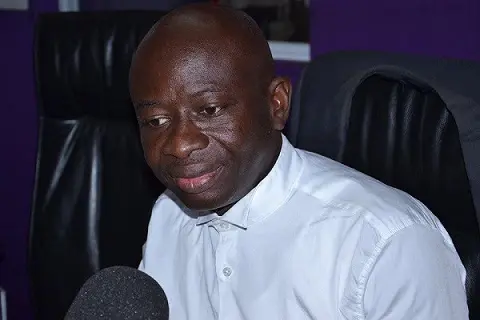
Legal practitioner Kwame Adofo has argued that Ghana’s Office of the Special Prosecutor (OSP) remains constitutional—provided it operates within the authority of the Attorney General.
Speaking on the Asaase Breakfast Show on Friday (10 April), Adofo said the Constitution is explicit that all prosecutions must be undertaken by or with the authorisation of the Attorney General.
“Article 88 is clear—offences prosecuted in the name of the Republic shall be at the suit of the Attorney General or a person authorised by him,” he explained.
Adofo maintained that the OSP Act itself anticipates this requirement and aligns with the Constitution.
“The Act clearly says ‘subject to Article 88.’ So if the OSP is authorised by the Attorney General, then it is constitutional,” he said.
However, he disagreed with claims that the entire law establishing the OSP is unconstitutional.
“That blanket statement is wrong. The office is legitimate where proper authorisation exists,” he added.
Adofo was critical of how the Special Prosecutor has exercised his mandate, accusing the office of overstepping its legal boundaries.
“He goes after matters he has not been authorised to pursue. That is what is causing this issue,” he said.
He likened the situation to an overreach of power.
“You cannot initiate prosecutions, issue arrest warrants, or request extraditions without proper authority,” he argued.
Adofo dismissed the notion that the OSP should operate entirely independently of the Attorney General.
“There is no such thing as absolute independence. Once you are authorised, then you can act independently within that mandate,” he explained.
With the matter now before the courts, Adofo said the Supreme Court’s ruling will be decisive in clarifying the law.
“The court will determine whether the OSP can initiate and prosecute on its own. That is the real issue,” he said.
He also rejected arguments that the OSP must independently defend itself in court, insisting that matters involving state institutions fall under the Attorney General’s remit.
“You cannot take away the Attorney General’s constitutional role in representing the state,” he said.
Adofo suggested that the solution lies in better coordination rather than institutional overhaul.
“The OSP must simply seek authorisation. That will eliminate all these legal challenges,” he concluded.