IMF concludes sixth review mission in Ghana, staff-level agreement uncertain
A visiting team from the International Monetary Fund has concluded its sixth review mission in Ghana after weeks of engagements with government officials and key stakeholders in Accra, with uncertainty lingering over whether a staff-level agreement has been reached. Sources familiar with the discussions say Ghana made...
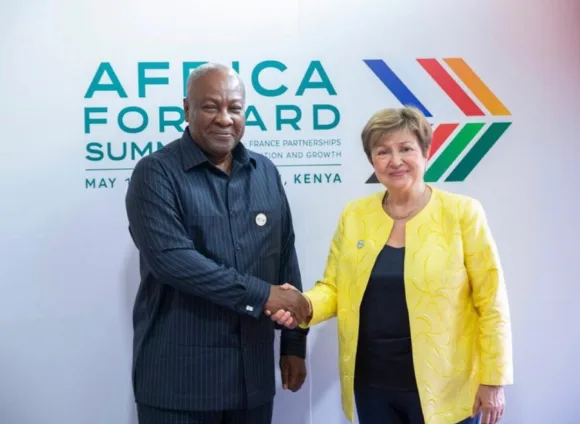
A visiting team from the International Monetary Fund has concluded its sixth review mission in Ghana after weeks of engagements with government officials and key stakeholders in Accra, with uncertainty lingering over whether a staff-level agreement has been reached.
Sources familiar with the discussions say Ghana made significant progress on key programme targets and reforms under the IMF-supported Extended Credit Facility (ECF) arrangement. However, some issues remain unresolved at the close of the mission.
Since Ghana entered the programme in 2023, each review has ended with a staff-level agreement between the IMF team and the government. As of the time of filing this report, it remained unclear whether such an agreement had been secured following the latest round of talks.
Clarity is expected later Friday when government officials and the IMF team jointly address the media at a scheduled press conference on the outcome of the review.
It is also not yet known whether the IMF will outline any “prior actions” for Ghana to complete before the programme proceeds to the IMF Executive Board for consideration in August 2026.
The sixth review assessed Ghana’s overall performance since the previous review earlier this year, focusing on delayed targets and structural reforms.
Discussions centred heavily on fiscal challenges, particularly in the energy sector, as well as broader structural reforms and debt management efforts.
In the monetary and banking sector, sources indicate that progress was made across most areas, although at least one issue remains outstanding.
Finance Minister Cassiel Ato Forson told the IMF team at the start of the mission that Ghana had made “strong and measurable outcomes” since the 2022 economic crisis.
“It has been a long, demanding, but ultimately transformative journey,” he said, crediting the programme with helping to stabilise the economy and restore confidence.
Forson, speaking on behalf of President John Mahama and the Ghanaian people, said the gains achieved so far were the result of disciplined policy decisions taken in the national interest.
He added that the next phase of the programme would prioritise private sector growth and ensure that macroeconomic stability translates into jobs and opportunities.
“We must ensure that stability translates into more investment, more jobs, and more opportunities for all,” he said.
Ghana’s 36-month ECF programme, approved in May 2023, provides access to SDR 2.24 billion (about $3 billion).
At the fifth review, the IMF described Ghana’s performance as broadly satisfactory, despite delays in some reforms, noting that earlier policy measures were beginning to yield results.
The Bank of Ghana has also built up foreign reserves to record levels, strengthening buffers against external shocks.
The IMF maintains Ghana’s 2026 growth forecast at 4.8 percent, slightly above the Sub-Saharan Africa average, while projecting inflation to decline to 7.9 percent, potentially keeping price growth within single digits through 2026 and 2027.
Globally, however, economic pressures persist, with growth revised to 3.1 percent amid rising energy costs and geopolitical tensions.