Free speech not under threat, Minority overstating situation – Ayine
The Attorney General Dominic Ayine has pushed back against claims by the opposition that the government is criminalising free speech, saying constitutional protections for expression come with limits under Ghanaian law. Speaking on the issue of ongoing political tensions over arrests and prosecutions linked to public c...
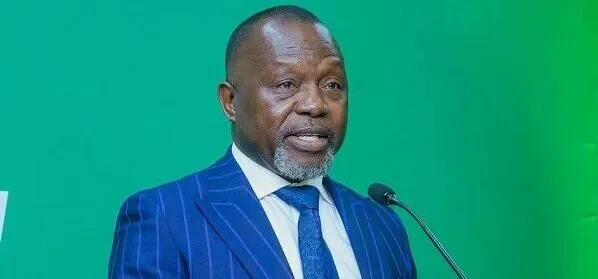
The Attorney General Dominic Ayine has pushed back against claims by the opposition that the government is criminalising free speech, saying constitutional protections for expression come with limits under Ghanaian law.
Speaking on the issue of ongoing political tensions over arrests and prosecutions linked to public commentary, Ayine said the 1992 Constitution guarantees fundamental freedoms, including free speech, but does not permit abuse of those rights in ways that threaten public order.
He pointed to Chapter Five of the Constitution, particularly Article 21, which enshrines freedoms of expression, assembly and demonstration, but stressed that these rights are not absolute.
“I think the minority is exaggerating a lot with respect to the question of gagging of free speech,” he said.
“There are limits. You can limit free speech if for instance it is one that can undermine public order or morals,” he said.
Ayine argued that speech which incites hatred or violence cannot be protected under the guise of free expression, warning that such conduct has historically contributed to instability in other countries.
“If someone for instance is inciting hatred, in our society, we do not expect the minority to say that we should sit down as a government to allow the person to go on,” he said, referencing past conflicts such as the Rwandan genocide.
He said Ghana must remain alert to the dangers of inflammatory speech, particularly through media platforms, but insisted the government remained committed to protecting lawful expression.
“It was the use of the radio, the use of the media that incited the genocide that eventually took place in Rwanda. And we have not gotten there,” he said.
Ayine added that President John Dramani Mahama supports free expression and understands its role in a democratic society.
“I would say that the president of the republic is one of the supporters of free speech and he is a communication specialist and so he understands the importance of free speech in a democratic society,” he said.
He also defended his own position, saying he fully supports constitutional freedoms but has a responsibility to ensure the law is enforced where necessary.
“As Attorney General I do understand the importance of free speech in a democratic society, and I will be the last person to want to enrun the right of our citizens who would want to express themselves,” he said.
However, he added that the state must act where expressions cross legal boundaries.
“But I should also not be the person who would sit idle when citizens are taking matters into their hands when it comes to free expression,” he said.
Ayine declined to comment on specific ongoing cases, noting that they are before the courts, but expressed confidence that the government would continue to uphold constitutional freedoms.
“I believe that this government will uphold the freedom of every Ghanaian to freely express themselves,” he said.
Meanwhile, lawyer and political figure Gabby Asare Otchere-Darko has thrown his support behind Minority Leader Alexander Afenyo-Markin in the escalating controversy surrounding criticism of a Circuit Court judge handling the case involving New Patriotic Party (NPP) Bono Regional Chairman Kwame Baffoe, popularly known as Abronye DC.
In a social media post on Wednesday (20 May) Otchere-Darko defended Afenyo-Markin’s criticism of the judge and framed the issue as one that extends beyond party politics and touches on broader democratic rights and freedoms.
“Leadership requires courage. Timidity can never be a leadership option,” he wrote, praising Afenyo-Markin for what he described as standing up against judicial actions that raised concerns over free expression and due process.
Otchere-Darko said the matter should not be viewed solely through a political lens involving the governing National Democratic Congress (NDC) and the opposition NPP.
“It is mistaken to view this through the narrow prism of NPP versus NDC,” he said, arguing that the implications extended to broader questions around freedom of speech and civil liberties.
He also warned against developments that could create fear among citizens over expressing opinions publicly, particularly among younger people increasingly using social media platforms to engage in public discourse.
“Today it may be a political activist. Tomorrow it could be the journalist, the radio commentator, the student, the taxi driver, or the ordinary young Ghanaian with a smartphone and an opinion,” he said.
Otchere-Darko added that while the law should be enforced against individuals who violate it, this should not come at the expense of due process and constitutional rights.