Uber unveils sensor-equipped Hyundai Ioniq 5 fleet for autonomous driving data push
Uber has revealed a prototype fleet of sensor-equipped Hyundai Ioniq 5 vehicles designed to collect real-world driving data for its autonomous vehicle partners, including Waymo, Avride, and WeRide. The company said the modified electric vehicles are fitted with advanced sensor systems and will be deployed as part of it...
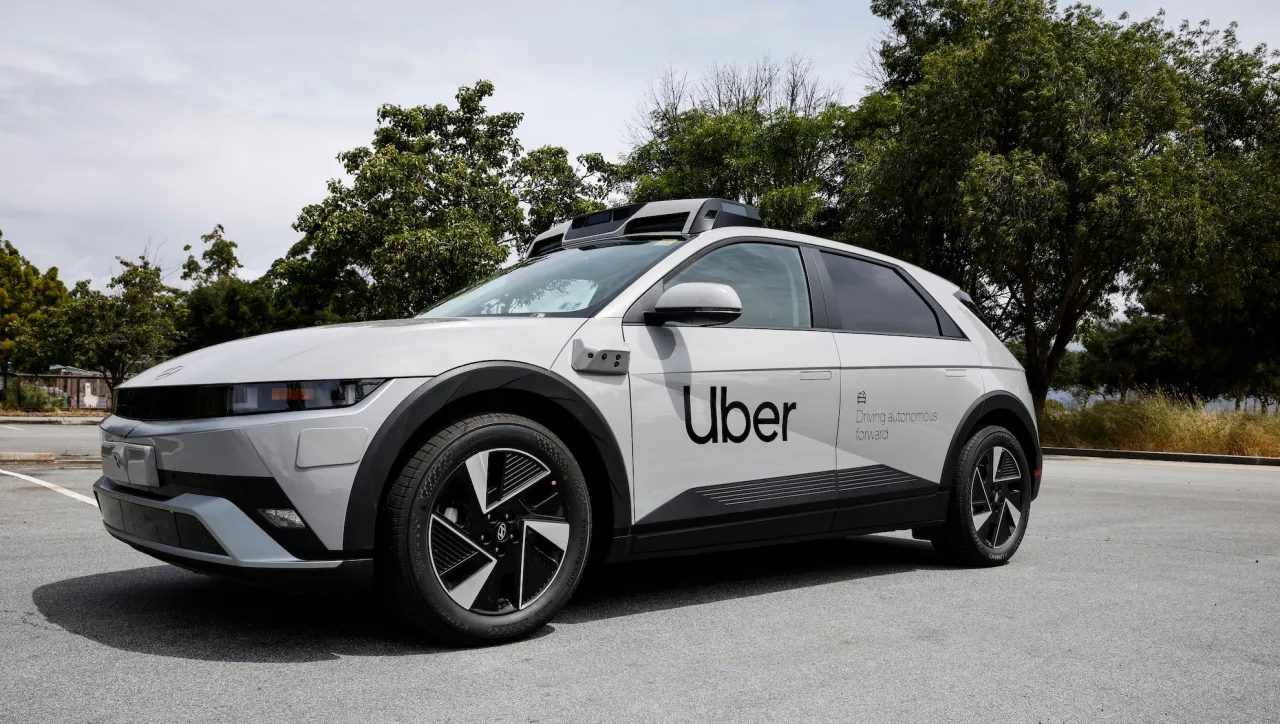
Uber has revealed a prototype fleet of sensor-equipped Hyundai Ioniq 5 vehicles designed to collect real-world driving data for its autonomous vehicle partners, including Waymo, Avride, and WeRide.
The company said the modified electric vehicles are fitted with advanced sensor systems and will be deployed as part of its expanding autonomous vehicle data programme.
Rather than introducing a radically new vehicle design, Uber has equipped the Hyundai Ioniq 5 with multiple cameras, radar, and lidar systems mounted across the body to capture high-fidelity driving data.
Uber said the initiative marks its first self-assembled vehicle project since selling its autonomous vehicle division to Aurora in 2020, signalling a renewed push into autonomous mobility development.
The fleet will be operated under Uber’s AV Labs division, which focuses on collecting and sharing driving data with its network of more than 30 autonomous vehicle technology partners.
According to the company, about 500 of the modified vehicles are expected to be deployed globally within the year, with initial rollout beginning with around 50 units in the coming months.
The vehicles are designed to collect millions of miles of driving data monthly, which will be used to improve robotaxi systems and self-driving software development.
Each unit is fitted with a combination of 14 cameras, eight solid-state lidar sensors, and nine radar systems, integrated through a partnership with Roush Performance, which is handling the retrofitting process.
The collected data is processed using Nvidia’s Dual Drive Thor autonomous driving computer, forming part of Uber’s broader effort to build a globally diverse training dataset for autonomous systems.
Uber said the goal is to create a comprehensive, time-synchronised dataset that provides a detailed 360-degree view of driving environments to support autonomous vehicle training.
The company added that it will continue refining the sensor configuration based on the needs of its technology partners as development progresses.
Uber’s autonomous strategy also includes its Uber Autonomous Solutions division, which oversees operations involving robotaxis, delivery robots, and self-driving freight systems.