How South Africa failed the rest of Africa as the continent cheers against it
The sight was unprecedented as South Africa’s Bafana Bafana walked onto the pitch at the Estadio Azteca for the opening match of the 2026 FIFA World Cup, millions of Africans across the continent were not cheering for them. They were cheering for Mexico. This was not about football. It was about betrayal. Social media...
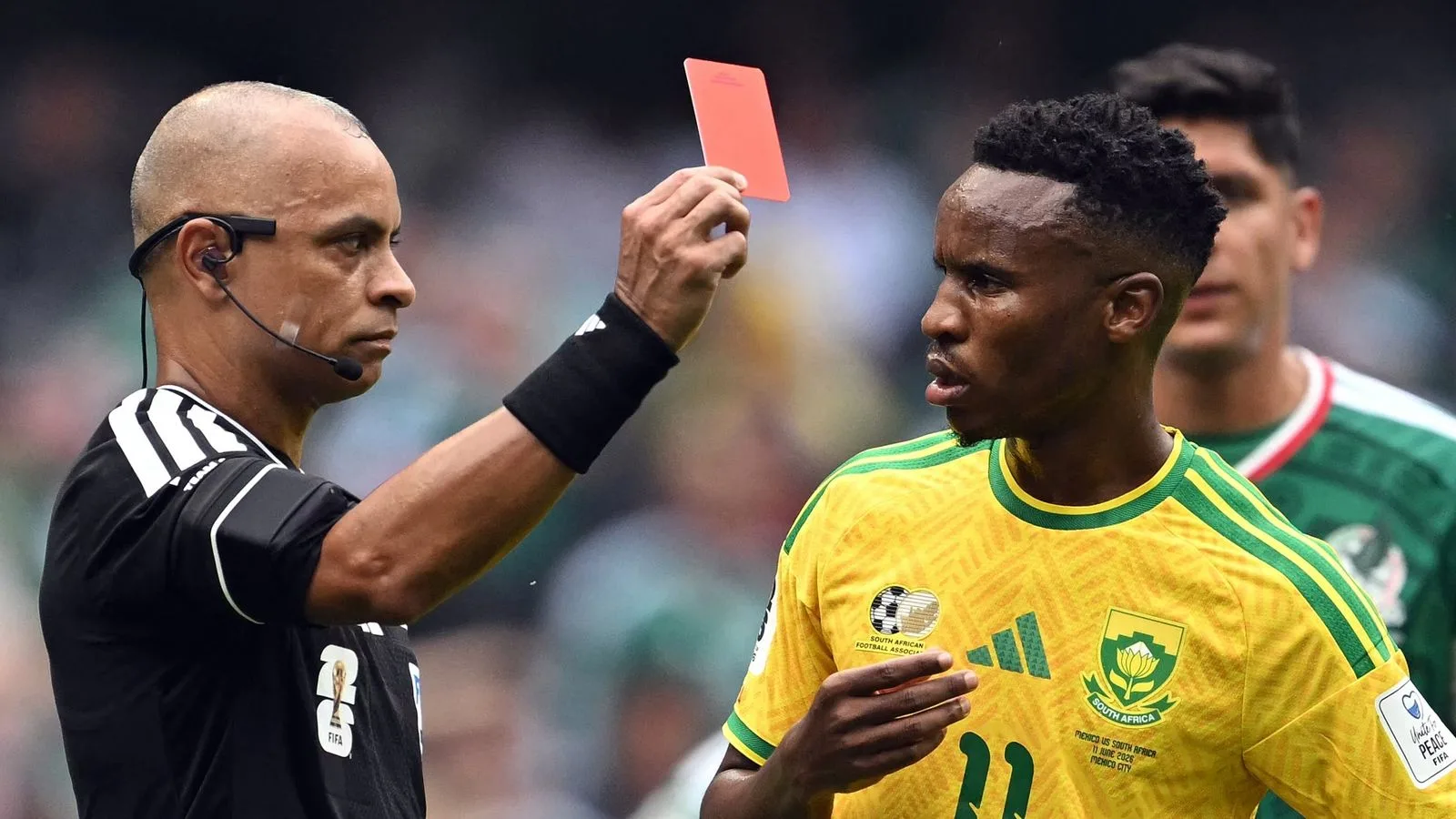
The sight was unprecedented as South Africa’s Bafana Bafana walked onto the pitch at the Estadio Azteca for the opening match of the 2026 FIFA World Cup, millions of Africans across the continent were not cheering for them.
They were cheering for Mexico.
This was not about football. It was about betrayal.
Social media lit up with a dark, collective joke: “If we support South Africa, they will say we are taking their jobs.”
Across Nigeria, Ghana, Zimbabwe, Mozambique, Somalia, and beyond, ordinary Africans rooted against the continent’s most developed economy, in a World Cup where African solidarity should have been automatic.
The African Commission on Human and Peoples’ Rights had already issued a formal condemnation of the attacks on African migrant workers, small business owners and even visitors.
Those countries that felt themselves most affected by the ‘xenophobic attacks’ were not impressed by the belated South African diplomatic outreach, which came with a veiled threat, that even repatriation efforts by vexed African countries, should not be used to score political points, and a back-handed apology. Nigeria threatened sanctions, and Ghana evacuated its citizens on special flights.
This did not happen overnight. It is the culmination of years; decades of South Africa failing and looking down on its fellow Africans. The attacks on foreign nationals in South Africa are not a new phenomenon. They are a recurring plague; 2008, 2015, 2019, 2021, and now 2026.
The latest wave has been among the deadliest. At least 12 people have been killed, and hundreds of businesses looted and destroyed. Vigilante groups roam townships, targeting African and Asian foreign nationals in violence that Human Rights Watch has described as systematic.
Groups have issued ultimatums with deadlines; some saying migrants must leave by June 30. Nigerian community leaders report that at least 105 Nigerians have been killed in South Africa between 2019 and 2026 alone, and The Guardian reports that African migrants across the country are living in “extreme fear.”
And each time, the cycle repeats: violence erupts, the government issues condemnations, a few arrests are made, and then a big fat nothing. No structural reform. No accountability. No healing.
PresidentCyril Ramaphosa recently moved to face the problem and vowed to crack down on groups behind the violence. The country has announced that it will send envoys across the continent to mend relations. But these are reactive gestures, not proactive leadership.
The government has had nearly 20 year; two decades to address the root causes and it has not. The immigration system is quite obviously still broken, with porous borders, alleged corrupt officials, and a massive undocumented population that is neither properly integrated nor managed. Critics argue that the system stays dysfunctional because corruption and cheap labour, serve those in power while ordinary South Africans bear the cost.
The writer was surprised to find that there is actually a government White Paper on immigration reform, a digital direction, points-based systems, but while bureaucrats draft papers on the future, people are being beaten, and burned out of their homes in the present.
It is most ironic that South Africa’s xenophobia overwhelmingly targets fellow black Africans from the rest of the continent, while white visitors and investors face no such hostility. The attacks are selective, and racialised; a controlled and focused hostility that spits on the idea of Pan-African identity.
An independent and disinterested observer, might understand the desperation that probably fuels these attacks, with South Africa’s economy stagnating, and unemployment hovering at catastrophic levels, particularly among young black South Africans. Housing is scarce, services are getting worse, and people are angry; and they are looking for someone to blame.
The government has failed to provide for its own citizens, and instead of addressing the real causes of economic decline; corruption, state capture, de-industrialisation, energy collapse, it has allowed the scapegoating to fester. Foreign nationals, many of whom came from worse conditions in their home countries, are the easy and obvious target. They are accused of “taking jobs” even though studies repeatedly show that immigrants in South Africa, are more likely to create jobs than take them, running small businesses and filling labour gaps in the informal economy.
But when a government refuses to lead, people will follow whoever offers answers, even bad ones. The anger is real. The target is wrong. And the government has done almost nothing to correct it.
For the rest of Africa, it has finally come to a painful realization; the cautious diplomatic statements, that it has been issuing from a distance, for years about South Africa’s xenophobia, are not enough this time.
The African Commission on Human and Peoples’ Rights has formally deplored the violence, and African ambassadors publicly snubbed South Africa’s recent Africa Day celebrations, something that could never have happened a decade ago. The stances taken by both Nigeria and Ghana have sent a clear message; you cannot call yourself the leader of Africa while your citizens burn African-owned shops and murder African nationals on your streets.
So when Mexico scored that goal against South Africa on Thursday, millions of Africans celebrated. Not because they love Mexico, but because they wanted South Africa to feel a fraction of the sting they have felt.
As one commentator put it: “This is dark humour born from pain.” South Africa arrived at the World Cup representing the entire continent; but the continent refused to be represented, by a society hell bent on destruction of its own. The tweets, the memes, the Facebook posts all said the same thing: you did this to yourselves.
Bafana Bafana, unfortunately, have become a symbol of their country’s moral and ethical failure. The players on the pitch did not loot shops or threaten migrants, but for one night, they carried the weight of a government’s neglect and a nation’s shame.
South Africa still has time to change course. The envoys being sent across Africa could be genuine apology missions and not just not diplomatic exercises. The immigration White Paper could become real reform with teeth, properly resourced and honestly implemented.
The government could invest in the economic programmes that would address the desperation driving xenophobia and it could also prosecute vigilantes with the full force of the law; not just for show, but for justice.
But that requires something South Africa has not yet demonstrated: the political will to put Pan-African solidarity ahead of domestic convenience. Until then, the rest of Africa will watch, wait, and remember. Maybe the sting of hearing the whole continent cheer for your opponent in a World Cup match, will be the wake-up call that decades of violence could not deliver.