World Cup 2026: Africa is playing for much more than a match
On 11 June 2026, when the tournament kicks off in the United States, ten African nations will appear on football’s biggest stage: Algeria, Cape Verde, DR Congo, Egypt, Ghana, Côte d’Ivoire, Morocco, Senegal, South Africa, and Tunisia. Ten flags representing a continent that, only a few years ago, had to settle for just...
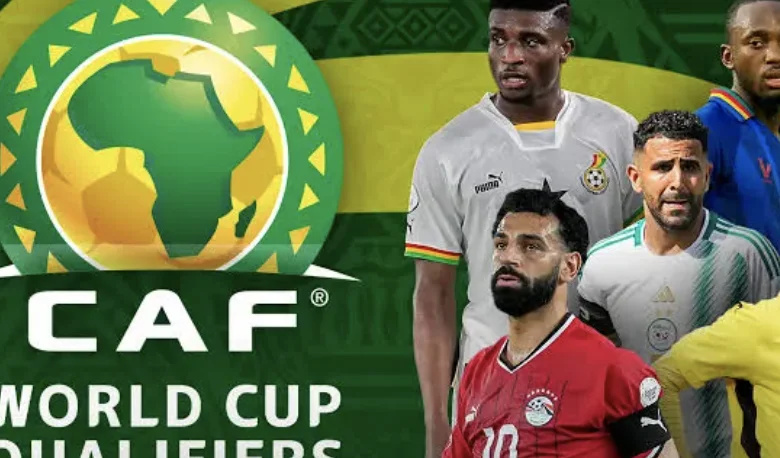
On 11 June 2026, when the tournament kicks off in the United States, ten African nations will appear on football’s biggest stage: Algeria, Cape Verde, DR Congo, Egypt, Ghana, Côte d’Ivoire, Morocco, Senegal, South Africa, and Tunisia. Ten flags representing a continent that, only a few years ago, had to settle for just five spots in the competition.
That doubling of Africa’s representation, made possible by FIFA’s 2016 decision to expand the tournament to 48 teams, is revolutionary in itself. But to understand what it truly means, one has to look beyond the stadium.
“Football is not only a sport we love; it is also a business, an investment, and a lever for economic development.”
When an African team enters the World Cup stage, it is not merely playing for a trophy; it represents a brand capable of generating billions in economic interest.
The figure is official. At its 36th Council meeting in Vancouver on April 28, 2026, FIFA set the total prize pool for the 48 qualified nations at $871 million — a 15% increase from the $727 million package initially approved in December 2025, which was itself already 50% higher than the $440 million distributed at the 2022 World Cup in Qatar.
The champion will receive $50 million. Every team eliminated in the group stage is guaranteed at least $21.5 million: $10 million for qualification, $2.5 million for preparation costs, and $9 million for participation in the group phase.
For the ten African federations that qualified, this guaranteed minimum represents more than $215 million collectively before a single match is played. It is an unprecedented sum in the history of African football and far exceeds the annual budgets of most federations on the continent. FIFA specifies that these funds are paid directly to member associations, not to players, whose individual bonuses are negotiated separately within each federation.
Added to this is the Club Benefits Programme (CBP): another $355 million will be distributed to clubs that release players for the tournament, with a significant share expected to flow to African clubs that developed many of the continent’s stars.
“All participating member associations are guaranteed at least USD 10.5 million each for their participation in the tournament,”
said FIFA President Gianni Infantino in an official FIFA statement in late December 2025.
The economic stakes for Africa in the 2026 World Cup go far beyond prize money. They are also — and perhaps above all — being played out in broadcasting rights.
Under an agreement concluded in August 2019 between FIFA and CAF’s 54 member associations, the media rights for African World Cup qualifiers are centrally managed by FIFA, with profits redistributed directly to the federations.
But the most dramatic shift is happening among broadcasters. Weeks before kickoff, Togolese group New World TV has emerged as the central broadcasting infrastructure for the 2026 World Cup across 43 sub-Saharan African countries. The model is unprecedented: neither a federation nor a national broadcaster, New World TV controls the rights, the signal, and the distribution, imposing a shared technical and editorial framework across its partners.
At the same time, beIN Sports, Canal+ Afrique, and SuperSport have also invested heavily in tournament rights for the continent — confirming that Africa is now viewed as a first-tier television market.
“FIFA’s investment in African football has increased significantly, from USD 70 million to USD 500 million per four-year cycle,”
Gianni Infantino has noted.
This shift is driven by a colossal audience base: more than 1.4 billion people, a predominantly young population passionate about football, and widespread mobile connectivity that multiplies the ways sports content is consumed.
The 2023 Africa Cup of Nations had already demonstrated the power of this market, with 1.4 billion viewers and $80 million in profits, according to statements by Patrice Motsepe.
Beyond prize money and TV rights, the 2026 World Cup represents a major commercial valuation opportunity for African federations.
“Football is not only a sport we love; it is also a business, an investment, and a lever for economic development,”
said CAF President Patrice Motsepe.
According to Africa Top Sports, African club revenues grew by 12% between 2023 and 2025 — momentum that massive exposure on the global stage can only accelerate.
CAF itself has embarked on an ambitious commercial strategy. Its renewed partnership with TotalEnergies, valued at $375 million over four years through 2028, illustrates the growing appetite of major brands for African football. Meanwhile, Afreximbank signed a €245 million agreement with New World TV, underscoring how football is becoming integrated into the continent’s economic development strategies.
“CAF is engaged in a strategic transformation to strengthen the commercial value of its competitions,”
Motsepe also stated.
For individual players, global exposure is an immediate accelerator of market value. A strong World Cup performance can trigger transfer negotiations, endorsement deals, and media visibility capable of permanently reshaping a footballer’s economic trajectory — while also feeding local leagues through sell-on clauses and training compensation.
In that sense, participating in the World Cup is the fastest way for African federations to increase the market value of their national football ecosystems.
The picture, however, is not without shadows.
While the overall figures are staggering — FIFA and the World Trade Organization, in a joint study conducted by consultancy OpenEconomics, project $80 billion in global economic impact and 824,000 jobs linked to the tournament — analysts remain cautious.
Saxo Bank noted in a May 2026 analysis that the benefits are “highly concentrated and temporary”, with effects mostly local, and that the history of major sporting events regularly shows significant gaps between projections and reality.
Most of those $80 billion will benefit the host countries — the United States, Canada, and Mexico — and FIFA’s commercial ecosystem itself: $4.26 billion in TV rights, $2.7 billion in marketing revenue, and $3.1 billion from ticketing and hospitality for the 2023–2026 cycle.
The structural share that will remain within African football is still something to build. Africa’s share of the global sports economy is estimated at only 0.5%, according to Africa Top Sports — a figure that captures the scale of the challenge ahead.
CAF Secretary General Véron Mosengo-Omba is aware of this, describing the confederation’s commercial strategy as “a concrete approach to addressing our quality challenges and promoting African football globally.”
“CAF is engaged in a strategic transformation to strengthen the commercial value of its competitions.”
The central question, then, is not whether the 2026 World Cup represents an economic opportunity for Africa. It unquestionably does. The real question is whether the continent’s structures — federations, leagues, clubs, and governments — are capable of capturing that value sustainably and investing it in academies, infrastructure, and training, rather than watching it evaporate after the final whistle.
The 2026 World Cup begins on June 11. Africa’s real economic match will last much longer.
Source: