Africa’s healthcare future depends on stronger policy, collaboration — Abyssinia Haile
Africa cannot achieve universal health coverage by focusing only on doctors and nurses, according to Abyssinia Haile, Government Relations and Strategic Communications Fellow (Ghana) at the Alexis Miranda Foundation, who says stronger investment in allied healthcare professionals and policy reform is critical to improv...
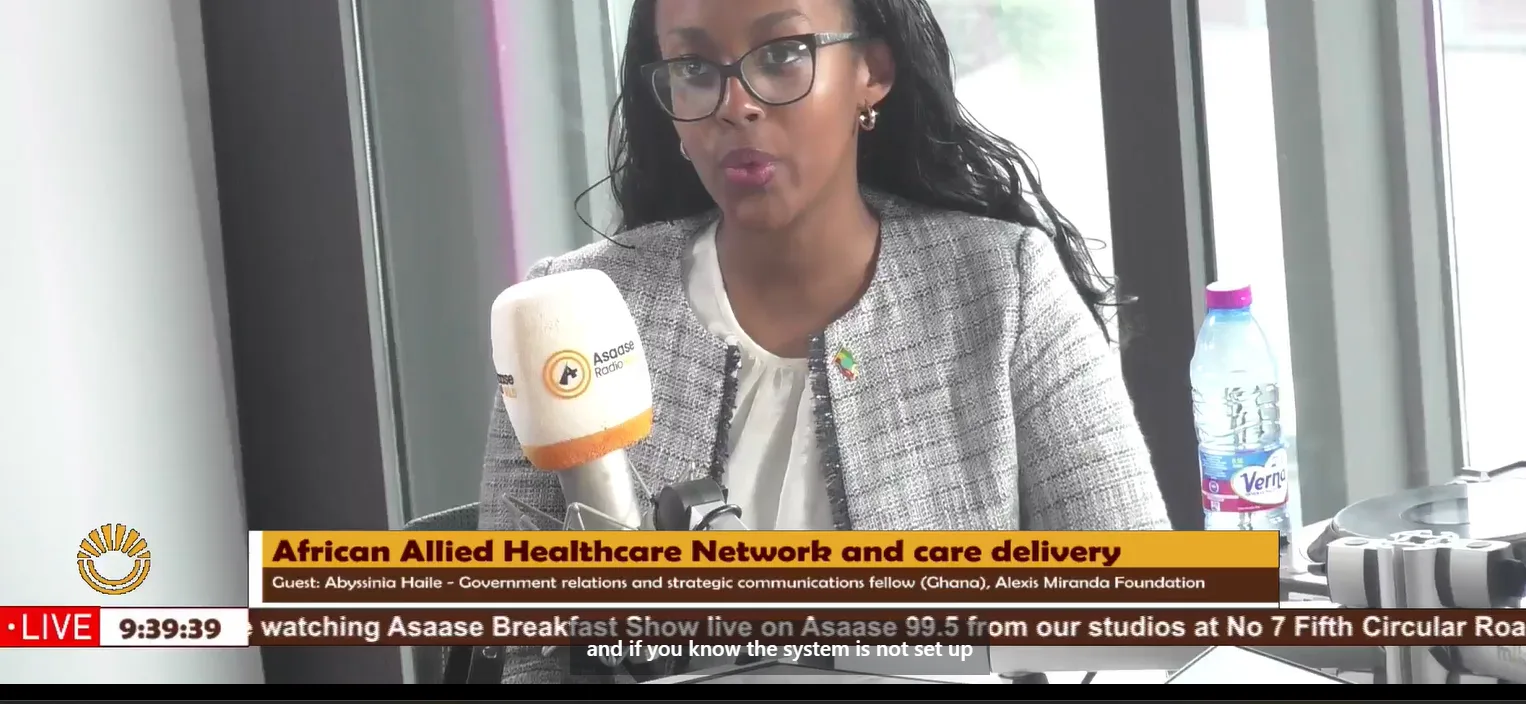
Africa cannot achieve universal health coverage by focusing only on doctors and nurses, according to Abyssinia Haile, Government Relations and Strategic Communications Fellow (Ghana) at the Alexis Miranda Foundation, who says stronger investment in allied healthcare professionals and policy reform is critical to improving healthcare delivery across the continent.
Speaking on the Asaase Breakfast Show on Monday (13 July), Haile said quality healthcare depends on a multidisciplinary workforce that includes physiotherapists, laboratory scientists, psychologists, occupational therapists, hospital administrators and policymakers.
“When you’re talking about allied healthcare professionals, we’re really trying to convene anyone who is interested in pursuing healthcare,” she said.
“It’s not just doctors and nurses. It’s governments, ministries, hospital managers and everyone involved in the decision-making process around healthcare.”
She said simply increasing the number of doctors would not solve Africa’s healthcare challenges if governments failed to strengthen healthcare systems and implement supportive policies.
“You can add as many doctors and nurses as you want, but if the system is not set up, organisationally it still won’t be effective,” Haile said.
According to her, one of the continent’s biggest healthcare challenges is translating discussions into practical policy that equips hospitals with adequate staffing, medical supplies and resources.
“The doctors need the supplies they need, they need the pay they deserve, and governments must implement policies that support them,” she added.
Haile also expressed concern over inequalities in access to healthcare, particularly in rural communities, where inadequate infrastructure and staffing continue to limit essential health services.
“It’s about equity. We need to make sure people in rural communities receive the same care and coverage as those living in metropolitan areas,” she said.
She further warned that non-communicable diseases such as hypertension, diabetes and heart disease are becoming an increasing public health concern, partly because of poor public awareness.
“A lot of these chronic illnesses are preventable and treatable. We need greater community education so people understand how lifestyle choices affect their health,” she said.
Haile also highlighted the impact of the migration of skilled health workers from Africa, saying governments must create conditions that encourage professionals to remain on the continent.
“We have to give incentives to these skilled doctors and nurses to remain on the continent. They’re leaving because they don’t feel supported,” she noted.
She made the remarks ahead of the African Allied Healthcare Summit 2026, scheduled for 23–24 July at the Cedi Conference Centre in Accra.
The summit, themed “Global Connections, Local Impact: Uniting African Diaspora Professionals to Strengthen Allied Healthcare Systems,” will bring together healthcare professionals, academics, students, government officials and members of the African diaspora to discuss workforce development, mental health, rehabilitation services, autism, healthcare policy and cross-border collaboration.
Haile said success would ultimately depend on sustained partnerships and greater youth participation in shaping future healthcare policy.
“It starts with engaging young people because they are the ones who will become tomorrow’s healthcare leaders,” she said.