Herbal medicine experts call for unified regulations, stronger support for industry growth
Herbal medicine experts have called on the government to establish a unified national standard for herbal medicines and improve the implementation of Ghana’s Essential Herbal Medicines List to support the growth of the sector. They warned that inconsistencies in regulatory processes and challenges with procurement syst...
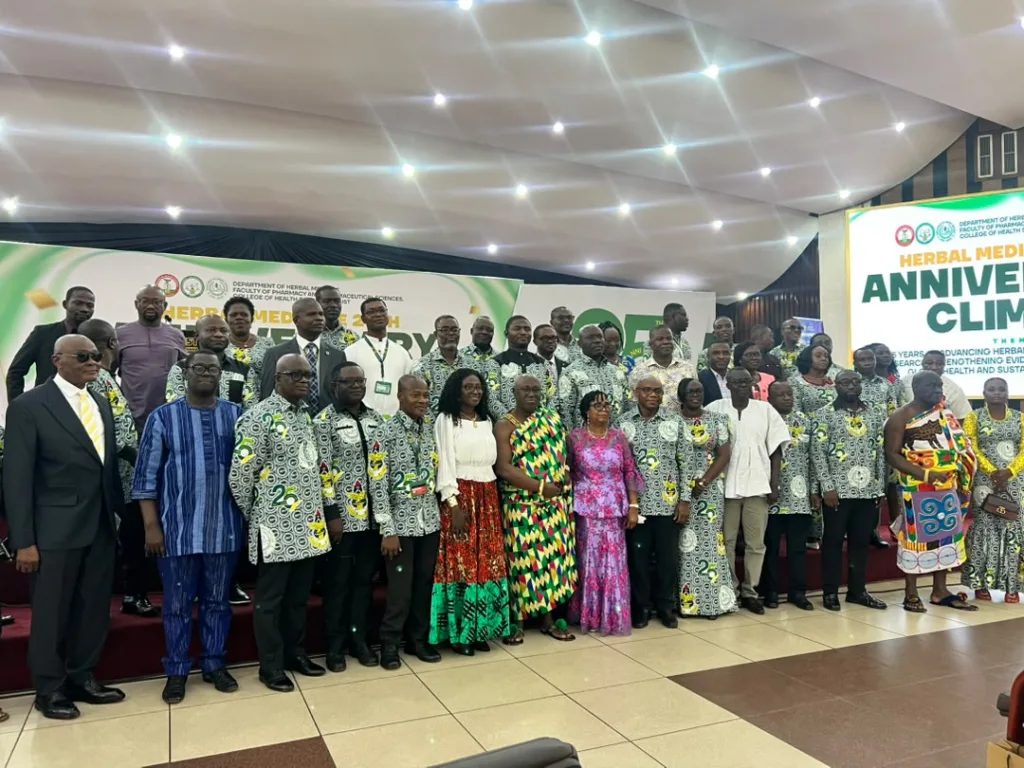
Herbal medicine experts have called on the government to establish a unified national standard for herbal medicines and improve the implementation of Ghana’s Essential Herbal Medicines List to support the growth of the sector.
They warned that inconsistencies in regulatory processes and challenges with procurement systems are limiting the potential of the herbal medicine industry.
The concerns were raised during the climax of the 25th anniversary celebration of the Department of Herbal Medicine at the Faculty of Pharmacy and Pharmaceutical Sciences, College of Health Sciences, Kwame Nkrumah University of Science and Technology (KNUST).
The General Secretary of the Ghana Federation of Traditional Medicine Practitioners Associations, Okogye Abibiduro Nana Kwadwo Kobiri, called for the Ghana Standards Authority to develop a single standard procedure for herbal medicines that would guide the Food and Drugs Authority (FDA), the Traditional Medicine Practice Council and industry players.
He said a common regulatory framework would help address confusion caused by changing policies and create a more predictable environment for manufacturers.
“It is time the Ghana Standards Authority comes out with a standard procedure for herbal medicines so that the FDA, the Traditional Medicine Practice Council and industry all work with the same standard. The changing policies are creating confusion for industry,” he said.
Nana Kobiri also raised concerns about the implementation of Ghana’s Essential Herbal Medicines List, arguing that some public health facilities rely heavily on products from the Centre for Plant Medicine Research despite the availability of a wider list approved by the Ministry of Health.

He said the practice limits opportunities for other herbal medicine producers and practitioners to contribute to the healthcare system.
“Mampong has only a few products on the list. If hospitals purchase only those products, it does not represent the entire traditional medicine sector. The Centre is supposed to conduct research for the industry, not compete with it,” he stated.
Meanwhile, Professor Regina Appiah-Opong of the Noguchi Memorial Institute for Medical Research called for increased investment in herbal medicine research and development.
She said adequate funding is needed to support scientific studies, including safety assessments, dosage determination, shelf-life testing and quality assurance, to improve confidence in Ghanaian herbal products.
According to her, Ghana’s herbal medicine industry remains underdeveloped compared to countries such as South Africa and Egypt due to limited funding for research and commercialisation.
“The first one, as we all know, is money. We need funds to do research. We have to ensure that every herbal medicine produced is carefully screened for dosage, shelf life and everything that makes that product standard for people to be confident in it, not only in Ghana but also abroad,” she said.
Prof. Appiah-Opong noted that although many herbal medicines have therapeutic value, the lack of scientific evidence and clinical trials continues to raise concerns about their safety and effectiveness.
“Many are struggling to accept herbal medicines because they ask, ‘Where’s the evidence that it works? Where’s the evidence that it’s safe?’ We know many of these medicines are useful, but we have to do the science,” she added.
The event, held under the theme “25 Years of Advancing Herbal Medicine Education: Strengthening Evidence-Based Practice for Global Health and Sustainable Development,” brought together traditional leaders, academics, researchers, policymakers, alumni and students to discuss ways of strengthening evidence-based herbal medicine practice and expanding the sector’s contribution to national development.
MORE:
Chief of Army Staff warns military will deal decisively with peace disruptors in Nkwanta South
Okada rider allegedly drives motorbike key into man’s skull during fight…