The Accra Strangler: Inside Ghana’s most notorious serial killing case
For nearly a decade, women in Accra and Kumasi were disappearing, found strangled — many stripped, some disfigured. Ghanaians, especially women, lived in fear, never knowing when the killer would strike next. The story changed in February 2000, when police arrested a mechanic from Adenta named Charles Kwabena Ebo Quans...
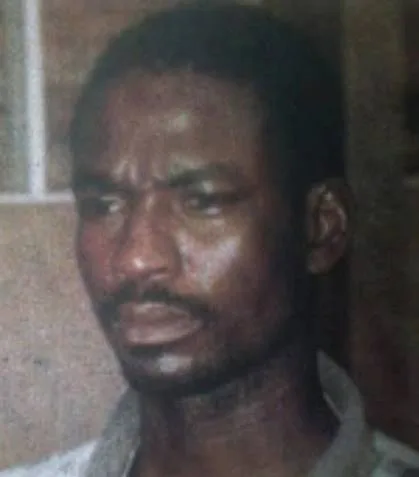
For nearly a decade, women in Accra and Kumasi were disappearing, found strangled — many stripped, some disfigured. Ghanaians, especially women, lived in fear, never knowing when the killer would strike next.
The story changed in February 2000, when police arrested a mechanic from Adenta named Charles Kwabena Ebo Quansah over the murder of his girlfriend, Joyce Boateng. That arrest would eventually unravel one of the darkest chapters in the country’s criminal history.
Quansah wasn’t unknown to law enforcement. His past run-ins with police and his aggressive conduct toward women had already put him under surveillance as a suspect in the killings. Soon after his arrest, investigators linked him to the murder of Akua Serwaa, a woman found strangled near the Kumasi Sports Stadium on January 19, 1996.
Before his 2000 arrest, Quansah had already served time at James Fort Prison for rape in 1986, was jailed again for a second rape in 1987, and was locked up once more in 1996 for robbery.
The confession
The breakthrough came through a joint investigation between Ghana’s CID and the FBI, which tied Quansah to numerous unexplained female deaths across Accra and Kumasi between 1993 and 2000. While in custody, he admitted to killing eight women in Accra, bringing his acknowledged victims to nine once the Kumasi case was added.
Most of the victims were night traders who were attacked, raped, then strangled. Several bodies were later found with condoms placed near them and their genitals removed or mutilated.
Investigators, however, believe the real number of his victims is far higher — as many as 34 women may have died at the hands of the same killer during that period.
The trial, sentence and denial
Quansah’s trial opened at the Accra High Court on June 11, 2002. By August, he had been convicted of murdering nine women and sentenced to death by hanging. He appealed twice, in September and November 2002, but lost both times.
He never let the guilty verdict stand unchallenged. In 2005, years into his sentence, he told prison officers he was innocent, claiming investigators had tortured him into confessing. He went further, alleging he had simply been taken to the Kumasi crime scene and shown where the body was found — not that he actually recalled committing the murder there himself.
The killings gripped the nation. Women in Accra and Kumasi lived in fear. The nickname “Accra Strangler” became a byword for a terror that felt too close to home.
More than two decades later, the case still comes up whenever people talk about serial crime in Ghana — a reminder of how long a predator can operate before the pieces finally come together.
Ghana has rarely carried out the death penalty since 1993, so Quansah’s sentence, while handed down, was never actually executed.