Africa CDC backs local manufacturing to strengthen health sector
Africa Centres for Disease Control and Prevention (Africa CDC) Director-General, Jean Kaseya, has urged African countries to increase investment in local pharmaceutical manufacturing, health financing and disease preparedness to reduce reliance on external support and strengthen the continent’s health security. Speakin...
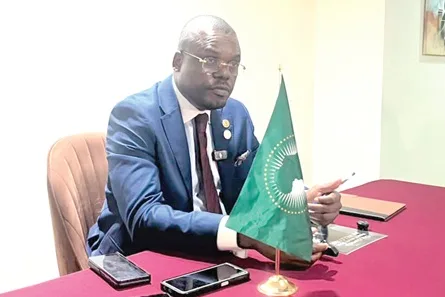
Africa Centres for Disease Control and Prevention (Africa CDC) Director-General, Jean Kaseya, has urged African countries to increase investment in local pharmaceutical manufacturing, health financing and disease preparedness to reduce reliance on external support and strengthen the continent’s health security.
Speaking at a press conference at the African Union (AU) Extraordinary Session of the Assembly of Heads of State and Government in Accra last Tuesday, Mr Kaseya said Africa had made progress in responding to Ebola outbreaks, while laying the foundation for greater health sovereignty through domestic investment and regional cooperation.
The summit, held on the theme, “Advancing Justice, Equity and Universal Health Coverage: Ending AIDS, TB, Improving Maternal Health, Addressing Endemic Non-Communicable and Neglected Tropical Diseases and Conditions in Africa,” focused on strategies to strengthen health security and improve disease response across the continent.
Mr Kaseya said Africa CDC had mobilised about US$110 million from African countries to support the Ebola response in the Democratic Republic of Congo (DRC) and Uganda, demonstrating the continent’s growing ability to finance emergency health interventions.
He said Africa CDC had also written to the United States government to request the removal of travel restrictions imposed on Uganda, arguing that the country’s management of the Ebola outbreak was based on scientific evidence rather than political considerations.
“We are seeing strong leadership from Uganda and significant progress in managing Ebola and other outbreaks.
The evidence supports confidence in the country’s response,” he said.
Mr Kaseya said Africa CDC had begun clinical trials for Ebola therapeutics and planned to commence vaccine trials next month as part of efforts to ensure the continent had access to vaccines, treatments and diagnostic tools by December 2026.
He said the continent could not continue relying heavily on imported medicines when several African countries had developed strong manufacturing capacity.
“Countries such as Algeria, Nigeria, Egypt and Ghana have the capacity to manufacture health products. Africa should create a market that supports producers within the continent,” he said.
Mr Kaseya said Africa CDC was working with member states to establish a stronger regulatory system through the African Medicines Agency and an African procurement mechanism that would provide manufacturers with a predictable market.
He said domestic resource mobilisation, expanding health insurance coverage and improving public financial management would be critical to reducing dependence on donor funding.
“Nearly 50 per cent of health resources are lost through inefficiencies. If we manage our resources better, Africa can finance more of its own health priorities,” he said.
Mr Kaseya also called for greater investment in digital health infrastructure, saying Africa’s dependence on external systems had exposed weaknesses when some development partners withdrew funding.
He said several countries temporarily lost access to critical health data used to monitor diseases such as HIV, highlighting the need for African governments to control and manage their own health information systems.
“The sovereignty agenda is not only about medicines and financing. It is also about owning our health data and building digital systems that remain operational regardless of external support,” he said.