When Did Convincing Floating Voters Become the Minority Leader’s Job?
Afenyo-Markin should ultimately be judged by how effectively he holds the government accountable and protects the national interest — not by whether every intervention immediately wins votes for the NPP.

1h ago·3 min read
Opinion
The views expressed in this opinion article are those of the author and do not necessarily reflect the views, editorial policy, or position of Dailyaccra.com, its editors, or its management.
A comment by Ing. Issaka Amon Kotei on the political strategy of the New Patriotic Party (NPP) raises an important question about what Ghanaians should expect from the Minority Leader in Parliament.
“The NPP must review its strategy. Afenyo-Markin’s current approach may not be convincing enough for floating voters,” he argued.
There may well be a legitimate conversation to be had about the NPP's broader political strategy and how the party intends to regain the confidence of voters ahead of the next election.
But when did convincing floating voters become the job of the Minority Leader?
Ghana has gradually developed a political culture in which campaigning effectively begins the day after an election. Almost every parliamentary intervention, press conference, criticism or political disagreement is immediately assessed through the prism of the next election.
Will this win votes? Will floating voters like it? Is this good for the party's electoral chances?
That approach risks confusing two very different responsibilities: the responsibility of a political party to win elections and the constitutional responsibility of an opposition in Parliament.
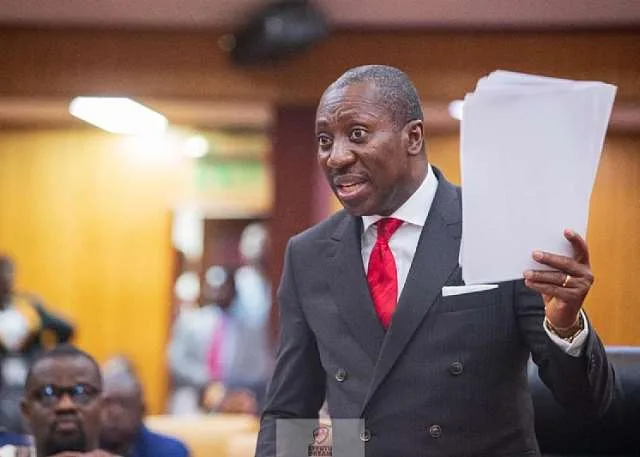
Alexander Afenyo-Markin, as Minority Leader, should not primarily be judged as the NPP's chief campaigner.
His immediate responsibility is to lead the Minority caucus in scrutinising government business, interrogating policies and expenditure, demanding accountability, offering alternatives where necessary and ensuring that the government of the day does not operate without effective parliamentary oversight.
If the government introduces a policy that the Minority believes is damaging to Ghana, Afenyo-Markin and his caucus should oppose it even if that position is temporarily unpopular.
If government expenditure raises questions, they should demand answers.
If legislation requires greater scrutiny, they should scrutinise it.
And where the government is doing something genuinely beneficial to Ghana, responsible opposition should also be capable of acknowledging it rather than opposing merely for electoral advantage.
That is the kind of opposition Ghana needs.
The danger in measuring every action of a Minority Leader by its ability to “convince floating voters” is that parliamentary opposition can easily become permanent campaigning.
Instead of asking whether a position is right for Ghana, politicians begin asking whether it will trend on social media, excite the party base or appeal to undecided voters.
That is precisely the kind of politics Ghana should be trying to move away from.
Of course, Afenyo-Markin is a politician and a senior figure in the NPP. His conduct will inevitably affect perceptions of his party. Political communication matters, temperament matters and the Minority cannot completely separate its parliamentary performance from the NPP's electoral fortunes.
But those should be consequences of doing the job well, not the primary purpose of the job.
The responsibility for convincing floating voters ultimately belongs to the NPP as a political organisation — its leadership, presidential candidate, national executives, communicators, campaign team, parliamentary candidates and grassroots machinery.
The party must develop the message, policies, organisation and candidates capable of persuading Ghanaians that it deserves another opportunity to govern.
The Minority Leader has a different immediate test.
Is Parliament providing meaningful oversight of the Executive? Is the Minority exposing wrongdoing where it finds it? Is it challenging policies it believes are against the national interest? Is it proposing credible alternatives? Is it helping ensure that public resources are properly accounted for?
Those are better measures of whether Afenyo-Markin is succeeding.
And there is a bigger principle at stake.
Suppose the Minority spends the next four years vigorously holding the government accountable, helps prevent questionable decisions, improves legislation through scrutiny and consistently defends what it believes to be Ghana's interest — but the NPP still loses the next election.
Would that automatically mean Afenyo-Markin failed as Minority Leader?
No.
If he performed those responsibilities effectively, he would have done his job.
Winning the election would then be a separate question for the NPP and its campaign machinery.
Ghana's democracy will be stronger when politicians are allowed to perform the institutions they occupy instead of every institution being converted into an election campaign platform.
The NPP may indeed need to review its strategy, as Ing. Issaka Amon Kotei suggests.
But if floating voters are not convinced by the party, the question should first be directed at the NPP's political strategy.
The Minority Leader should be judged first on whether he is leading an effective opposition and helping Parliament hold the government accountable in the interest of Ghana.
There will be enough time for campaigning.
Governance cannot become a four-year election campaign.