Bono’s cashew goldmine bleeds value as 1.8 million tonnes rot yearly — GIPA urges bold local investment
Ghana is losing millions in potential revenue from its thriving cashew industry, with a staggering 1.8 million metric tonnes of cashew apples going to waste annually in the Bono Region alone due to the absence of processing infrastructure, the Deputy Chief Executive Officer of the Ghana Investment Promotion Authority (...
Ghana is losing millions in potential revenue from its thriving cashew industry, with a staggering 1.8 million metric tonnes of cashew apples going to waste annually in the Bono Region alone due to the absence of processing infrastructure, the Deputy Chief Executive Officer of the Ghana Investment Promotion Authority (GIPA), Abdul Razak Baba, has revealed.
Addressing a high-level Business Forum in Sunyani as part of GIPA’s Regional Investment Roadshow, Baba painted a vivid picture of a sector bursting with opportunity yet crippled by underinvestment and structural gaps.
“Bono Region produces more than 80,000 metric tonnes of raw cashew nuts every year, but about 90 per cent of this is exported in its raw state,” he said. “That means we are exporting jobs, exporting value, and leaving money on the table.”
But it is the scale of waste in the cashew value chain that drew the strongest reaction from the audience.
“Let me say this again 1.8 million metric tonnes of cashew apples rot on farms every single year because we do not have the processing plants to utilise them,” Baba stressed. “When you see these numbers, you begin to wonder how our farmers even survive. The least we can do is recognise their resilience.”

He described the situation as “unsustainable” and called for urgent private sector intervention to reverse the trend.
Baba extended a direct invitation to investors, both local and foreign, to seize opportunities across the cashew value chain from nut processing and packaging to the production of juices, wines, and other derivative products from cashew apples.
According to him, establishing processing facilities in the region requires an investment ranging from GH¢1.5 million to GH¢20 million, depending on scale.
“The money is here in Ghana,” he noted pointedly. “We have what I call ‘mattress millionaires’ people with capital sitting idle. What is lacking is the courage to invest in our productive sectors.”
He challenged local investors to emulate foreign businesses that identify Ghana’s opportunities, secure financing, and establish thriving enterprises in the country.
“If foreigners can see these opportunities from afar, take loans and come here to succeed, then there is no reason why Ghanaians should keep their money under their mattresses,” he said.
The forum highlighted a broader spectrum of investment opportunities across agriculture, manufacturing and logistics in the Bono Region.
Baba disclosed that Ghana imports over 34.4 million bags of maize annually despite the region recording yields that are twice the national average.
“This presents a clear opportunity for aggregation, logistics, and processing,” he explained. “From silos and warehousing to feed production and cereals manufacturing, the entire value chain is open for investment.”
He also pointed to opportunities in sustainable forestry including sawmilling, plywood production, furniture manufacturing and wood recycling urging investors to prioritise environmentally responsible practices.
Tourism was another key sector identified, with Baba encouraging the development of eco-lodges, riverfront properties, and hospitality infrastructure around the region’s waterfalls, forest reserves and wildlife sanctuaries.
Baba emphasised that recent reforms have significantly improved Ghana’s investment climate. The transition from the Ghana Investment Promotion Centre to the Ghana Investment Promotion Authority, he explained, comes with a new legal framework aimed at reducing barriers to entry.
“The new law removes minimum capital requirements for most sectors, making it easier for investors to enter the Ghanaian market,” he said, adding that a one-stop investment service centre is being developed to streamline regulatory processes.
He also highlighted incentives under the Free Zones regime, including 10-year tax holidays and reduced corporate tax rates, as well as location-based tax benefits for businesses operating outside Accra.
“Investors who export at least 70 per cent of their output can enjoy significant tax exemptions. These incentives are not just for foreigners they are for Ghanaians too,” he stressed.
Despite the optimism, Baba acknowledged persistent challenges, including infrastructure deficits, high lending rates, limited access to capital, and widespread information gaps about available opportunities.
“There is no country without problems,” he said. “But we cannot wait for all problems to be solved before we act. We must move forward while addressing them.”
He noted that ongoing government interventions including infrastructure development and policy alignment are gradually improving the business environment.
Participants at the forum welcomed the initiative but urged authorities to go beyond policy dialogue and deliver tangible support to businesses.
Founder of Majbansa Enterprise, Margaret Bansa, said while the roadshow was commendable, access to finance remains a major hurdle for entrepreneurs.
“Starting a manufacturing business is capital-intensive from machinery to packaging, everything is expensive,” she said. “We need more than registration support. We need funding real financial backing to turn these ideas into reality.”
The GIPA Regional Sensitisation Tour, under the theme “Dragging Local Investment, Unlocking Regional Potentials, Mapping Opportunities and Mobilising Growth in the Bono Region” forms part of the Authority’s Investment Opportunity Mapping Project (IOMP), aimed at identifying, packaging and promoting investment-ready projects across the Bono, Bono East and Ahafo regions.
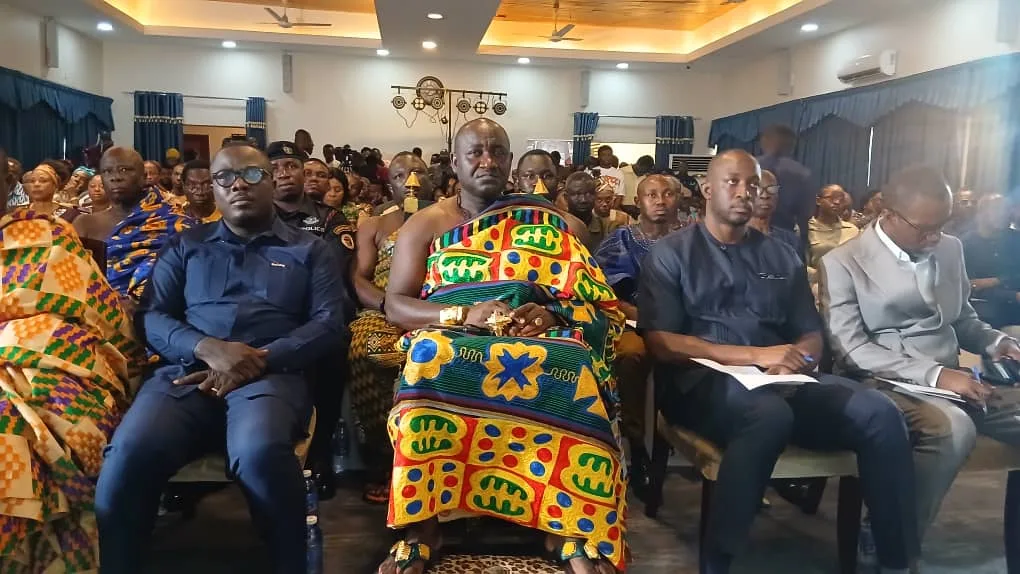
The Sunyani forum brought together government officials, traditional leaders, business chambers and private sector players to explore partnerships and unlock the region’s economic potential.
Officials say the initiative is not only targeting new investments but also promoting joint ventures and supporting existing businesses to scale.
Report by Daniel Donkor, Bono Region