African countries urged to increase domestic financing
The Executive Director of the Joint United Nations Programme on HIV/AIDS (UNAIDS), Winnie Byanyima, has urged African countries to increase domestic financing for health and tackle inequalities that continue to fuel HIV infections. She said although the continent had recorded significant progress in reducing HIV infect...
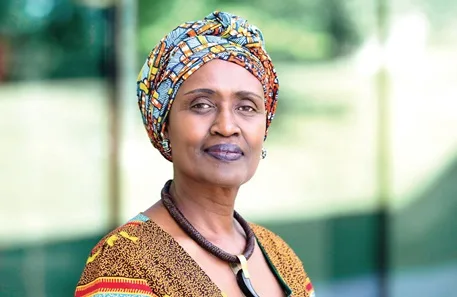
The Executive Director of the Joint United Nations Programme on HIV/AIDS (UNAIDS), Winnie Byanyima, has urged African countries to increase domestic financing for health and tackle inequalities that continue to fuel HIV infections.
She said although the continent had recorded significant progress in reducing HIV infections and expanding access to treatment, the gains remained at risk due to declining external health financing, rising debt burdens and persistent inequalities.
Ms Byanyima made the call at the Extraordinary Session of the African Union (AU) Assembly on Health in Accra, where African leaders and health stakeholders met to deliberate on measures to strengthen health systems, improve universal health coverage and address major public health challenges.
The session was held on the theme, “Advancing Justice, Equity and Universal Health Coverage: Ending AIDS, Tuberculosis, Improving Maternal Health and Addressing Endemic, Non-Communicable and Neglected Tropical Diseases and Conditions in Africa.”
The meeting followed the adoption of the United Nations Political Declaration on HIV/AIDS by 149 countries, including 46 African nations, which sets out global priorities and targets for ending AIDS as a public health threat over the next five years.
Delivering a message from the United Nations Secretary-General, António Guterres, Ms Byanyima said the UN supported Africa’s efforts to protect progress made against HIV and accelerate action towards ending AIDS by 2030.
She said the implementation of the new Political Declaration on HIV/AIDS, alongside the AU Roadmap to 2030 and Beyond, would provide a framework for countries to strengthen health systems and improve access to lifesaving services.
Ms Byanyima said, “Africa has repeatedly shown that when leaders act together, when communities are empowered and when science is made available to all, people's lives are protected and saved and economies flourish.
The UNAIDS executive director also urged countries to implement the UN Political Declaration as part of a coordinated African health agenda aligned with the AU Roadmap to 2030 and Beyond, Agenda 2063 and the Africa Centres for Disease Control and Prevention (Africa CDC) agenda on health security and sovereignty.
Ms Byanyima cited Ghana’s decision to remove the cap on financing for the National Health Insurance Fund, which she said had released GH¢3.5 billion to support broader health coverage, as an example of African-led health investment.
She also mentioned efforts by countries including Nigeria, Uganda, Côte d’Ivoire, South Africa and Tanzania to increase domestic investments in HIV and health programmes.
The UNAIDS executive director said Africa must strengthen its capacity to research, manufacture and regulate medicines, diagnostics and other health technologies to achieve health sovereignty.
She said innovations such as Lenacapavir, a long-acting HIV prevention medicine administered twice yearly, had the potential to transform the HIV response but needed to become more accessible across the continent.
Ms Byanyima called for greater technology transfer, affordable pricing and increased local manufacturing to ensure scientific breakthroughs reached those who needed them most.
Ms Byanyima stressed that ending AIDS required more than medical interventions, saying countries must also confront stigma, discrimination and social inequalities that prevent people from accessing prevention and treatment services.
She called for people-centred HIV services that reached vulnerable populations and protected the rights of those affected by the disease.