Parliament approves reintroduction of electronic road tolls
Parliament has approved a concession agreement for the reintroduction of road and bridge tolling in Ghana through a nationwide electronic toll collection system. The agreement establishes the legal and commercial framework for the financing, design, construction, operation and maintenance of the electronic tolling syst...
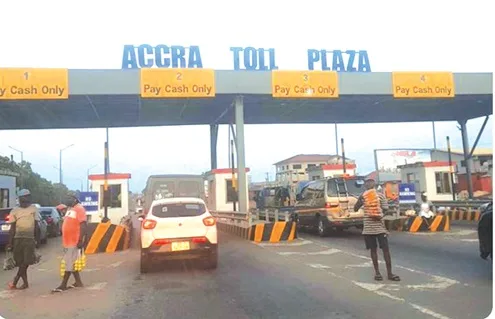
Parliament has approved a concession agreement for the reintroduction of road and bridge tolling in Ghana through a nationwide electronic toll collection system.
The agreement establishes the legal and commercial framework for the financing, design, construction, operation and maintenance of the electronic tolling system, as well as the eventual transfer of the project to the government.
Under the agreement, the system is expected to improve toll collection through electronic technology, reduce revenue leakages and enhance transparency and efficiency in toll administration.
It is also intended to restore road tolls as a sustainable source of funding for road maintenance.
The agreement is between the Ministry of Roads and Highways, acting on behalf of the government, and a special purpose vehicle to be incorporated by Rock Africa Limited, which will mobilise private investment for the development and operation of the system.
The electronic tolling system will cover 66 locations across 13 operational corridors.
These will comprise 38 existing toll locations and 28 newly identified strategic locations.
Under the revenue-sharing arrangement, the government will receive 70% of gross toll revenues, while the concessionaire will receive the remaining 30%.
The concession will run for 20 years, consisting of three years for the design and construction of the system and 17 years for its operation and maintenance.
At the end of the concession period, all project assets will be transferred to the government in accordance with the terms of the agreement.
The concession agreement was presented to Parliament on Wednesday, July 29, 2026, by the Minister of Lands and Natural Resources on behalf of the Minister of Roads and Highways.
It was subsequently referred to the Roads and Transportation Committee for consideration.
The House approved the agreement after the committee’s chairman, Isaac Adjei Mensah, presented its report and moved for its adoption.
Seconding the motion, Ranking Member of the Roads and Transportation Committee Kennedy Osei Nyarko said the reintroduction of road tolls would help generate additional revenue for the Road Trust Maintenance Fund.
He recalled that the previous administration suspended road toll collection in 2022 to allow for the development of new structures and an expansion of road and bridge tolling.
According to him, Cabinet had approved a roadmap for the reintroduction of road tolls before the previous administration left office.
“So, I am happy that the current government did not abandon the previous Cabinet’s approval of the re-introduction of road tolls,” he said.
The Member of Parliament for Bimbilla, Dominic Nitiwul, also supported the agreement but urged the government to ensure that the electronic system does not inconvenience motorists.
Mr Nitiwul explained that the previous government had abolished road tolls partly to reduce the financial burden on Ghanaians following the introduction of the electronic levy.
He said the government at the time had considered the revenue generated from road tolls relatively small compared with the potential revenue from the e-Levy.
“When we sat in Cabinet and the e-levy came, we knew it would bring some bit of burden to Ghanaians with lots of queues with people spending lots of hours and burning fuel,” he said.
He said the government had estimated that the e-Levy could generate about GH¢10 billion, while road tolls were generating less than GH¢100 million.
Mr Nitiwul said he supported the new arrangement because toll collection would be electronic and would eliminate the queues and delays associated with the former manual system.
“The road tolls are electronic and it is 20 years, I think it is good for us to support it,” he said.