Volta fishers adopt seasonal limits on prohibited poli nets
Fishers in the Volta Region have agreed to restrict the seasonal use of poli nets, a prohibited small-mesh fishing gear used mainly to harvest anchovy, in what stakeholders describe as a significant step towards sustainable fisheries management. The agreement was reached through engagements facilitated by the Global Fi...
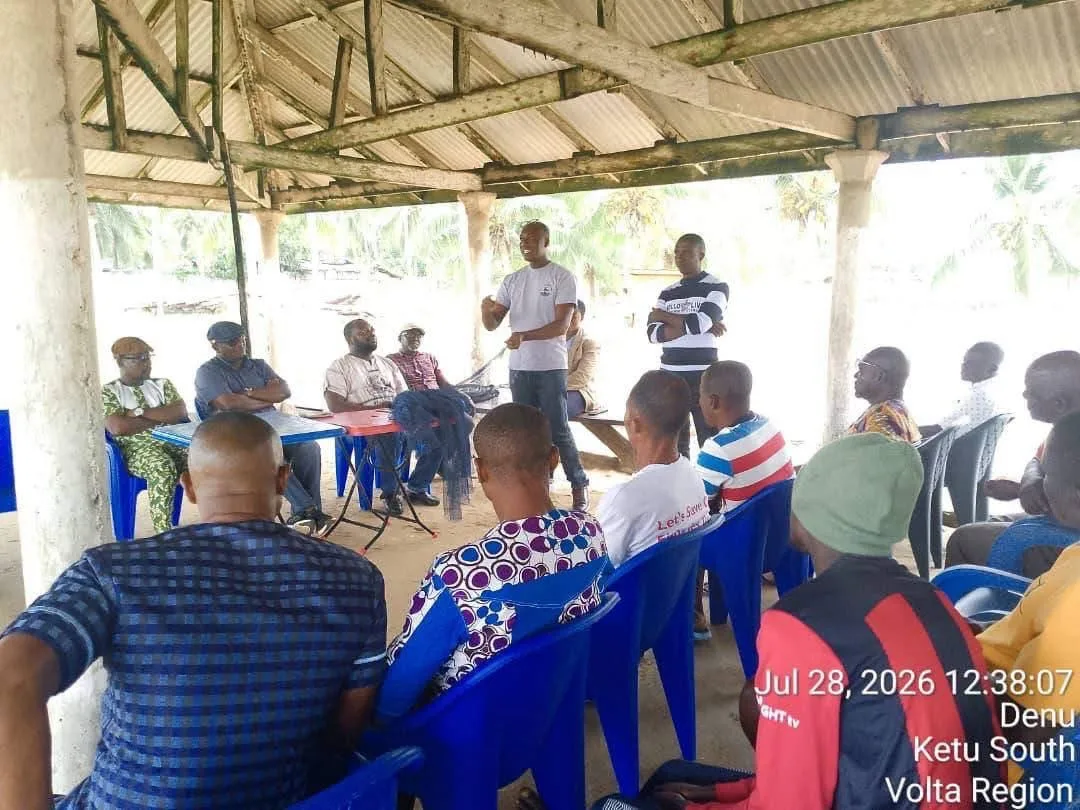
Fishers in the Volta Region have agreed to restrict the seasonal use of poli nets, a prohibited small-mesh fishing gear used mainly to harvest anchovy, in what stakeholders describe as a significant step towards sustainable fisheries management.
The agreement was reached through engagements facilitated by the Global Fisheries and Resilience Action (GFRA) under its partnership with Blue Ventures, bringing together fishers from Adina, Agavedzi, Denu and Hedzranawo with the Ministry of Fisheries and Aquaculture (MoFA) and the Fisheries Commission.
Under the agreement, fishers will use poli only during the main anchovy fishing season from August to February. The gear will not be used from March to July to reduce the capture of juvenile fish and allow depleted fish stocks to recover.
The seasonal arrangement will apply across fishing communities in the Volta Region, with fishers collectively committing to ensure compliance rather than relying solely on selected volunteers.
Anchovy remains an important source of food and income for many fishing communities in the region. However, because poli uses small mesh sizes, its year-round use has resulted in the capture of juvenile fish of other species, undermining fisheries management efforts.
Although poli is prohibited under Ghana’s fisheries laws, enforcement has remained difficult because of the gear’s importance to local livelihoods, leading to its continued use without an effective regulatory mechanism.
The five-month restriction represents a major milestone for fisheries management, particularly as Ghana’s artisanal fishing sector currently has no closed fishing season.
GFRA, in collaboration with MoFA, the Fisheries Commission, Landing Beach Enforcement Committees (LaBECs) and fishing communities, is supporting the development of a Seasonal Poli-Watcha Standard Operating Procedure and a sampling protocol to guide implementation.
The framework will establish operating conditions, monitoring requirements, data collection procedures, institutional responsibilities and compliance measures.
LaBEC members will receive classroom, simulation and practical beach-based training to inspect fishing gear, collect catch and effort data, assess species composition and juvenile catch, monitor compliance, report suspected violations and support Fisheries Commission oversight.
Fishing communities across the Volta Region will be expected to comply with the seasonal arrangement, while regular gear inspections, catch sampling, field visits and implementation reviews will assess whether the initiative reduces juvenile catch while allowing the targeted harvesting of anchovy.
The evidence generated will be submitted to the Fisheries Commission and its Scientific and Technical Committee to inform future fisheries management decisions and possible amendments to regulations governing poli and other small-mesh fishing gear.
Stakeholders emphasised that the agreement does not change existing law, and poli remains prohibited until the regulatory framework is formally amended.
They, however, believe the government’s support and the regional commitment by fishers could pave the way for a legally recognised seasonal management regime that balances fish stock conservation with the livelihoods of fishing communities.