Atronie invokes ancestral justice as galamsey poison sacred Amoma river
In a powerful blend of tradition, protest, and public urgency, the people of Atronie in the Sunyani East of the Bono Region have turned to ancestral authority in a dramatic attempt to halt illegal mining activities devastating their sacred Amoma River, after what they describe as prolonged inaction by state authorities...
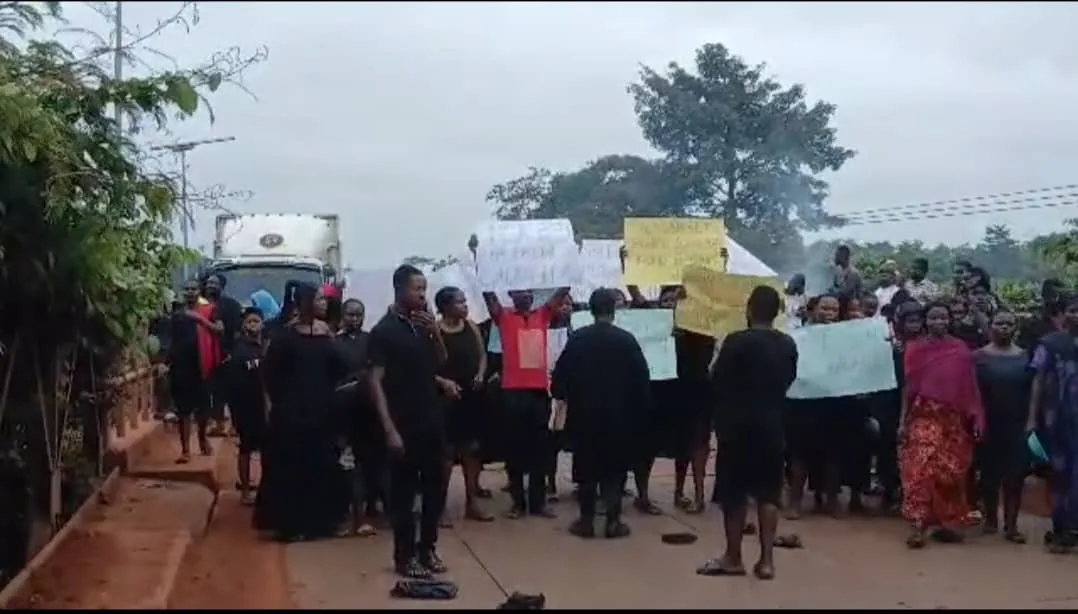
In a powerful blend of tradition, protest, and public urgency, the people of Atronie in the Sunyani East of the Bono Region have turned to ancestral authority in a dramatic attempt to halt illegal mining activities devastating their sacred Amoma River, after what they describe as prolonged inaction by state authorities.
At dawn on Monday, 11 August 2026, elders and custodians of the land, led by the Atronie hene, Diawusie Nana Amponsem Darko II, gathered at the revered Amomaso stretch of the river to perform solemn libation rites invoking spiritual justice against individuals accused of engaging in galamsey operations at nearby Jinijini.
The ritual, deeply rooted in cultural tradition, marked a decisive shift from formal appeals to spiritual intervention, underscoring the community’s growing frustration and sense of abandonment.
Ritual Protest Causes Traffic Disruption
The significance of the ceremony extended beyond symbolism, as the Amomaso River Bridge became a scene of heavy vehicular congestion. Traffic built up along the busy corridor linking Sunyani to the Ahafo Region, with commuters traveling to and from Goaso, Kenyasi, and Hwidiem stranded for hours.
The gridlock reflected both the gravity of the protest and the extent to which the crisis has gripped public attention.
“We Have Exhausted All Formal Channels”
Speaking to journalists, Nana Amponsem Darko II expressed deep disappointment over what he described as failed responses from authorities.
“We have exhausted all formal channels. We reported to the Regional Minister, we went to the Police Commander, yet nothing changed. Meanwhile, the destruction of our river worsens by the day,” he said.
According to the chief, repeated appeals to Joseph Addae Akwaboa and the Regional Police Command yielded no decisive action, prompting the community to resort to its traditional belief systems.
He further revealed that remarks allegedly made by the Regional Police Commander influenced their decision.
“We were told, ‘Don’t you have gods in your town?’ We initially insisted we were acting in the interest of Ghana, not invoking deities. But now, having been neglected, we have followed that path,” he stated.
The Atronie Traditional Council has accused a company identified as Jagri Bikali of undertaking extensive illegal mining operations in Jinijini, reportedly deploying more than 30 excavators.
Secretary to the Atronie Traditional Council, Nana Ampofo described the situation as dire and ongoing.
“We challenge the authorities to take the media to Jinijini today. More than 30 excavators are still working there as we speak,” he asserted.
The community has strongly disputed claims that excavators have been confiscated, insisting that illegal activities continue unabated.
Residents recount what they describe as unfulfilled assurances from the Regional Minister, including a pledge to convene a Regional Security Council (REGSEC) meeting and take swift action.
“When we first reported the issue, the Minister said he had no knowledge of any galamsey in Jinijini. He summoned security heads in our presence and promised action the next day. That never happened,” Ampofo recounted.
The perceived inaction has deepened frustration and eroded trust in institutions responsible for safeguarding communities and natural resources.
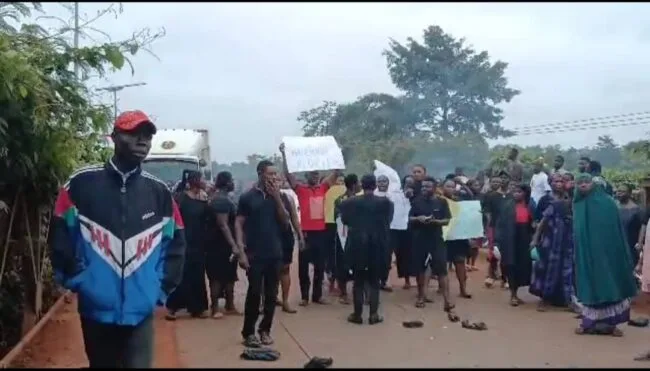 Beyond its spiritual significance, the Amoma River is the lifeline of Atronie’s predominantly farming population. Farmers depend heavily on it for irrigation, particularly for cocoa cultivation, while others rely on it for fishing and domestic use.
“With the cocoa season approaching between September and November, farmers can no longer spray their crops due to polluted water. This threatens our harvest and livelihoods,” Nana Ampofo warned.
Residents say the contamination now poses a direct threat to food security and economic survival.
The Traditional Council has dismissed suggestions that the crisis is rooted in land ownership disputes, insisting that Jinijini falls firmly under Atronie’s jurisdiction.
“We have documents to prove that Jinijini belongs to Atronie. This is not about land ownership—it is about saving our environment and our future,” Ampofo stressed.
Describing the situation as “pathetic and unbearable,” the community is calling for urgent intervention from the Ministry of Lands and Natural Resources, the Ministry of Local Government, and John Dramani Mahama.
“Atronie is crying. Atronie is weeping. If urgent action is not taken to stop this galamsey, worse consequences may follow,” Ampofo warned.
Report by Daniel Donkor, Bono Region