Part 17: The children who were never counted: The currency of conscience
Setting: Accra, Greater Accra Region, Ghana Date: 6 September 2018 The sealed letter remained on the table. Nobody touched it. Nobody spoke. Seven words stared back at them. *IF ANYTHING HAPPENS TO ME… OPEN THIS*. Professor Henderson looked at the woman. She looked down at her hands. “Because I knew one day somebody wo...
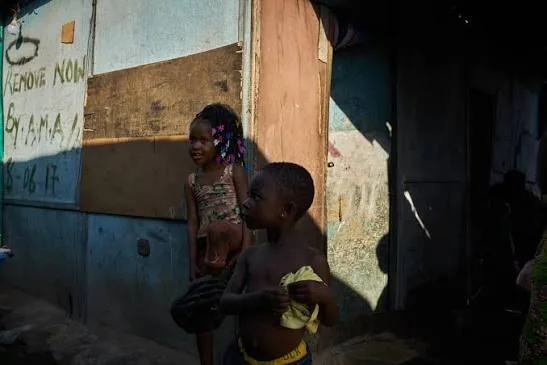
Setting: Accra, Greater Accra Region, Ghana
Date: 6 September 2018
The sealed letter remained on the table.
Nobody touched it.
Nobody spoke.
Seven words stared back at them.
*IF ANYTHING HAPPENS TO ME… OPEN THIS*.
Professor Henderson looked at the woman.
She looked down at her hands.
“Because I knew one day somebody would ask why I kept silent.”
Professor Henderson leaned forward.
“And what is inside?”
The woman closed her eyes.
“The beginning of what?”
She looked directly at him.
“The beginning of the children who were never fed.”
She opened the brown envelope.
Inside was a collection of documents.
School registers.
Payment schedules.
Caterer lists.
District allocations.
Letters.
Photographs.
And pages upon pages of handwritten calculations.
Professor Henderson picked up one sheet.
“What am I looking at?”
“A feeding list.”
“For which school?”
“That is the problem.”
But the number of pupils did not.
He picked up another.
Different school.
Different district.
“How many schools?”
“I stopped counting.”
“Because every time I counted them, more appeared.”
The Director of Digital Forensics took the papers.
The room fell silent.
Professor Henderson slowly removed his glasses.
The woman hesitated.
“You must know something.”
“I know who benefited.”
That changed everything.
She pulled out another document.
“This is what frightened me.”
Professor Henderson read the figures.
Payments had been authorised.
Receipts had been issued.
Caterers had been paid.
But something was wrong.
The quantities did not match the number of children.
there were no children at all.
“How could this happen?”
The woman answered quietly.
“Because nobody was counting the children.”
Professor Henderson stared at her.
“Someone was counting something.”
The woman reached into the envelope again.
She produced a small cassette.
The Director looked at it.
“What is this?”
“A recording.”
“Of what?”
“A meeting.”
Professor Henderson looked up.
“I cannot tell you.”
“Because some of them are still powerful.”
He looked at the cassette.
“Then why bring it here?”
The woman stared at him.
“Because I am tired of being afraid.”
The cassette was inserted into an old recorder.
A man’s voice.
Calm.
Confident.
“The numbers must balance.”
Another voice laughed.
“They always balance.”
“What about the schools?”
“They don’t have to exist.”
“What about the children?”
The answer came immediately.
“Children don’t sign payment vouchers.”
The recording stopped.
Professor Henderson looked at the woman.
“Where did you get this?”
The next morning, the investigators began comparing the woman’s documents with government records.
The deeper they went…
the uglier it became.
There were discrepancies.
Payments whose supporting documents raised questions.
Names that appeared more than once.
And schools whose enrolment figures seemed impossible.
The Auditor-General’s earlier work on the programme had already identified financial irregularities, including overpayments to caterers running into millions of cedis. One documented audit finding put unrecovered caterer overpayments at more than GH¢2.3 million.
But Professor Henderson was no longer interested in the amount.
He was interested in the mechanism.
“How do you steal from a child?”
The young investigator looked puzzled.
Professor Henderson pointed to the school registers.
“You first make the child a number.”
He pointed to the payment schedule.
“Then you make the number money.”
He pointed to the missing food records.
“You make the money disappear.”
A television screen flickered inside Professor Henderson’s old office.
His hair had turned almost completely white.
The brown envelope was still with him.
For seven years, he had kept it.
Not because the investigation had failed.
But because some truths required time.
On the television, a former government minister was speaking about the School Feeding Programme.
Her allegations were explosive.
She said she had been instructed to audit the programme.
She said her audit had uncovered serious problems.
She spoke of resistance.
She spoke of a report.
And then she spoke of something that made Professor Henderson freeze.
His hand stopped turning the pages.
The television continued.
The former minister alleged that a proposal had been made to introduce fictitious schools into the programme as a way of making money. She also said she had refused to participate. These were public allegations, not judicial findings, and they were subsequently disputed by the family of the late former School Feeding Coordinator Gertrude Quashigah.
Professor Henderson stared at the screen.
The young investigator who had once worked with him was now a senior officer.
He entered the room.
Professor Henderson pointed at the television.
“You remember the woman?”
The officer stared at the screen.
Professor Henderson smiled sadly.
He opened the old brown envelope.
Inside was the same school list.
The same figures.
The same handwriting.
The same ghost schools.
The officer’s face changed.
“This is impossible.”
Professor Henderson shook his head.
He turned another page.
“It happened before.”
*THE ATTORNEY-GENERAL*
Then came another revelation.
The Attorney-General’s office announced findings concerning alleged financial crimes involving the National Food and Buffer Stock Company.
The figures were staggering.
More than GH¢78 million was alleged to have moved through transactions connected to the case.
The Attorney-General described the alleged operation as a criminal enterprise involving funds intended for food programmes, including school feeding. The accused persons denied wrongdoing, and the matter proceeded through the courts.
Professor Henderson read the report slowly.
A name.
A company.
A transaction.
A number.
He looked at the old documents.
The numbers were different.
The architecture was not.
“They never changed the machine.”
The senior investigator stared at him.
Professor Henderson closed the report.
“The machine that turns hunger into money.”
That evening, Professor Henderson visited a basic school.
Children were eating.
Rice.
Beans.
Vegetables.
Some laughed.
Some talked.
Some fought over pieces of meat.
He watched them silently.
A little girl noticed him.
“Why are you looking at us?”
He knelt beside her.
“Because someone once forgot to count you.”
“I don’t understand.”
“You don’t need to.”
He watched her return to her food.
For years, people had counted contracts.
They had counted invoices.
They had counted allocations.
They had counted bank transfers.
They had counted companies.
They had counted properties.
But they had forgotten the only numbers that mattered.
How many children were actually fed?
That night, Professor Henderson returned to his office.
He opened the woman’s sealed letter.
For seven years he had refused to read the final paragraph.
There were only three sentences.
“If they ever tell you that the money was lost…”
“Ask them where the children are.”
The final sentence was underlined three times.
THEY WILL ALWAYS HIDE THE MONEY.
BUT THE CHILDREN WILL TELL YOU WHERE IT WENT.
Professor Henderson slowly folded the letter.
Outside, Accra was alive.
Traffic moved.
Music played.
Lights glittered across the city.
And somewhere in Ghana…
a child was eating a meal that had been paid for.
a child was waiting for one that never came.
And between those two children…
was an entire economy.
An economy built on numbers.
Ghost numbers.
Ghost schools.
Ghost transactions.
Ghost suppliers.
Ghost beneficiaries.
But the hunger…
was real.
Professor Henderson stood by the window.
His reflection stared back at him.
Then he whispered the words that had haunted him for seven years:
“Conscience leaves a trail.”
He turned off the light.
And somewhere inside the darkness…
the old recorder clicked on by itself.
Then a child’s voice.
Almost impossible to hear.
A pause.
“We are hungry.”
The recording ended.
Professor Henderson stood motionless.
Because now he understood.
The woman had never been the real witness.
They had always been.
They simply had no voice powerful enough…
until someone finally decided to listen.
HavillahConsultants.com
08082026
*Disclaimer*
———————-
The Currency of Conscience is a work of fiction. While the story draws inspiration from real societal issues, public reports, audits, media publications and allegations concerning accountability and the management of public programmes, the characters, dialogue, investigative team, documents, relationships and narrative connections are fictional or fictionalised for literary purposes. References to real public figures or publicly reported matters are presented as part of the story’s fictional framework and should not be construed as assertions of criminal conduct. Allegations remain allegations unless established by a competent court. The story is intended to encourage reflection on integrity, accountability and the enduring value of a clear conscience.