“Imaging is the GPS for neurosurgery” – consultant calls for more equipment
Ghana has about one neurosurgeon for every 1.5 million people, far below the World Health Organisation (WHO) recommended level of one neurosurgeon per 100,000 people, consultant neurosurgeon Dr Teddy Totimeh has said. He said the shortage, coupled with limited specialised equipment and the concentration of neurosurgica...
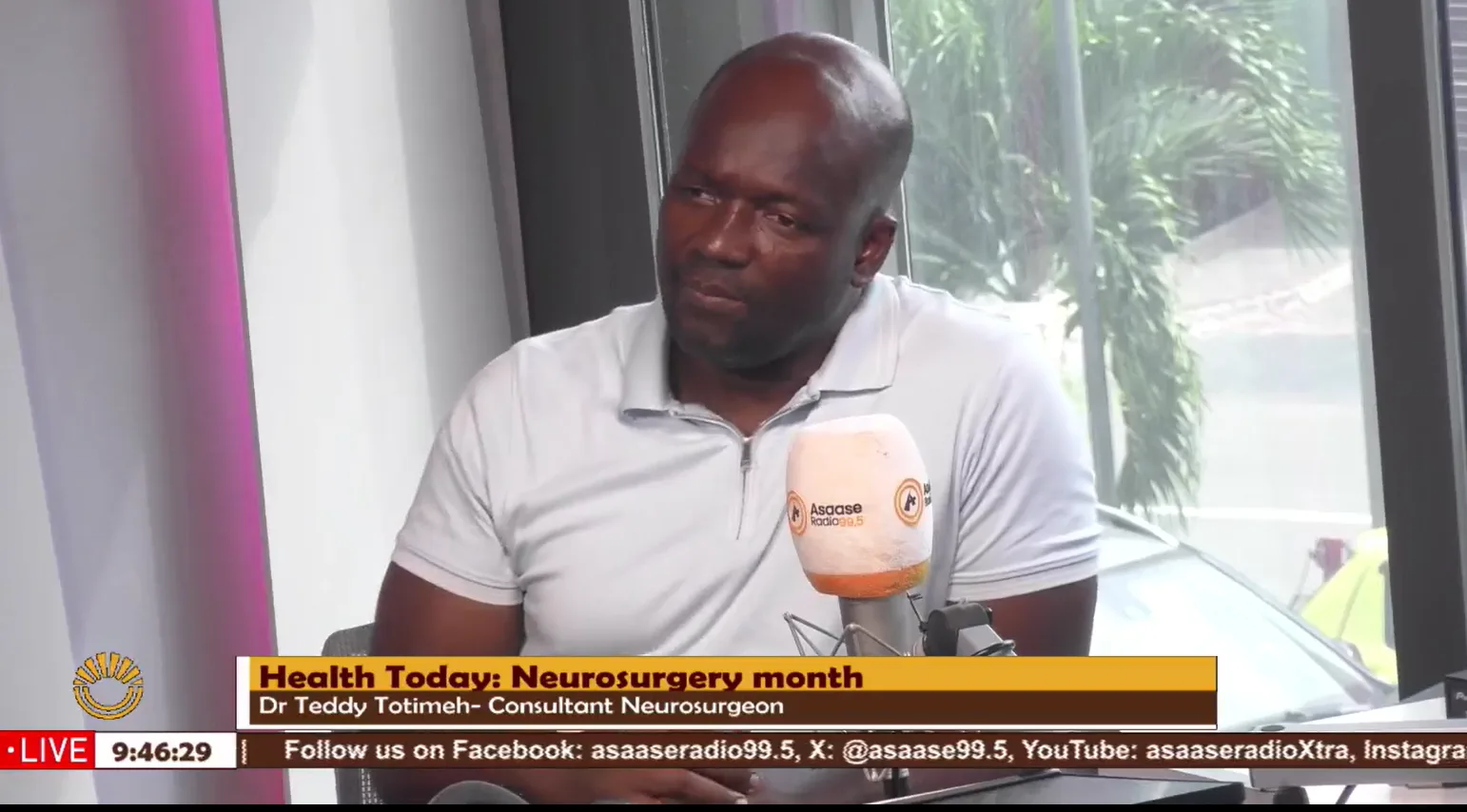
Ghana has about one neurosurgeon for every 1.5 million people, far below the World Health Organisation (WHO) recommended level of one neurosurgeon per 100,000 people, consultant neurosurgeon Dr Teddy Totimeh has said.
He said the shortage, coupled with limited specialised equipment and the concentration of neurosurgical services in urban areas, was restricting access to critical care for patients across the country.
Speaking on the Asaase Breakfast Show on Thursday (13 August) during Neurosurgery Awareness Month, Dr Totimeh said Ghana currently has about 33 neurosurgeons, although the number is expected to rise significantly as more training centres are established.
“The standard number of neurosurgeons per 100,000 is one to two. Generally, the WHO recommended level is there should be one neurosurgeon for every 100,000 people. At the moment in Ghana, we’re doing one to 1.5 million,” he said.
He said the shortage was particularly concerning because neurosurgical conditions were not rare in Ghana, pointing to stroke, road traffic injuries, spinal disorders and congenital conditions affecting children.
Dr Totimeh said contrary to the popular perception that neurosurgery primarily involves major brain operations, spinal procedures account for a larger share of neurosurgical work.
“Spine surgeries are performed more by neurosurgeons than even brain surgeries,” he said, explaining that spinal trauma and degenerative diseases become increasingly common with age.
However, he cautioned that surgery is required for only about 10 percent of people suffering from lower back pain.
He said neurosurgeons also have an important role in preventing patients with less severe spinal problems from progressing to the point where surgery becomes necessary.
Neurosurgeons also treat congenital conditions such as hydrocephalus and spina bifida, as well as tumours and other disorders affecting the brain and spinal cord.
Dr Totimeh said the increasing burden of stroke and road traffic injuries meant Ghana needed to expand neurosurgical coverage rather than treat the specialty as a service for rare conditions.
He said stroke had become a leading cause of death in Ghana and that neurosurgeons played an important role in managing both bleeding and clot-related strokes and their complications.
Road traffic crashes were another major source of traumatic brain and spinal injuries, he said.
Dr Totimeh attributed part of the problem to road infrastructure and the vulnerability of pedestrians to vehicles.
“When you have a situation where you don’t have well-built roads and then your pavements are not really in place, then you have car against human being,” he said.
He said the result was often severe trauma to the brain and spine.
The consultant also warned that many victims of traumatic brain injury in low- and middle-income countries die before reaching hospital.
“We’re losing 80% of those involved in accidents before they get to hospital,” he said, adding that only about 20 percent make it to a hospital.
Dr Totimeh urged the public to exercise caution when helping victims of serious road crashes, particularly when a person is unconscious.
He said an unconscious crash victim should be presumed to have both a brain and spinal injury until proven otherwise.
“If the person is unconscious, then it means that we should assume the person has a brain injury and a spine injury,” he said.
Ideally, trained emergency personnel should handle the evacuation of such patients, he said.
But acknowledging Ghana’s limited ambulance coverage, Dr Totimeh said that if an injured person had to be moved, the person’s back should be kept straight and the body transferred carefully.
Where that could not be done safely, he said, it could be safer to leave the victim in place and seek medical advice or assistance.
He also urged bystanders to listen to conscious victims who complain of pain and treat those areas with particular care.
“Pain is the way in which the body shows there’s something wrong,” he said.
Dr Totimeh urged Ghanaians not to ignore persistent neurological symptoms, particularly prolonged headaches.
He said people experiencing headaches lasting more than a month should seek medical evaluation, particularly given Ghana’s high levels of hypertension.
He also identified progressive vision loss as another warning sign that should be investigated, noting that some brain tumours can affect vision without causing headaches.
Other symptoms requiring medical attention include weakness or numbness in the arms or legs, particularly when accompanied by pins and needles.
He also warned against changes in bladder control in people with persistent back pain.
“If it keeps happening that when you feel like urinating, you have to rush to the washroom and it didn’t used to happen before, especially in somebody who has been having back pain for a little while, that is a problem and that should be sorted out,” he said.
He further urged parents not to dismiss repeated seizures in children as normal.
“Every time a child gets a seizure, the person loses brain ability, brain functional ability,” he said, warning that repeated seizures could affect a child’s neurological development.
Dr Totimeh said some brain tumours grow so slowly that patients may not experience obvious symptoms until significant damage has occurred.
He said changes in the sense of smell, handwriting or walking could sometimes provide early clues.
A person whose signature gradually changes or begins experiencing unexplained difficulty signing documents should seek medical assessment, he said.
Similarly, a noticeable change in a person’s gait — such as dragging one foot or consistently leaning to one side — could indicate a neurological problem.
He encouraged people to look out for such changes in relatives and colleagues because they may be more apparent to observers than to the affected person.
Dr Totimeh said Ghana’s capacity to provide neurosurgical care remained severely constrained, with specialists concentrated largely in urban centres where specialised equipment and consumables are available.
“The capacity for neurosurgery is very limited. We have neurosurgeons concentrated mainly in our urban areas because that is where the equipment and the consumables can be found,” he said.
He said access to imaging was particularly critical because neurosurgery depends heavily on CT scans and MRI.
“Imaging is a GPS for neurosurgery,” he said.
According to Dr Totimeh, recent figures indicate that only about 7 percent of Ghana’s public hospitals have the requisite imaging capacity for complex neurosurgical care.
He described the figure as “abysmal” and called for greater investment in diagnostic and treatment infrastructure.
Despite the challenges, Dr Totimeh said Ghana had made progress in expanding specialist training.
He said the number of centres training neurosurgeons had increased over the past three to four years and, at the current rate of training, Ghana could increase its number of neurosurgeons from about 33 to between 60 and 70 over the next decade.
He cautioned, however, that Ghana must accelerate training and infrastructure development in line with the country’s needs, noting that some other African countries were planning to triple or quadruple their neurosurgical workforce over the same period.
He called for a broader health system capable of supporting specialists, rather than focusing solely on producing more neurosurgeons.
“Investing into ecosystems of care, right from primary care to intensive care, it’s a continuum that we cannot interrupt in order to make neurosurgery impactful,” he said.
Dr Totimeh said policymakers should therefore invest in the full chain of neurosurgical care — from emergency response and primary healthcare to imaging, specialist treatment and intensive care — if Ghana is to significantly reduce deaths and disability from neurological conditions.