Part 21: The First Name – the currency of conscience
Setting: Cape Coast, Central Region, Ghana / Accra, Greater Accra Region Date: 10 September 2018 Adisa woke before her alarm. The phone call from the previous night was still in her mind. You like asking questions. She dressed quietly for school and slipped her notebook into her bag. Before leaving, she wrote one sente...
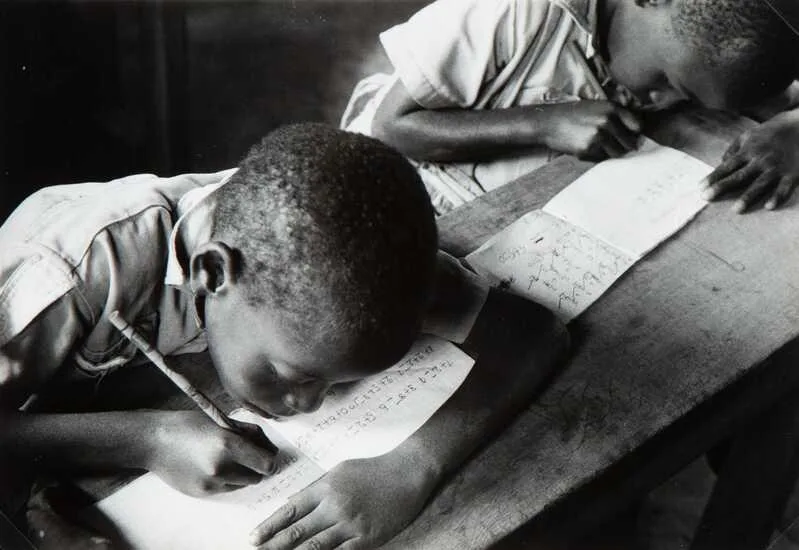
Setting: Cape Coast, Central Region, Ghana / Accra, Greater Accra Region
Date: 10 September 2018
Adisa woke before her alarm.
The phone call from the previous night was still in her mind.
You like asking questions.
She dressed quietly for school and slipped her notebook into her bag.
Before leaving, she wrote
one sentence on the last page:
Why was Kojo still on the payment list?
At breakfast, Adisa showed the sentence to Uncle Martey.
“Do you think asking too many questions can be dangerous?”
Uncle Martey looked at her carefully.
“Then why do adults keep telling children to ask questions?”
“Because good questions can uncover bad things.”
Adisa thought about that.
“Then I think I will keep asking.”
Uncle Martey laughed softly.
“Just be careful where you ask them.”
*THE CALL FROM ACCRA*
Later that morning, while Adisa was at school, Uncle Martey’s phone rang.
It was Professor Henderson.
“Martey, I found something.”
Uncle Martey sat down.
“I went through Daniel’s old records again.”
“There is another name.”
“His name is Kofi Asare.”
Uncle Martey frowned.
“A former pupil in Cape Coast. He disappeared in 2015.”
Uncle Martey’s expression changed.
“I have the school records and his photograph.”
Within seconds, the photograph arrived on Uncle Martey’s phone.
A smiling ten-year-old boy stood beside a classroom.
Uncle Martey stared at the picture.
There was something strangely familiar about the photograph.
Henderson called again.
“Look beside Kofi’s name.”
Uncle Martey enlarged the photograph.
There was a small black circle.
“The mark,” he said.
“The same one found on six other files.”
Uncle Martey was silent.
“How many children?”
“And all disappeared?”
“According to the records.”
Uncle Martey shook his head.
“Children don’t simply disappear from records.”
“That is why I’m calling you.”
That afternoon, Adisa returned from school.
She dropped her bag on the chair.
“Do you remember the boy I told you about?”
“I think I saw another boy like him.”
Uncle Martey looked up.
“I don’t know if it was him. I only saw the photograph you showed me.”
“There was something about his eyes.”
Uncle Martey became serious.
“Adisa, don’t guess.”
“And don’t start asking people about him.”
“Because we don’t know who is involved.”
“Uncle, if somebody is missing, shouldn’t somebody look for them?”
Uncle Martey looked at her.
“Then why didn’t they?”
That evening, Henderson called again.
“I found something else.”
Uncle Martey answered immediately.
“Kofi wasn’t the beginning.”
Uncle Martey’s voice became quieter.
“Who was before him?”
Henderson hesitated.
“An eight-year-old boy.”
Uncle Martey wrote the name down.
“When did he disappear?”
Uncle Martey looked towards Adisa’s schoolbag lying on the chair.
“What happened to him?”
“He disappeared from the school records.”
Uncle Martey closed his eyes.
That night, Adisa was doing her homework when her phone vibrated.
*STOP ASKING ABOUT* *KOJO* .
Her heart began to beat faster.
She immediately went to Uncle Martey’s room.
She handed him the phone.
He read the message.
His expression hardened.
“Did you give anyone your number?”
“Did anyone at school ask about you?”
He looked at the message again.
Then his phone rang.
“I think they know.”
“That we’ve found the first name.”
Uncle Martey looked at Adisa.
Then Henderson said:
“Martey, whatever you do, keep Adisa away from this investigation.”
Uncle Martey looked at his niece.
“That may already be too late.”
In Accra, Henderson opened the old file again.
At the bottom of Kwame Mensah’s record was a handwritten sentence:
THE SYSTEM DID NOT BEGIN WITH KOJO.
Below it was another line:
FIND THE FIRST CHILD.
Henderson stared at the words.
Then he took a photograph and sent it to Uncle Martey.
Uncle Martey’s phone beeped.
He opened the photograph.
Adisa stood beside him.
Uncle Martey hesitated.
Then he read it aloud.
“Find the first child.”
Adisa looked at him.
“Then we should find him.”
Uncle Martey smiled faintly.
She returned to her homework.
But Uncle Martey remained standing.
Because he had just realised something.
The investigation was no longer only about missing money.
It was about missing children.
And someone in Accra was frightened that the first name had finally been found.
Thanks for reading.
Havillah Consultants
08082026
*Disclaimer*
———————-
The Currency of Conscience is a work of fiction. The characters, dialogue, investigative team, documents, events and narrative connections are fictional or fictionalised for literary purposes. The story may draw thematic inspiration from publicly reported issues concerning public-sector accountability, school feeding and the management of public funds. References to real institutions, public figures, reports or allegations, where applicable, should not be interpreted as assertions of criminal conduct. Allegations remain allegations unless established by a competent court. The purpose of this series is to encourage reflection on integrity, accountability and the human cost of corruption.