GOLDBOD proposes ‘Involve, Protect, Expand’ model to transform mining communities
The Ghana Gold Board (GOLDBOD) has proposed a new framework aimed at giving mining communities and young people a greater stake in the country’s mineral wealth, as it seeks to strengthen the social licence for mining. GOLDBOD Chief Executive Officer Sammy Gyamfi made the proposal on Tuesday, 18 August, at the National...
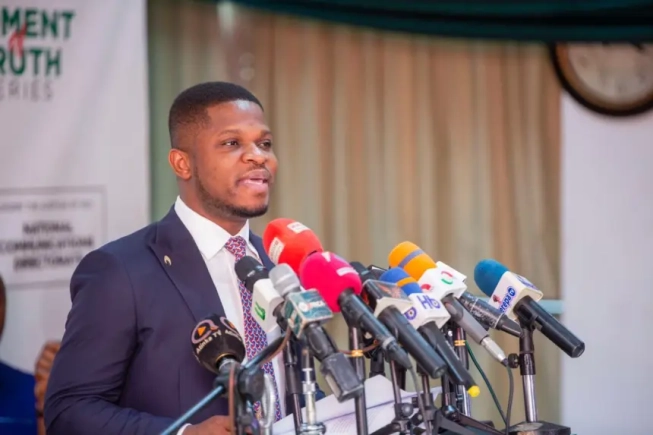
The Ghana Gold Board (GOLDBOD) has proposed a new framework aimed at giving mining communities and young people a greater stake in the country’s mineral wealth, as it seeks to strengthen the social licence for mining.
GOLDBOD Chief Executive Officer Sammy Gyamfi made the proposal on Tuesday, 18 August, at the National Mining Dialogue in Accra, held under the theme “Rethinking the Social Licence to Operate”.
Gyamfi said Ghana could no longer continue extracting gold from mining communities without ensuring that the wealth generated translated into jobs, infrastructure, enterprise and improved living conditions.
“The social licence to operate is built not only on legal authority, but on the confidence that mineral wealth serves both the national interest and host communities,” he said.
He argued that mining communities should be treated as development partners rather than simply as sources of land and mineral resources.
Gyamfi proposed an “IPE” model — Involve, Protect and Expand — as a framework for reshaping Ghana’s mining sector.
Under the “Involve” pillar, he called for mining communities to have a meaningful role in decisions affecting them, greater access to mining-related opportunities and stronger pathways for young people to participate in the sector.
He also advocated higher and more decentralised retention of mining royalties, clearer commitments by mining companies to local jobs and businesses, and greater Ghanaian ownership across the mining value chain.
“Production without ownership is limited. Production without value addition is leakage. Production without community transformation is a broken social contract,” he said.
The “Protect” component, he said, should focus on safeguarding water bodies, forests, farmlands and public health while strengthening reclamation and reforestation.
He also called for greater formalisation and traceability in artisanal and small-scale mining and prosecution of operators who breach environmental and mining laws.
Under “Expand”, Mr Gyamfi said Ghana should increase indigenous participation in exploration, production and mining services while expanding local refining, jewellery manufacturing and other downstream industries.
Gyamfi said GOLDBOD had already begun implementing measures intended to increase Ghanaian participation in the gold economy.
He said the institution had facilitated the formal export of about 170 tonnes of artisanal and small-scale mining gold since 2025, generating more than $17 billion in foreign exchange.
He also said nearly nine tonnes of gold aggregated by GoldBod had been refined locally this year, describing the development as a step towards retaining more value within Ghana.
GoldBod, he added, was planning to establish a Ghana Gold Village in partnership with the private sector to support jewellery manufacturing, gold fabrication, skills development and access to international markets.
The institution is also preparing to introduce a gold tokenisation programme in 2027, which Mr Gyamfi said would allow citizens and other Africans to participate in gold-backed investment opportunities.
Gyamfi said GoldBod was also supporting government efforts to combat illegal mining and protect the environment.
He said the institution had previously donated vehicles and GH¢5 million to the National Anti-Illegal Mining Operations Secretariat and was procuring high-specification speed boats to strengthen operations around water bodies.
GOLDBOD also plans to launch an Artisanal and Small-Scale Mining Formalisation and Financing Support Programme in 2027.
The programme is expected to support miners with regulatory compliance, capacity building, concession viability assessments, equipment financing and mining services.
Gyamfi said a technology-driven traceability system was also being procured to strengthen responsible sourcing and make illegal and irresponsible mining less attractive.
GOLDBOD has further commenced reclamation of 50 hectares of degraded land in the Tano Nimri Forest Reserve, with plans to expand the programme to another 100 hectares next year.
The institution is also funding the rehabilitation of three Ghana Water Limited treatment plants affected by poor water quality associated with irresponsible mining.
Gyamfi said Ghana’s gold resources should play a bigger role in building local industries and strengthening the economy.
He cited 2025 data showing gold accounted for about 63 percent of Ghana’s total merchandise export earnings, generating approximately $20.2 billion out of total exports of about $32 billion.
He also said artisanal and small-scale miners produced about 3.11 million ounces of gold in 2025, representing 52.4 percent of national production.
“Gold is both a strategic asset and a moral responsibility. It must stabilise the economy, but it must also transform the communities from which it comes,” he said.
GOLDBOD is also working with the Ghana Geological Survey Authority to conduct geological studies at Funsi in the Upper West Region and Bensere in the Ashanti Region.
Gyamfi said the studies were intended to identify viable mineral deposits, reduce investment risks and create opportunities for stronger Ghanaian participation in future mining projects.
GOLDBOD also plans to begin construction of an ISO-certified National Assay Laboratory at the Aviance Cargo Village near the Accra International Airport by November 2026.
The facility is expected to strengthen gold testing, improve purity assessment and address concerns over under-declaration of mining revenues.
Gyamfi said the broader objective was to ensure that Ghana moved beyond extracting gold to retaining more value from its mineral resources.
“If we get this right, Ghana will not only produce gold. Ghana will produce prosperous mining towns, strategic industries around its minerals and deeper community trust,” he said.