“We cannot continue to be spectators” – GOLDBOD CEO calls for indigenous mining ownership
The Ghana Gold Board (GOLDBOD) says Ghana must move beyond simply extracting gold and ensure that local communities and businesses capture a larger share of the wealth generated from the country’s mineral resources. GOLDBOD Chief Executive Officer Sammy Gyamfi made the call on Tuesday, 18 August, at the National Mining...
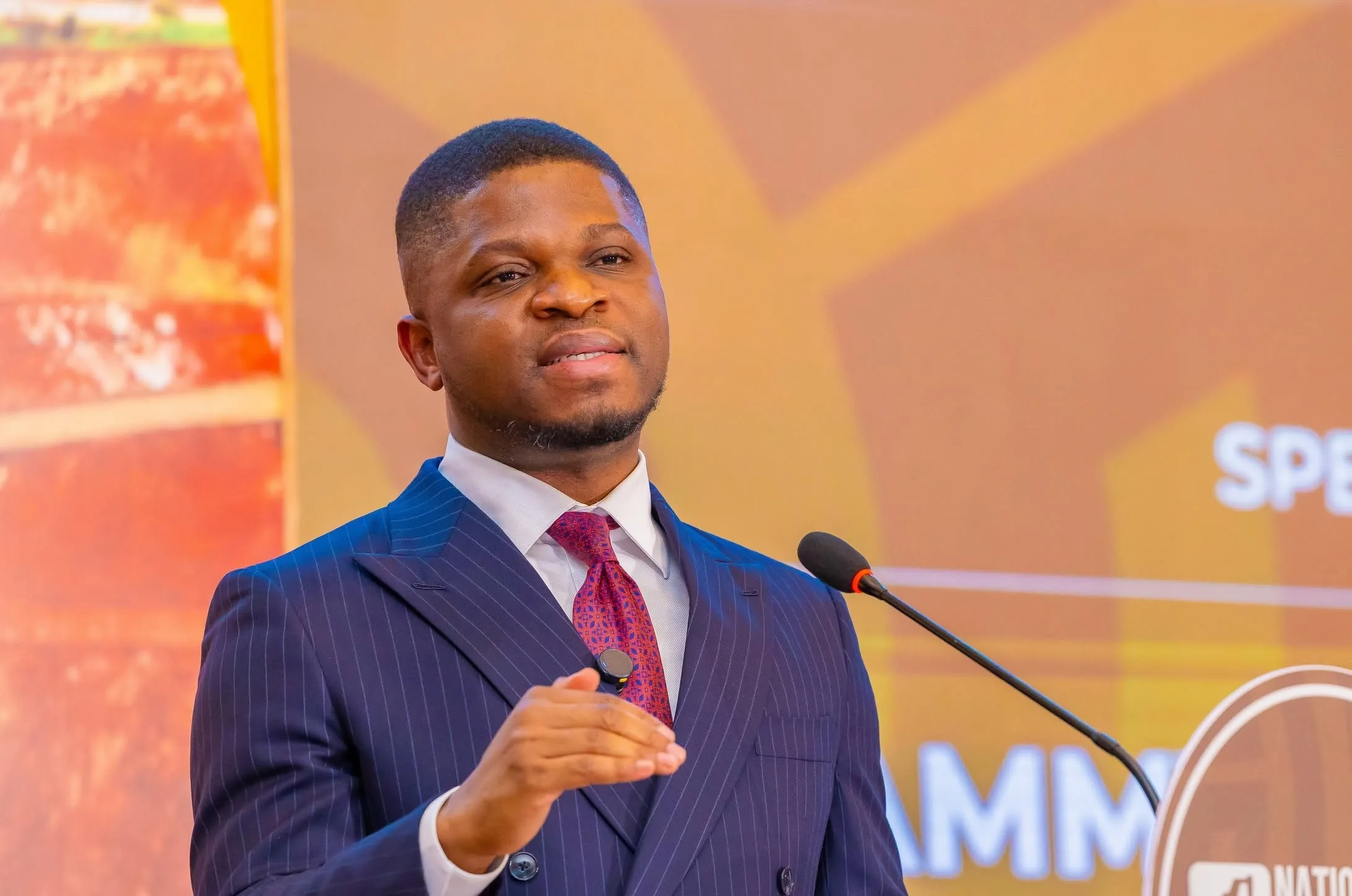
The Ghana Gold Board (GOLDBOD) says Ghana must move beyond simply extracting gold and ensure that local communities and businesses capture a larger share of the wealth generated from the country’s mineral resources.
GOLDBOD Chief Executive Officer Sammy Gyamfi made the call on Tuesday, 18 August, at the National Mining Dialogue in Accra, arguing that more than a century of gold production had not translated into sufficient economic transformation for many mining communities.
He said Ghanaian participation in the mining industry must extend beyond employment to include ownership, production, services, refining and downstream businesses.
“For most of this long history, Ghanaians have not been the real value owners of the mines,” Mr Gyamfi said.
He argued that foreign ownership, imported inputs, offshore services and limited local processing had allowed too much of the value generated by Ghana’s gold to leave the country.
“Production without ownership is limited. Production without value addition is leakage. Production without community transformation is a broken social contract,” he said.
Gyamfi cited Obuasi as an example of the gap between mineral wealth and local development, questioning why a community that had hosted gold mining for generations had not achieved the level of industrial and economic development associated with major mining centres elsewhere.
He said the answer was deliberate policy rather than extraction alone.
“Mines do not build nations by accident. Nations build value through deliberate ownership, strategic partnerships, infrastructure, linkages, reinvestment and disciplined policy management,” he said.
Gyamfi said GOLDBOD was seeking to change the structure of Ghana’s gold economy by increasing local participation and retaining more value domestically.
He said the institution was promoting local refining, gold trading and downstream industries, including jewellery manufacturing.
According to him, nearly nine tonnes of gold aggregated by GOLDBOD had been refined in Ghana in 2026, compared with the country’s previous reliance on overseas refining.
GOLDBOD is also planning a Ghana Gold Village in partnership with the private sector to support jewellery manufacturing, gold fabrication, skills development and access to international markets.
Gyamfi said the institution planned to introduce a gold tokenisation programme in 2027, which would create opportunities for citizens and other Africans to participate in gold-backed investments.
The GOLDBOD CEO said young people in mining communities should be at the centre of efforts to secure the industry’s future.
He said communities often watched mineral wealth leave their areas while young people struggled to find decent jobs and opportunities.
“A social licence cannot survive where the youth believe mining has no place for them except as casual laborers and bystanders,” he said.
He proposed stronger pathways for young people to enter mining-related businesses, including transport, equipment maintenance, environmental services, logistics, agriculture, housing and other support industries.
He also called for mining companies to make clearer commitments to local employment, enterprise development and infrastructure.
Gyamfi said GOLDBOD’s approach would be guided by an “IPE” framework — Involve, Protect and Expand.
The “Involve” component would give mining communities a greater role in decisions affecting them and promote increased Ghanaian ownership across the mining value chain.
“Mining communities must be recognised not as land donors, but as economic shareholders in the wealth they host,” he said.
The “Protect” component focuses on environmental safeguards, reclamation, responsible mining and stronger enforcement against illegal operators.
Under “Expand”, GOLDBOD wants to increase indigenous participation in exploration, production, refining and downstream industries.
Gyamfi said GOLDBOD was also working with the Ghana Geological Survey Authority to identify mineralised areas and reduce the risks associated with geological exploration.
He said Ghana’s growing dependence on gold for export earnings made it necessary to manage the resource as both an economic asset and a national responsibility.
Gold accounted for about $20.2 billion, or 63.1 percent, of Ghana’s approximately $32 billion in merchandise exports in 2025, according to figures cited in his address.
Artisanal and small-scale miners accounted for about 3.11 million ounces, or 52.4 percent, of Ghana’s estimated 5.94 million ounces of gold production that year.
Gyamfi said the figures demonstrated the importance of ensuring that Ghanaian miners were integrated into a formal and productive value chain.
“The objective is not simply to produce more gold. It is to ensure that every ounce of gold produced in Ghana creates greater value for Ghana,” he said.
He said the long-term goal was to transform mining communities into centres of industry and opportunity rather than areas where mineral wealth was extracted without corresponding development.
“If we get this right, Ghana will not only produce gold. Ghana will produce prosperous mining towns, strategic industries around its minerals and deeper community trust,” he said.