Dr Akoriyea advocates effective collaboration to improve public health emergencies
The Director-General of the Ghana Health Service, Dr Samuel Kaba Akoriyea, has called for stronger collaboration among state institutions and other stakeholders to improve the country’s preparedness and response to public health emergencies. He said the country’s ability to protect its population during emergencies dep...
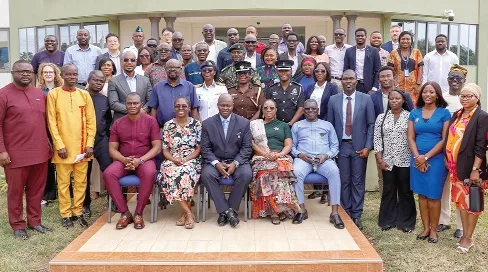
The Director-General of the Ghana Health Service, Dr Samuel Kaba Akoriyea, has called for stronger collaboration among state institutions and other stakeholders to improve the country’s preparedness and response to public health emergencies.
He said the country’s ability to protect its population during emergencies depended on effective coordination, timely information sharing and clearly defined responsibilities among institutions.
Dr Akoriyea, who was speaking when institutional leaders from various ministries, departments and agencies visited the National Public Health Emergency Operations Centre (PHEOC) at Pantang in the Greater Accra Region, said no single institution could successfully manage a major public health emergency in isolation.
He, therefore, urged stakeholders to work together to keep the national PHEOC active and responsive.
The meeting was part of efforts to strengthen connected leadership and multisector collaboration in public health emergency preparedness and response.
Dr Akoriyea said the establishment and development of the PHEOC had been the result of years of efforts to build a coordinated emergency management system in the country.
He said lessons from past emergencies showed that institutional rivalry and unclear responsibilities could undermine efforts to manage public health threats effectively.
“We cannot do this alone.
We need your help. It is not for one of us, it is for all of us,” he stressed and said support for the PHEOC should not only be viewed in terms of financial resources, but should also include ideas, experiences, technical assistance and lessons from other countries.
Dr Akoriyea said the country had made progress in using the PHEOC to anticipate and respond to health threats, citing the recent meningitis season and the response to floods.
He said the country had reached the threshold for a meningitis outbreak, but proactive surveillance and preparedness had enabled the health system to respond before the situation escalated.
He also said the country had, despite the floods, recorded no case of cholera following the response mounted after the disaster.
He said keeping the PHEOC active at all times was essential to ensuring that the country was prepared for outbreaks and other emergencies.
The Health Emergencies Team Lead of the World Health Organisation (WHO), Dr Sally-Ann Ohene, said the PHEOC had become a core component of the country’s health emergency management system.
She said the centre had been supported over the years through technical assistance from partners, including the WHO, and had already demonstrated its usefulness during the Marburg outbreak.
Dr Ohene said the systems established at the centre had contributed to containing the Marburg outbreak within two months.
She, however, called for further strengthening of the incident management system to improve the effectiveness of the PHEOC.
“We need to strengthen the incident management system, and I believe the EOC now speaks to that.
That will really strengthen the core foundation of the function of the EOC,” she added.