PIAC at 15: Govt to widen resource governance oversight
The government is pushing for the expansion of Ghana’s resource governance framework beyond petroleum because the country’s resource landscape is evolving, with growing opportunities and risks in the wider extractive sector, including critical minerals and the global energy transition. The proposed intervention is cruc...
The government is pushing for the expansion of Ghana’s resource governance framework beyond petroleum because the country’s resource landscape is evolving, with growing opportunities and risks in the wider extractive sector, including critical minerals and the global energy transition.
The proposed intervention is crucial to ensure that resource revenues are managed transparently and translated into tangible development outcomes such as roads, schools, hospitals and decent jobs, while promoting environmental sustainability and local content development.
Speaking at the 15th anniversary launch of the Public Interest and Accountability Committee (PIAC) in Accra last Wednesday, the Presidential Advisor on the National Anti-Corruption Programme, Prof. Francis Dodoo, said governance systems must evolve alongside the country’s changing resource opportunities.
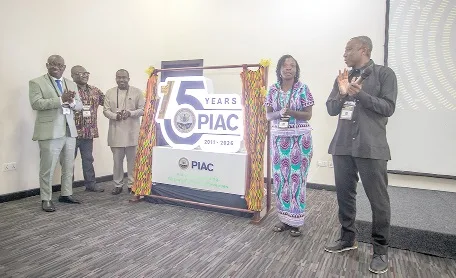
PIAC launched its 15th anniversary celebration to take stock of its contribution to transparency and accountability in Ghana’s petroleum revenue management since its establishment in September 2011.
Established under the Petroleum Revenue Management Act, 2011 (Act 815), PIAC is mandated to monitor compliance with the law, facilitate public debate and provide independent assessments on the management and use of petroleum revenues.
The anniversary will be celebrated on the theme, “Advancing resource governance through transparency and accountability for sustainable development.”
Activities lined up for the anniversary celebration include increased public and district-level engagements, a homecoming event for past PIAC members, media and social media campaigns, policy workshops and the publication of policy documents.
The presidential advisor who was the guest speaker, urged PIAC to broaden its oversight from petroleum revenue management to the wider extractive sector and strengthen its use of data, citizen engagement and transparency mechanisms to ensure natural resource wealth benefited both present and future generations.
Prof. Dodoo said the expanded mandate should include scrutiny of how resource revenues were translated into roads, schools, hospitals and decent jobs for Ghanaians, and stressed that stronger oversight institutions would not weaken the government but would build public confidence, improve policy outcomes and reinforce democratic accountability.
The Chairman of the Parliamentary Select Committee on Finance, Isaac Adongo, commended PIAC for its contribution to transparency, accountability and responsible management of Ghana’s petroleum resources over the past 15 years.
He said PIAC had played a critical role in strengthening public financial management by challenging government institutions to account for petroleum revenues and demonstrating value for money in the use of public resources.
Mr Adongo said the committee’s persistence and independent oversight had helped prevent potential mismanagement and strengthened public confidence in the management of the country’s oil revenues.
PIAC’s early years were focused on developing standard operating procedures, asserting its independent mandate and overcoming significant operational challenges as it established itself as a credible oversight institution.
He explained that PIAC had, over the 15 years, evolved from a basic reporting committee into an assertive and credible oversight body that contributed to national policy, with its next phase requiring stronger financial independence, enforcement of its recommendations and the mobilisation of new petroleum revenue sources.
“Transparency alone is not enough; meaningful citizen engagement drives change.
Investments must avoid being thinly spread, inter-generational equity requires strong safeguards, reliable data is essential for effective monitoring, and PIAC’s financial independence is critical to fulfilling its mandate," he said.
The Chair of PIAC, Richard Ellimah, said PIAC’s next phase must focus on strengthening its institutional independence and ensuring that petroleum revenues are managed in a manner that delivers sustainable benefits to Ghanaians.
He called on the government and other stakeholders to provide the necessary support for the committee to effectively discharge its statutory mandate and deepen accountability in the petroleum sector.