Remain moral voice in national affairs - President Mahama tells PCG
President John Dramani Mahama has urged the Presbyterian Church of Ghana (PCG) to remain a firm and fearless moral voice in national affairs, calling on the church to “speak with courage and consistency” as Ghana navigates social, economic and political challenges. He said the PCG, as an active member of the church in...
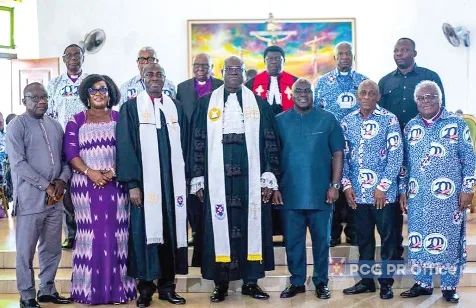
President John Dramani Mahama has urged the Presbyterian Church of Ghana (PCG) to remain a firm and fearless moral voice in national affairs, calling on the church to “speak with courage and consistency” as Ghana navigates social, economic and political challenges.
He said the PCG, as an active member of the church in Ghana, had been the voice of conscience and held the moral compass on all issues that affected national development, a role that had contributed to the steady development of the country.
Addressing the 26th General Assembly of the PCG at the Ramseyer Congregation, Abetifi–Kwahu, President Mahama encouraged the PCG to maintain its prophetic voice, insisting that it must comfort the afflicted, challenge the comfortable and resist injustice, whether committed by friends or opponents.
In a speech read on his behalf by the Chief of Staff, Dr Julius Debrah, the President reminded the PCG of its role, stressing, “Power is temporary; our account before God is permanent.”
The President praised the PCG for sustaining a united, disciplined and mission-focused church for nearly two centuries, describing it as “an extraordinary achievement.”
He also described as valuable the PCG’s long-standing contributions to national development through evangelism, education, health care, agriculture, publishing and social services, acknowledging the sacrifices of missionaries, teachers, nurses, ministers and lay members who built institutions that continue to serve Ghana today.
Speaking on the theme, President Mahama reminded the church that every generation received unfinished work and history would judge whether the foundation laid on Christ was strengthened with integrity, courage and service, reminding the church that heritage was both a gift and a responsibility, something preserved, improved and faithfully handed over to the next generation.
Conveying the President’s message on national issues, Dr Debrah said it was important for the government’s policies to translate into “food on the table, healing in the hospital, productivity on the farm and stability in the economy.”
He also called for collective action against environmental degradation, describing responsible mining as a moral duty.
“Water is not partisan.
A poisoned river does not ask how a community voted,” he said.
The President acknowledged the church’s concerns about flooding, LGBTQ+, rising indiscipline in senior high schools and the need for mechanised agriculture.
He gave the assurance that the government was addressing those issues, including ongoing work on the Afram Plains bridge to improve access to one of Ghana’s major food baskets.
President Mahama stressed the urgent need to support young people, many of whom face unemployment, uncertainty and social risks such as drugs, gambling, cybercrime and dangerous migration.
He invited the church to deepen its work in technical education, entrepreneurship, counselling, addiction prevention and mental health, urging congregations to become places where young people find salvation for the soul and direction for life.
The Moderator of the General Assembly, Rt Rev. Dr Abraham Nana Opare Kwakye, in his address, expressed concern about the growing culture of insults and disrespect in national discourse, calling for a return to responsibility, respect and decorum in public speech.
He also on behalf of the church, raised concern about rising incidents of violence, sexual assault and attacks on teachers in senior high schools, advocating a concerted effort from parents, schools and duty bearers to find solutions to curb these incidents, help instil discipline not only in them today, but also for the benefit of the nation in the future, given that the youth were the future leaders.