The name game: Why first names, titles and respect are dividing opinions
A brief exchange between Nigerian billionaire businessman and UBA Group Chairman, Tony Elumelu, and a young woman has sparked a lively debate on social media about respect, titles, culture and the changing way younger people interact with older generations. The incident happened during the Graduate Management Accelerat...
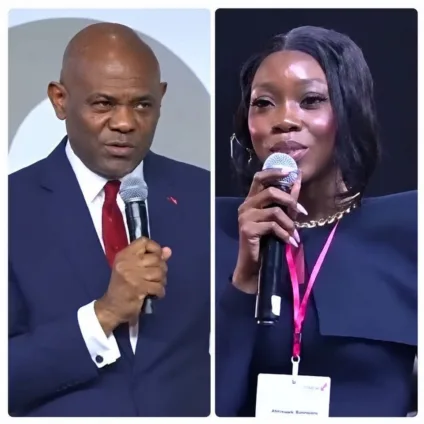
A brief exchange between Nigerian billionaire businessman and UBA Group Chairman, Tony Elumelu, and a young woman has sparked a lively debate on social media about respect, titles, culture and the changing way younger people interact with older generations.
The incident happened during the Graduate Management Accelerated Programme graduation ceremony organised by UBA, where a young lady addressed the businessman by his first name.
“Good morning, Tony,” she said.
Mr Elumelu, who appeared surprised by the address, initially responded, “Toyin? Toyin?”
After she clarified that she had said “Tony”, he quickly corrected her.
“Okay. No, you won’t call me Tony. You’ll call me Mr Elumelu or TOE. You won’t call me Tony, or Chairman. I don’t subscribe to that kind of Oyinbo life, okay?” he said.
The young woman immediately corrected herself.
“Good morning, Mr Elumelu,” she said before continuing with her question.
The short exchange has since gone viral, with social media users divided over whether the young woman was being disrespectful or simply following the more informal corporate culture that has become common in many workplaces.
But is calling an elder by their first name disrespectful?
For many Africans, especially those raised in traditional homes, the answer may seem obvious.
Growing up, many of us were taught that respect is not only shown through our actions but also through the way we address people.
If someone is older than you and you do not know their name, you are likely to hear, “Auntie” or “Uncle” before you even get to know them properly.
And when the person holds a position, the title often comes with the territory.
You say “Mr”, “Madam”, “Doctor”, “Professor”, “Chief”, “Chairman” or whatever title the person is known by.
It is simply how many of us were brought up.
So, when someone who is much older or holds a senior position tells you, “Don’t call me by my first name,” many Africans may not see it as a big deal.
You simply adjust and move on.
Then comes Gen Z and the ‘first-name basis’ culture
But things are changing.
In many modern workplaces, especially multinational companies and corporate organisations, employees are encouraged to communicate more casually.
The CEO can be “John”.
The manager can be “Ama”.
The boss can even tell you, “Please, just call me by my name.”
And that does not necessarily mean there is no respect.
It simply means that is the culture the organisation has adopted.
That may explain why some people believe the young woman may not necessarily have intended to disrespect Mr Elumelu.
She could simply have been operating within the increasingly common corporate culture where senior executives and younger employees interact on a first-name basis.
‘Not everyone subscribes to that Oyinbo life’
But Mr Elumelu’s response has also reminded many people that not everyone subscribes to that style of interaction.
For some people, titles are important.
And there is nothing wrong with that.
A person may have spent years building a career, earning a professional title or rising through an organisation, and may genuinely appreciate being addressed by that title.
Take academia, for example.
For some professors, being addressed as “Professor” is not just about showing off a title.
It represents years of study, research, sacrifice and hard work.
So forgetting or refusing to use the title may feel disrespectful to them.
The same applies to traditional leaders, religious leaders, senior professionals and others who place importance on how they are addressed.
But does first name automatically mean disrespect?
Not necessarily.
That is where the conversation gets interesting.
Calling someone by their first name can be disrespectful in one setting and completely normal in another.
It depends on the person, the relationship and, importantly, the culture of the environment.
In some workplaces, calling the CEO by his first name is completely acceptable.
In others, you may be expected to say “Mr CEO”, “Sir” or use the person’s professional title.
For instance, some employees may call their CEO by his first name every day, and the CEO may respond happily.
That does not mean the employees have no respect for him.
It simply means that is the relationship and workplace culture they have agreed to.
But take that same CEO to a formal traditional or corporate event, and the way you address him may need to change.
Know the room
Perhaps that is the biggest lesson from the Tony Elumelu moment.
Know the room.
Know the person.
Know the occasion.
And, most importantly, know how that person wants to be addressed.
If someone tells you, “Please don’t call me by my first name. Call me Mr Elumelu,” there is really no need to argue.
Just say, “Mr Elumelu,” and continue.
After all, respect is not about winning an argument over a name.
What social media users are saying
The incident has generated plenty of reactions online, with some users siding with Mr Elumelu and others defending the young woman.
One social media user argued that the issue was less about Mr Elumelu being a billionaire and more about understanding the setting.
The user said addressing someone formally at an event where they are acting in their official capacity is different from having a casual conversation with someone you know personally.
Another user argued that even in Western societies, where first-name interactions are common, people still understand when a formal title is appropriate.
But others came to the young woman’s defence, pointing out that modern corporate culture often encourages employees to address senior executives by their first names.
One user noted that many corporate organisations deliberately create an informal environment where titles are played down to make employees feel more comfortable around senior management.
And that is probably why this particular exchange has struck a nerve.
It is not simply about Tony versus Mr Elumelu.
It is about two different ideas of respect meeting in one room.
One side says: “Respect your elders and their titles.”
The other says: “Respect does not always have to come with a title.”
Both arguments have their place.
A clash of cultures?
Perhaps Mr Elumelu was right.
Perhaps the young lady was also simply following what she has been taught in the corporate world.
Maybe neither side was entirely wrong.
African culture has traditionally placed a strong emphasis on age, hierarchy and titles, while modern corporate culture is increasingly moving towards informality and first-name relationships.
And as Gen Z enters the workplace, these two worlds are bound to collide from time to time.
So, before you confidently walk into a formal event and say, “Good morning, Tony!”, perhaps take a second to read the room.
Because as Mr Elumelu has reminded us:
Not everybody subscribes to that Oyinbo life.
ALSO:
I don’t subscribe to Oyinbo life, Nigeria’s Elumelu schools lady for calling him by first name [Watch]
Deputy Education Minister slams BOGISS authorities over handling of assault case