Musah Superior Slams Krobea Asante Over NPP Election Claims, Defends John Boadu’s Record
Musah Superior has accused George Krobea Asante of attempting to rewrite the party’s electoral history, rejecting claims that Boakye Agyarko deserves credit for the NPP’s 2016 parliamentary success while John Boadu should be blamed for the party’s loss of seats in 2020.
12h ago·4 min read
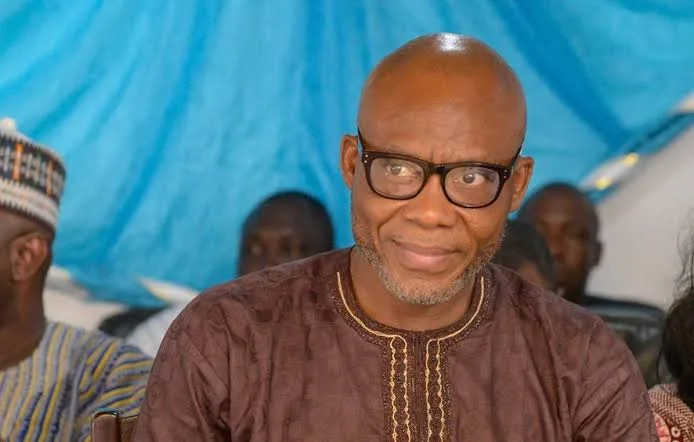
Musah Superior has launched a strong defence of former New Patriotic Party (NPP) General Secretary John Boadu, describing claims about his role in the party’s 2020 parliamentary losses as “shameless falsehood” and “convenient revisionism”.
In a statement ahead of the NPP’s October 3 congress, Superior took aim at George Krobea Asante over arguments concerning the respective roles played by John Boadu and former Energy Minister Boakye Agyarko in the party’s electoral fortunes.
According to Superior, Krobea Asante had sought to credit Agyarko with the NPP’s parliamentary performance in the 2016 general election while holding Boadu responsible for the reduction in the party’s parliamentary seats four years later.
Superior rejected that interpretation, arguing that it misrepresented the responsibilities assigned to the two men during the 2016 campaign.
The NPP won 169 parliamentary seats in the 2016 elections, alongside Nana Addo Dankwa Akufo-Addo’s victory in the presidential race.
Superior said that while Agyarko played an important role as a policy adviser to then-presidential candidate Akufo-Addo, John Boadu occupied positions that placed him more directly at the centre of the party’s electoral operations.
He noted that Boadu was acting General Secretary and National Organiser and also headed operations, while Peter Mac Manu served as campaign manager.
“Boakye Agyarko’s contribution was undoubtedly important, particularly on policy, but to suggest that his role meant he personally ‘won’ the NPP its parliamentary seats is to confuse Agyarko's auxiliary role as a policy advisor with campaign management and electoral operations,” Superior argued.
He maintained that winning parliamentary elections depended heavily on constituency organisation, mobilisation, logistics, polling-station coordination and other campaign operations, which he said were areas that fell within Boadu’s responsibilities.
Superior further argued that Boadu continued to play a central operational role in the 2020 campaign, serving as General Secretary and heading campaign logistics and operations.
The NPP's parliamentary representation dropped substantially after the 2020 election, leaving the party and the National Democratic Congress (NDC) with 137 seats each before subsequent developments in the House.
Superior, however, rejected attempts to place responsibility for that decline solely on Boadu.
He pointed out that the NPP nevertheless retained the presidency in 2020, with Akufo-Addo securing a second term, despite an election conducted amid the COVID-19 pandemic.
“If the argument is that Boadu alone should be blamed for the 2020 decline, then the argument becomes stupider and more difficult to sustain,” he said.
NPP's 2024 defeat
Superior used the NPP's performance in the 2024 general election as the centrepiece of his defence of Boadu.
He argued that the party suffered a considerably more severe electoral setback after Boadu had left office as General Secretary.
The NPP went into opposition following the 2024 elections, suffering heavy losses in both the presidential and parliamentary contests.
Superior cited the party's fall from 137 parliamentary seats following the 2020 election to 88 seats in 2024. He also pointed to the decline in the party's presidential vote, contrasting Akufo-Addo's performance in 2020 with that of Dr Mahamudu Bawumia in 2024.
According to him, the 2024 results undermine any attempt to make Boadu personally responsible for the party's loss of parliamentary seats in 2020.
“So, if Krobea Asante wants to attribute the 2020 parliamentary decline to John Boadu, he should also explain the far more dramatic 2024 parliamentary and presidential collapse, which occurred after John Boadu had left the General Secretaryship and was no longer responsible for campaign operations,” Superior stated.
Bawumia dragged into dispute
Superior also criticised Krobea Asante's treatment of former Vice-President Dr Mahamudu Bawumia in his account of the party's electoral history.
He accused Krobea Asante of including Bawumia when discussing the NPP's 2016 electoral victory but excluding him from the narrative surrounding the party's 2020 success.
Superior described that approach as “completely nonsensical” and warned that it could unnecessarily expose the former Vice-President to political attacks.
He further sought to connect the argument to previous disagreements over Bawumia's place within the NPP's Danquah-Busia-Dombo tradition, accusing the opposing camp of treating Bawumia as an “outsider”.
The comments come amid intensifying internal campaigning ahead of the NPP's October 3 congress, with competing camps increasingly debating the records of leading party figures and their contributions to past electoral victories and defeats.
Superior urged delegates to judge the contenders based on their actual responsibilities and records rather than competing interpretations of the party's history.
“Ahead of the October 3rd Congress, the debate should be about records, responsibilities, and results; not convenient revisionism,” he said.
“The NPP people (delegates) are not idiots to swallow anything hook, line and sinker. They know the electoral records of the NPP and the ‘combatants’ who led us to achieve the victories of 2016 and 2020.”
Superior concluded by throwing his weight behind the former General Secretary, declaring: “John Boadu remains our strongest foot for 2028.”