Why Uche Montana's Monica Is Forcing a Conversation Nollywood Can’t Ignore
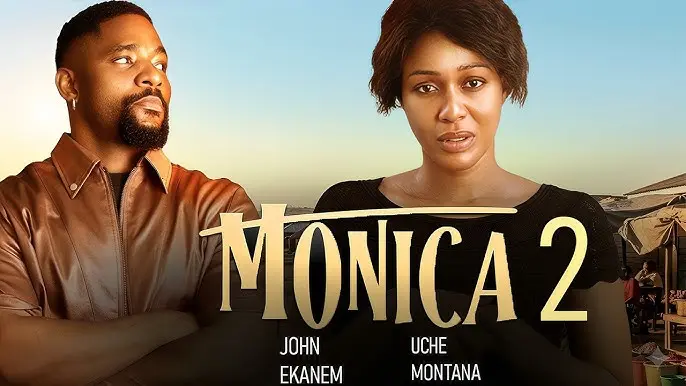
A viral Nollywood hit has sparked outrage after its emotional story of sacrifice ends without consequences for those who wronged her, leaving audiences demanding justice in a Part 2.

Isaac Clad
View author profile Mar 23·1.2Kviews·4 min read
Analysis
The views expressed in this analysis article are those of the author and do not necessarily reflect the views, editorial policy, or position of Dailyaccra.com, its editors, or its management.
In just two weeks, Monica, a film by Uche Montana, has crossed an astonishing 11 million views on YouTube. That number alone is enough to make Nollywood pause—but it’s not just the views that matter. It’s what Monica represents.
For years, there has been an unspoken hierarchy in African filmmaking. “Serious” films—the ones with depth, emotional weight, and strong storytelling—go to cinemas, Netflix, or Amazon Prime Video. YouTube, on the other hand, has often been treated like a dumping ground for low-budget productions—predictable plots, exaggerated romance, and stories that recycle tired stereotypes.
But Monica disrupts that narrative completely.
And it’s not alone.
Filmmakers like Uche Jombo have also begun leaning into YouTube—not as a fallback, but as a primary distribution channel for quality storytelling. Interestingly, both leading this shift share the same first name. Coincidence? Maybe. Movement? Definitely.
At its core, Monica is not just a movie—it is an emotional reckoning.
Monica is the kind of character many Africans instantly recognize: the “good daughter,” the sacrificial one, the peacekeeper. She lives her life not for herself, but for everyone else—guided by a controlling mother and a passive father who never finds the courage to defend her.
From childhood, her path is dictated for her. While her siblings are prioritized, Monica is denied opportunities—her education sacrificed so resources can be redirected to others. Instead, she is pushed into learning a trade, told implicitly that her dreams matter less.
Then comes love—and its destruction.
She meets a man who genuinely wants to marry her. But her mother intervenes, convincing her that his intentions are not pure. Monica listens. She lets him go.
Years later, the same man returns from abroad—successful, wealthy, and ready to reclaim what he lost. But it’s too late. Her younger sister steps in and marries him instead.
And perhaps the most painful part?
The justification: “If you really loved him, you would have married him before he left.”
It’s a cruel rewriting of history—one that ignores the manipulation she endured.
Monica’s tragedy is not just bad luck—it is systemic.
She continues to give. Continues to sacrifice. Continues to believe that being good will eventually reward her.
Instead, it destroys her.
Her younger brother impregnates a woman but cannot afford the bride price. What happens next is almost unthinkable: he takes Monica’s entire savings—200,000 naira—to fund his marriage. Then, unbelievably, he and his new wife move into Monica’s room… and plot to push her out.
And they succeed.
Her parents do nothing.
No defense. No intervention. No justice.
This is not just storytelling—it’s a mirror reflecting uncomfortable truths about family dynamics, entitlement, and the silent suffering of the “responsible child.”
Just when you think the film might deliver justice, it takes an unexpected turn.
Monica’s redemption comes not through confrontation, but escape.
Her boss—who had traveled abroad—returns and takes her to Canada, helping her start a fashion school. It’s a hopeful ending for Monica herself, but it leaves a gaping emotional void:
No one who hurt her faces any consequences.
- Not the manipulative mother.
- Not the opportunistic sister.
- Not the exploitative brother and his wife.
- Not even the silent father.
And that is where the internet erupted.
Audiences are not just reacting—they are protesting.
Because storytelling, especially in film, is not just about realism. It’s about emotional resolution. It’s about justice—whether poetic, symbolic, or literal.
Yes, Uche Montana has said the story is based on real life. And in reality, many people never get closure. Many families never face consequences.
But this is where viewers draw the line: If reality denies justice, fiction should restore it.
The demand for a Part 2 is not just about entertainment—it’s about balance. Viewers want to see accountability. They want to see the system that failed Monica finally confront itself.
Because letting every antagonist walk away untouched feels less like realism—and more like injustice extended.
Beyond the story, Monica signals something bigger:
YouTube is no longer the “low-quality” platform.
It is becoming a democratized cinema, where powerful stories can reach millions instantly—without gatekeepers, without subscriptions, without barriers.
And if filmmakers like Uche Montana continue on this path, we may be witnessing a shift where:
- YouTube becomes a first-choice platform, not a last resort
- Quality storytelling meets mass accessibility
- African stories reach global audiences directly
Monica is more than a viral success. It is a cultural moment.
It forces us to ask hard questions about family, sacrifice, and the cost of being “good” in a world that often rewards the opposite.
But above all, it leaves us with one burning demand: Justice.
And until that justice is served, one thing is clear—the story of Monica is not over.