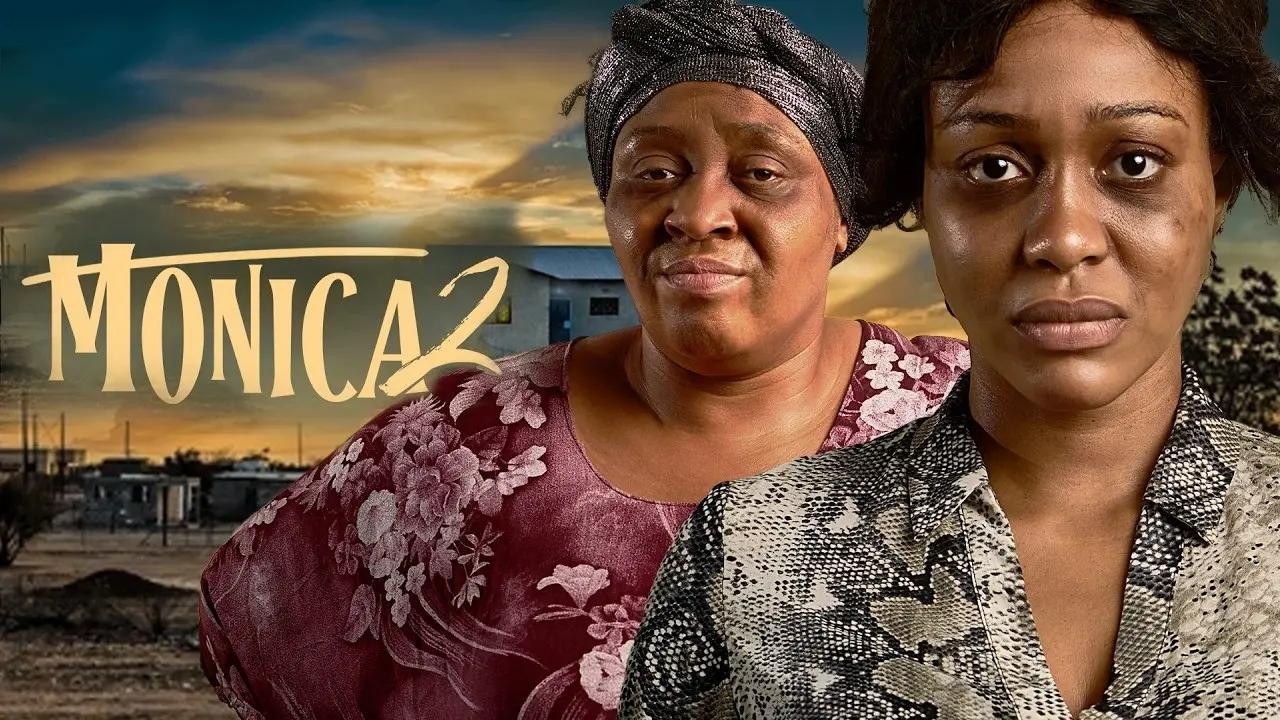
Monica 2: Uche Montana Turns a Familiar Family Drama into a Cultural Statement
An ordinary story has become one of Nollywood’s most talked-about movies of all time. Maybe I am exaggerating, or not.

Isaac Clad
View author profile May 6·314views·3 min read
Analysis
The views expressed in this analysis article are those of the author and do not necessarily reflect the views, editorial policy, or position of Dailyaccra.com, its editors, or its management.
Uche Montana has once again proven her unusual ability to create stories that sell—and not just commercially, but emotionally and culturally too. Her stories do not merely entertain; they provoke conversation, and force audiences to confront uncomfortable truths. With Monica, she did exactly that. And with Monica Part 2, she has raised the bar even higher.
At its core, Monica is an average story—one we have heard repeatedly. It is the story of the firstborn, the family’s silent backbone, the sacrificial lamb expected to give everything and ask for nothing. In Nigeria and Ghana, that story is painfully familiar. A woman gives up her dreams, her youth, and her peace for the people she loves, only to be rewarded with ingratitude, manipulation, and outright cruelty.
Ordinarily, this would be just another emotional family drama. But Uche Montana understands that storytelling is not just about plot—it is about presentation. She takes this familiar template and injects it with a trendy, Gen Z-infused pulse that makes it feel fresh, modern, and highly relatable.
She cleverly balances generations. The parents are old-fashioned, rigid, and deeply rooted in customs and traditions. Their decision to deny Monica education feels authentic because it reflects the reality many African women used to face. Yet she contrasts this with younger siblings who embody the much talked-about Gen Z stereotype—carefree, entitled, unserious, and at times frustratingly realistic. Their nonchalance borders on annoying, cute, and disturbingly believable all at once.
That contrast is what transformed Monica from a regular family drama into a cultural phenomenon.
In Monica Part 2, the story resumes with a brilliant emotional twist: Monica wakes up to realize that her relocation to Canada was only a dream. But instead of disappointment, the dream becomes a catalyst. It pushes her to enroll in fashion school and begin chasing the life she imagined.
Then reality strikes again.
Her father falls critically ill and requires ₦60,000 weekly for dialysis. Predictably, the family disappears when responsibility arrives. Monica shoulders everything—her father’s treatment, her own education, and even her siblings’ financial failures.
She gives her brother Bobo ₦150,000 to start a phone accessories business. Later, she gives the same brother another ₦600,000 to pay for his wife’s Caesarean section during childbirth. Yet this same Bobo, played by Prince Buchi, repays her with a slap during an argument over their father’s funeral.
That moment becomes the emotional breaking point of the film.
It is not just about the assault—it is symbolic. It represents years of disrespect, entitlement, and emotional exploitation finally taking visible form. It is the moment Monica—and the audience—realizes that sacrifice without boundaries becomes self-destruction.
Her father’s final advice becomes the film’s moral center: stop obsessing over family and pursue your dreams.
For once, Monica listens.
She accepts an opportunity she was ready to reject, leaves for Paris to further her education, and chooses herself. It is one of the most satisfying decisions in the entire movie because audiences were dying to see Monica refuse the tired “endure and keep suffering” narrative.
When she returns to Nigeria successful, she finds exactly what many viewers hoped for: a family broken by the consequences of their own wickedness.
Her sister Chika, played by Ekene Onochie, who stole Monica’s boyfriend, married him, and relocated to the US, returns as a shattered alcoholic after her husband dies from heart complications. Her mother, Mama Monica, played by Blessing Onwukwe, along with Bobo and Chika, end up as mere guests at Monica’s wedding.
It is poetic justice—but according to the internet, not enough.
Audiences still want more punishment. Many are already calling for Monica Part 3, proof that the emotional investment in these characters is deeper than most Nollywood films achieve.
That is Uche Montana’s real victory.
She made people care.
She took an ordinary story and turned it into a movement. She made viewers angry, emotional, vindicated, and hungry for more. She made Monica feel like someone we know—our sister, our aunt, our friend, or even ourselves.
That is not just good filmmaking.
That is cultural storytelling.
And once again, Uche Montana proves she knows exactly how to do it.