Ghana petitions AU on attacks against Africans in South Africa
Ghana has formally asked the African Union (AU) to place recurring xenophobic attacks against African nationals in South Africa on the agenda of its upcoming mid-year coordination meeting, describing the incidents as a threat to continental unity and African integration. In a diplomatic note dated 6 May and addressed t...
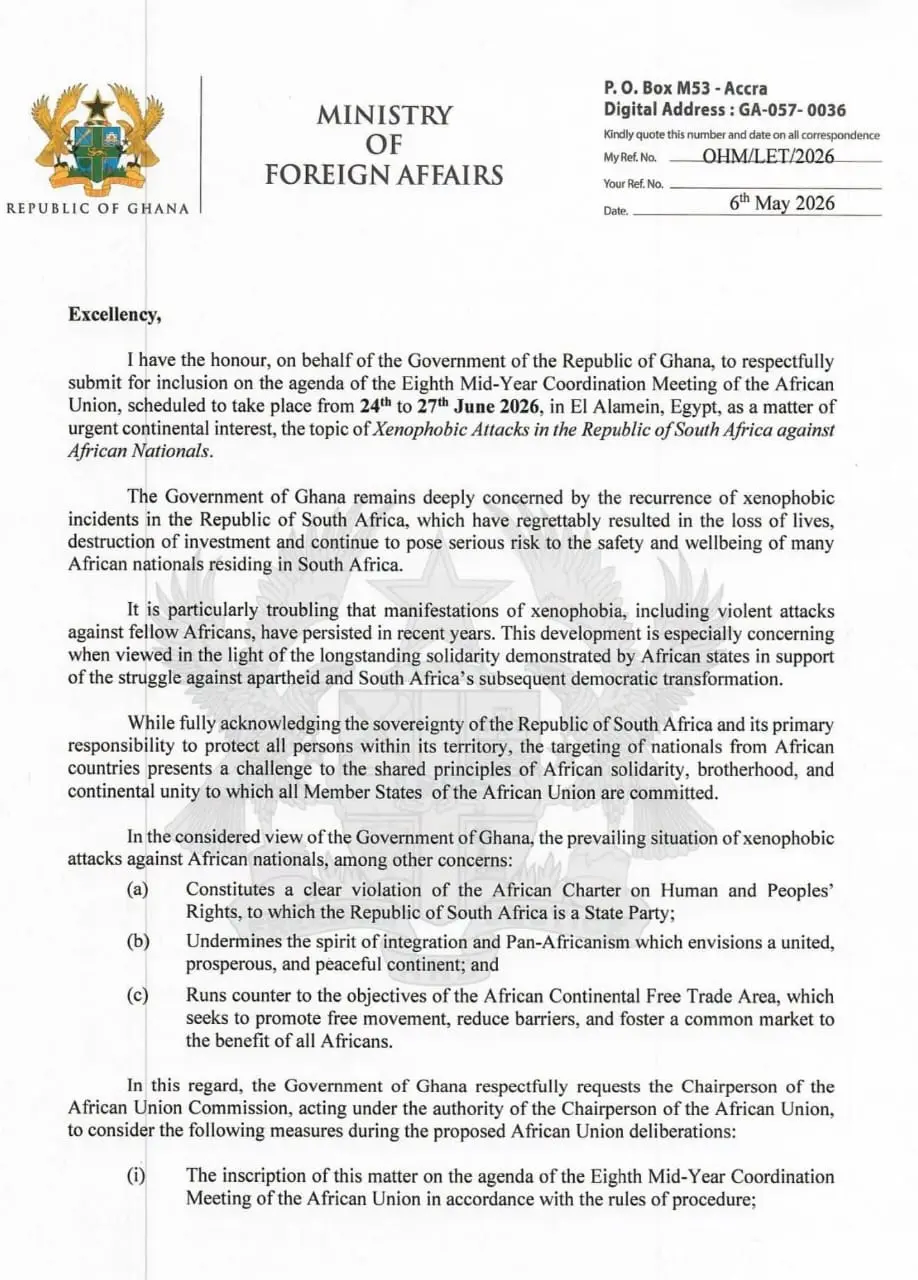
Ghana has formally asked the African Union (AU) to place recurring xenophobic attacks against African nationals in South Africa on the agenda of its upcoming mid-year coordination meeting, describing the incidents as a threat to continental unity and African integration.
In a diplomatic note dated 6 May and addressed to the Chairperson of the African Union Commission, Foreign Affairs Minister, Samuel Okudzeto Ablakwa, said Accra remained “deeply concerned” about repeated xenophobic violence targeting African migrants in South Africa.
The letter said the attacks had resulted in deaths, destruction of investments and growing insecurity among African nationals living in South Africa.
“It is particularly troubling that manifestations of xenophobia, including violent attacks against fellow Africans, have persisted in recent years,” the letter stated.
Ghana argued that the incidents undermine the principles of Pan-Africanism, solidarity and regional integration championed by the African Union and conflict with the goals of the African Continental Free Trade Area, which promotes free movement and economic cooperation across the continent.
The government also said the attacks could amount to violations of the African Charter on Human and Peoples’ Rights, to which South Africa is a signatory.
Among measures proposed by Ghana are the inclusion of the issue on the agenda of the African Union’s Eighth Mid-Year Coordination Meeting scheduled for 24-27 June in El Alamein, the strengthening of AU monitoring mechanisms, and the establishment of a fact-finding mission into the causes of xenophobic violence in South Africa.
Ghana also called for dialogue and reconciliation initiatives aimed at promoting tolerance and continental unity.
“Africa’s future is one of shared dignity, prosperity, and mutual respect,” the letter said, invoking the Pan-African ideals of Kwame Nkrumah.
South African authorities have previously condemned xenophobic violence and pledged to protect foreign nationals, but outbreaks of attacks against migrants from other African countries have recurred over the years, often fuelled by tensions over jobs, crime and economic hardship.