Creppy Emmanuel writes: Europe has its philosophy. Asia has its. Why is Africa governing AI without one?
When the European Union wrote its AI Act, it did not begin with algorithms. It began with a question: what do we believe about human beings? The answer — shaped by centuries of Enlightenment philosophy, two world wars, and hard-won democratic reconstruction — became the Act’s philosophical spine. Individual dignity. Fu...
When the European Union wrote its AI Act, it did not begin with algorithms. It began with a question: what do we believe about human beings? The answer — shaped by centuries of Enlightenment philosophy, two world wars, and hard-won democratic reconstruction — became the Act’s philosophical spine. Individual dignity. Fundamental rights.
The state as guardian, not predator. Every prohibition, every transparency requirement flows from that inheritance.
Asia understood this too. Singapore built SEA-LION — large language models trained to understand the linguistic textures and cultural values of Southeast Asia — because the AI systems built in the West do not understand Southeast Asian context. China designed its governance framework around social harmony and state capacity. Japan embedded AI into its Society 5.0 vision of human flourishing. These are not copies of the EU playbook. They are answers to the same foundational question, asked through different civilisational lenses: what does AI mean for us?
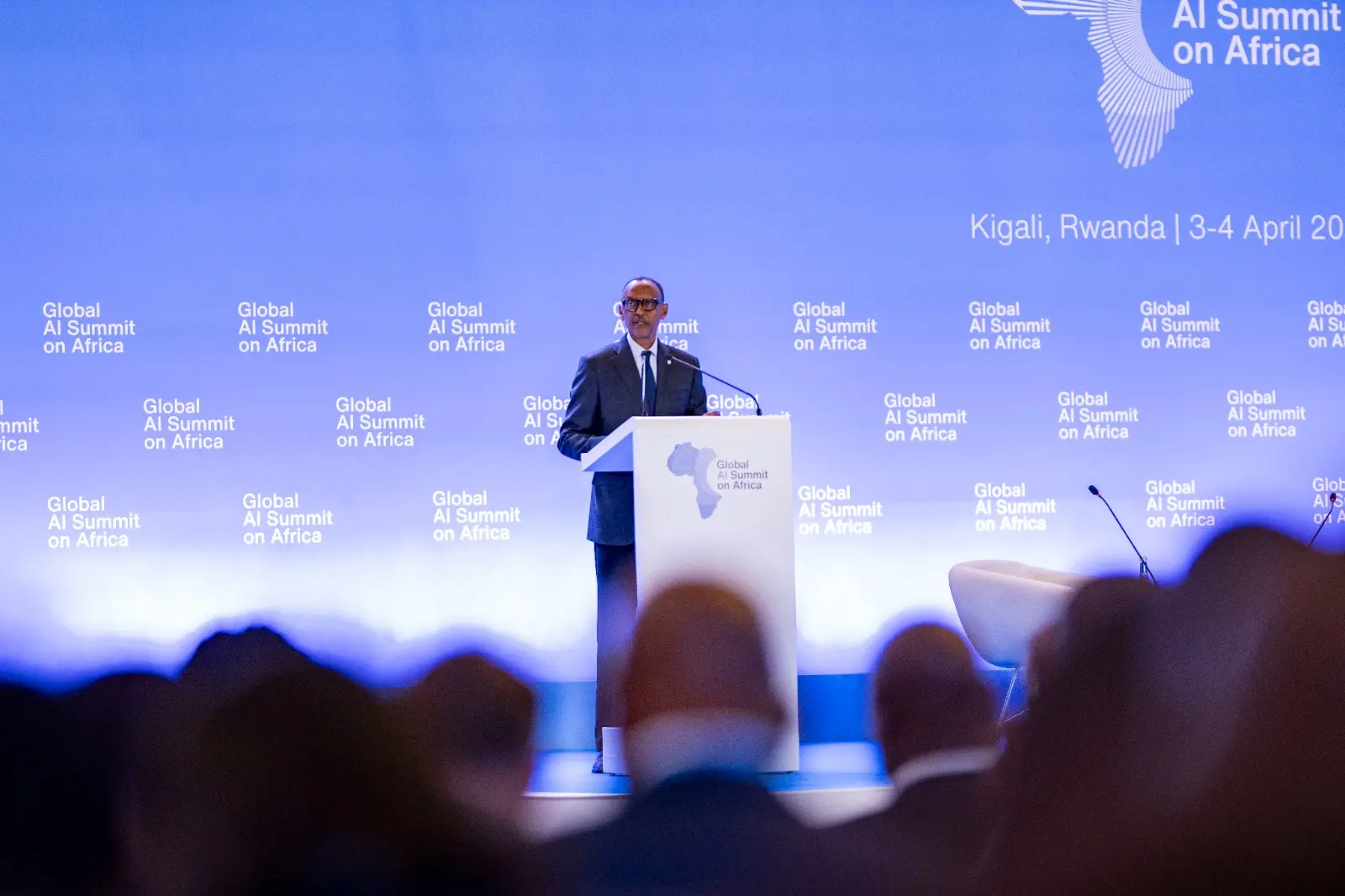
And then we look at Africa. We have an AU Continental AI Strategy, endorsed in Accra in July 2024. We have the Africa Declaration on Artificial Intelligence, signed in Kigali in April 2025 by every AU member state and backed by a sixty-billion-dollar commitment. We have momentum. We have ambition. But when you read these documents carefully, something conspicuously absent emerges: a philosophical anchor. A distinctly African way of thinking about why AI governance matters to us — rooted not in someone else’s enlightenment, but in our own.
Strategy without philosophy is like building a house without understanding why you need walls. It tells you what to do. It does not tell you why.
Africa’s philosophical inheritance is not thin. Ubuntu — ‘I am because we are’ — offers one of the most compelling starting points available to any AI governance framework anywhere in the world. Its emphasis on relational humanity and communal flourishing challenges the atomistic assumptions embedded in Western rights frameworks. Ubuntu is not folklore. It is a governance philosophy waiting to be operationalised.
But Ubuntu alone is not the answer — and insisting it is would be its own form of philosophical laziness. Africa is not philosophically singular. Akan relational ethics, Islamic epistemology practiced across North and East Africa, Pan-African liberation philosophy from Nkrumah to Sankara — these are not museum pieces. They are living intellectual resources. And there may be something emerging that has not yet been named: a synthesis philosophy born from the specific experience of navigating technology in contexts of colonial history and the particular urgency of a continent with the world’s youngest population entering the AI age.
The real question is not which philosophy Africa chooses. It is whether Africa will choose at all — before the governance structures harden around someone else’s answer.
The Africa Declaration on AI, signed in Kigali, is genuinely significant. But it is aspirational, not philosophical. It says what we want to achieve. It does not say why we want to achieve it in distinctly African ways, rooted in distinctly African thinking. There is no AU body, no continental initiative, no funded intellectual commission explicitly tasked with developing the philosophical foundations of African AI governance. We have invested in the architecture before laying the foundation.
Africa needs to do what Europe and Asia have done: make its philosophy visible, deliberate, and binding before its governance structures fully calcify. The window is not permanent. National regulatory frameworks are being built now. In two years they will be concrete. In five, they may be immovable.
The most urgent step is the creation of a Pan-African Philosophical Commission for AI Governance — a genuine intellectual initiative bringing together African philosophers, cultural scholars, indigenous knowledge holders, youth leaders, and technologists to ask collectively: what do our traditions and experiences teach us about how to govern intelligence, data, and algorithmic power? Its mandate: produce a Pan-African Philosophical Framework for Digital Governance within two to three years, flowing into AU policy, national regulation, and ultimately the AI systems deployed on this continent.
We will have built a house according to someone else’s blueprint and called it home.
The Africa Declaration on AI was signed on 4th April 2025 in Kigali — now over a year ago. The AU Continental Strategy has been in motion since July 2024. The foundations are no longer wet. They are beginning to set. Which means the window to ask the philosophical question before the policy machinery locks it in is not coming — it is closing. Ubuntu may offer one important starting point. Pan-African liberation thought may offer another. Akan ethics, Islamic epistemology, and the emerging digital philosophy of Africa’s youth may offer others still. The point is not to choose among them prematurely. The point is to gather them into a room together — the elders and the engineers, the philosophers and the policymakers, the coders and the chiefs — and ask the question that every serious AI governance framework in the world has already asked of itself.
What do we, as Africans, believe a just algorithm looks like?
The silence where Africa’s answer should be is not merely an intellectual gap. It is a governance vulnerability, a sovereignty risk, and — if we allow it to persist — a civilisational abdication.
The silence, gentle as it sounds, is the loudest thing in the room.
Creppy Emmanuel is an AI Governance Consultant, Digital Strategist, and Cultural Diplomat based in Accra, Ghana. He advises on AI governance, digital policy, and cultural diplomacy, and writes on the intersection of African philosophy, technology, and governance.