Procurement expert warns new value-for-money office risks politicisation, inefficiency
Procurement expert Kobina Ata Bedu has warned that Ghana’s newly introduced value-for-money oversight framework risks becoming ineffective due to political interference and structural flaws. Speaking on the Asaase Breakfast Show on Tuesday (12 May), Bedu traced Ghana’s procurement oversight evolution from the colonial-...
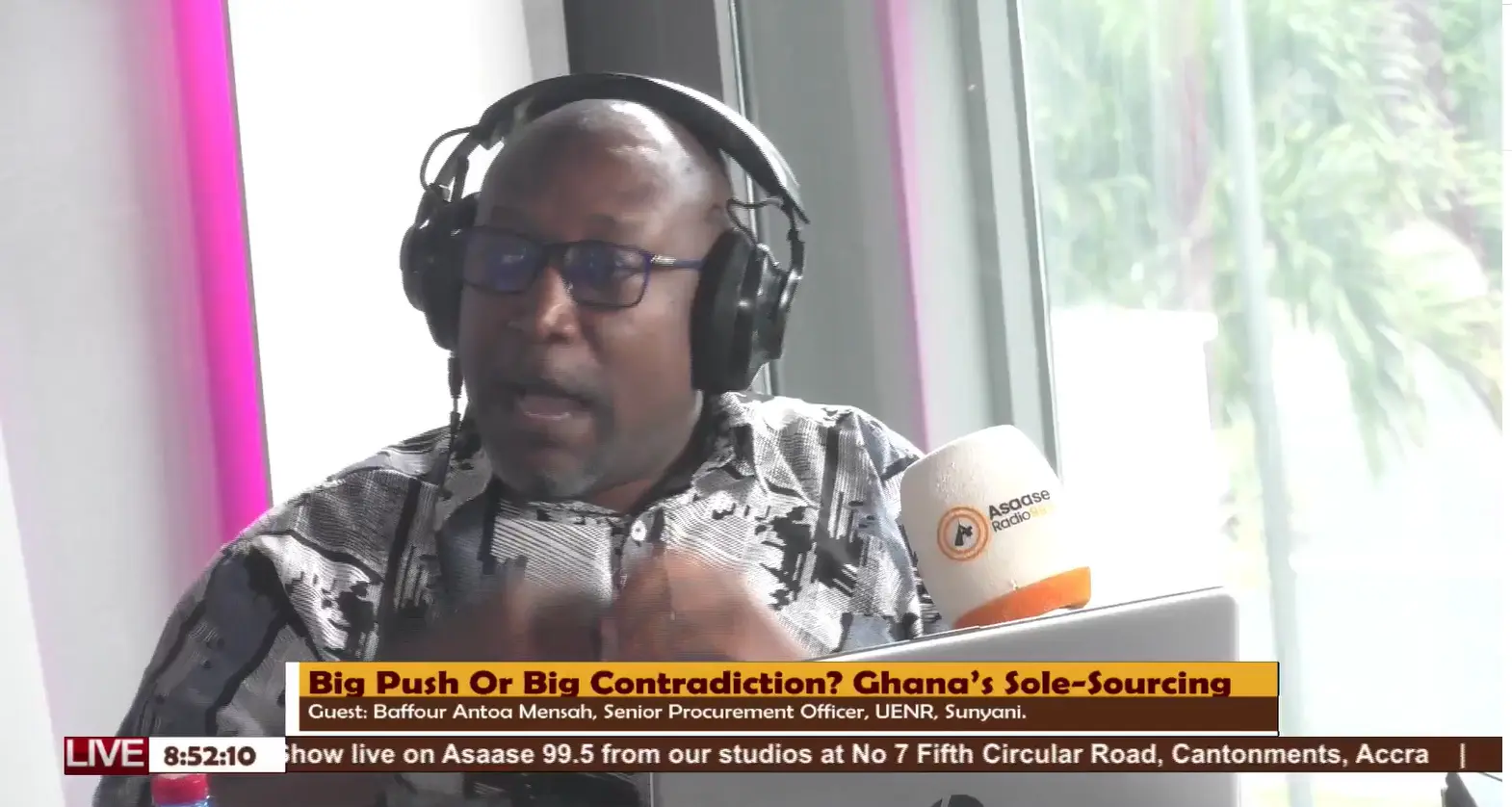
Procurement expertKobina Ata Bedu has warned that Ghana’s newly introduced value-for-money oversight framework risks becoming ineffective due to political interference and structural flaws.
Speaking on the Asaase Breakfast Show on Tuesday (12 May), Bedu traced Ghana’s procurement oversight evolution from the colonial-era Crown Agents system to the current reliance on major audit firms, arguing that the country’s core challenge is not the absence of systems but their weak enforcement.
He criticised the design of the proposed Value for Money Office (VMO), particularly provisions that allow presidential appointments, warning it could become “a complete political office” vulnerable to partisan control.
“When the next government comes, they will sweep the whole office clean and put their people there,” he said.
Bedu argued that political influence already drives controversial procurement practices such as single sourcing, which he described as a key source of inefficiency and potential corruption.
He also questioned the necessity of creating a new institution rather than strengthening existing structures like the Public Procurement Authority (PPA), which already has a due diligence unit responsible for value-for-money assessments.
According to him, the proposed system risks adding bureaucratic layers that could delay project execution and create new avenues for rent-seeking.
“Anytime you put such a bureaucracy in place, it’s another avenue for corruption,” he said.
Bedu further argued that Ghana’s procurement challenges are rooted less in legislative gaps and more in enforcement failures and political interference.
While acknowledging that value-for-money assessments require multidisciplinary expertise — including engineering, cost analysis, and social and environmental evaluation — he maintained that these competencies could be embedded within existing institutions rather than through a new office.
He concluded that the law, as currently structured, risks being ineffective unless significantly revised.
“There’s no point passing a law that is dead on arrival,” he said.