Defence witness rejects verbal transfer of mineral rights in Samreboi trial
The first defence witness in the Samreboi concession trial has told the court that verbal permission cannot constitute the assignment of mineral rights under Ghana’s mining laws. Wisdom Edem Gomashie, testifying on Thursday as an expert mining engineer for Bernard Antwi-Boasiako and the other accused persons, said Ghan...
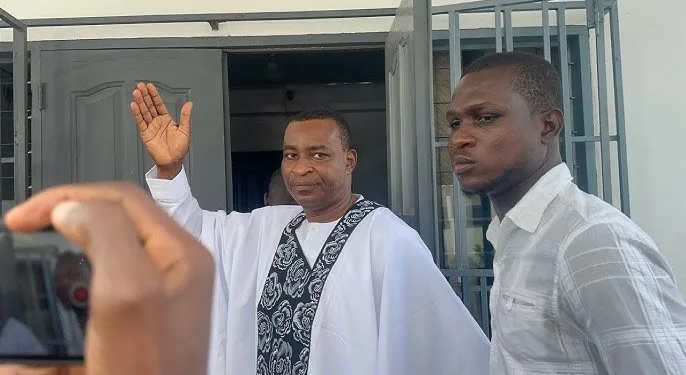
The first defence witness in the Samreboi concession trial has told the court that verbal permission cannot constitute the assignment of mineral rights under Ghana’s mining laws.
Wisdom Edem Gomashie, testifying on Thursday as an expert mining engineer for Bernard Antwi-Boasiako and the other accused persons, said Ghana’s legal framework requires formal procedures and approvals before mineral rights can be transferred.
Relying on the Minerals and Mining Act, 2006 (Act 703), and the Minerals and Mining (Licensing) Regulations, 2012 (L.I. 2176), the witness told the court that any valid assignment of mineral rights must be formalised and cannot arise from verbal discussions.
He explained that the assignment of mineral rights is a legal transaction that must comply with laid-down processes, including authorisation by the minister responsible for mines.
Chairman Wontumi and his company are facing six counts over allegations that they permitted two individuals—Henry Okum and Michael Gyedu Ayisi—to undertake mining activities on a concession without prior ministerial approval, while also facilitating unlicensed operations.
The accused persons have pleaded not guilty and are on bail pending the outcome of the trial.
The defence team, led by Andy Appiah-Kubi, argued that allowing the individuals to operate on the concession did not amount to an assignment of mineral rights, as there was no written agreement.
However, the prosecution maintains that a transfer does not cease to be a transfer simply because it was not reduced into writing. According to the state, once a concession holder grants another party the right to exploit minerals, a transfer has effectively occurred.
During cross-examination, the Deputy Attorney-General, Justice Srem-Sai, challenged the witness’s interpretation, arguing that his expert opinion was not properly grounded in law.
Gomashie, however, stood by his position, adding that while mining lease holders may engage service providers for operational work, such arrangements do not necessarily amount to the assignment of mineral rights.
Earlier, the witness identified his statement, which was admitted into evidence. However, under further questioning, inconsistencies emerged regarding his academic qualifications.
The court heard that although Gomashie was born in April 1993, his statement indicated that he obtained his first degree in 1998.
The statement also suggested he obtained a Master’s degree from the Kwame Nkrumah University of Science and Technology, but he later clarified that his qualifications were from the University of Mines and Technology and the University of Ghana.
He admitted the discrepancies were typographical errors.
“So it is not true when you told the court that you had a Master of Science degree in Minerals and Economics in 2003,” Dr Srem-Sai put to him.
The witness responded that it was a mistake in the statement.
The court subsequently allowed him to correct the errors to clarify his credentials.