Government risks deeper deficit without new revenue sources – Prof Boadi warns
Ghana’s public finances are showing early signs of strain, with revenue growth falling behind government spending, economist Prof. Isaac Boadi has warned, cautioning that the trend could force difficult fiscal decisions in the months ahead. Speaking on The Forum on Asaase Radio on Saturday (30 May), Prof. Boadi said cu...
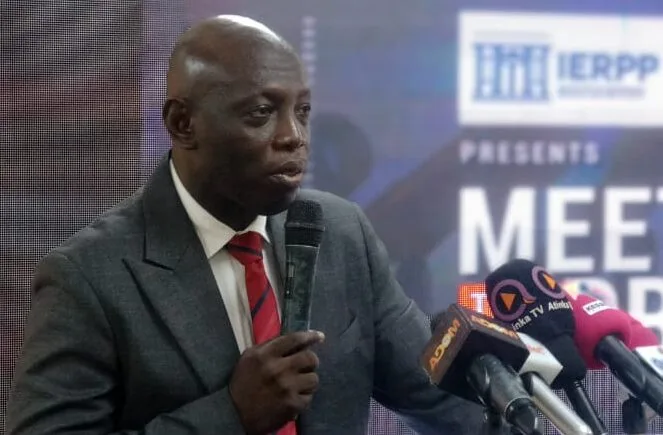
Ghana’s public finances are showing early signs of strain, with revenue growth falling behind government spending, economist Prof. Isaac Boadi has warned, cautioning that the trend could force difficult fiscal decisions in the months ahead.
Speaking on The Forum on Asaase Radio on Saturday (30 May), Prof. Boadi said current figures suggest revenue is growing at about 3.6% of GDP while expenditure is running at roughly 3.9%, creating what he described as an emerging deficit position.
“That is a warning sign,” he said. “It tells you that in the midyear something is going to happen…Either we go and borrow, or we print money, or we introduce new taxes,” he said.
His comments come amid ongoing debate over Ghana’s fiscal direction following recent government tax policy adjustments, including the scrapping of some levies and discussions around digital taxation reforms.
Prof. Boadi argued that while such policy shifts may ease public pressure, they must be matched with clear alternative revenue sources.
“The government needs money because the pressures are there,” he said, pointing to rising obligations including salaries, interest payments and other recurrent expenditures.
He warned that Ghana’s fiscal structure could come under further strain in the 2026 and 2027 budget cycles if revenue mobilisation does not improve.
“In 2026/27, our interest obligations, salaries and expenditure patterns will not stop coming. How do we generate revenue to cater for these?” he asked.
The economist also criticised what he described as gaps in tax administration capacity, particularly in the digital economy.
“Do the Ghana Revenue Authority have the expertise in taxing companies registered online?” he asked, arguing that traditional enforcement approaches were becoming less effective as economic activity shifts online.
“When the service sector takes the lead, you see expansion in GDP, but the production sector suffers,” he said. “And that is why unemployment keeps going up. Government must be truthful now because it is hitting them hard.”