Ghana agri-entrepreneur says failure, not funding, shaped her journey
Ghanaian agribusiness advocate Alberta Nana Akyaa Akosah says failure, persistence and passion — rather than formal planning — have defined her journey building one of the country’s leading agricultural advocacy organisations. Speaking on the Asaase Breakfast Show on Tuesday (2 June), the founder and executive director...
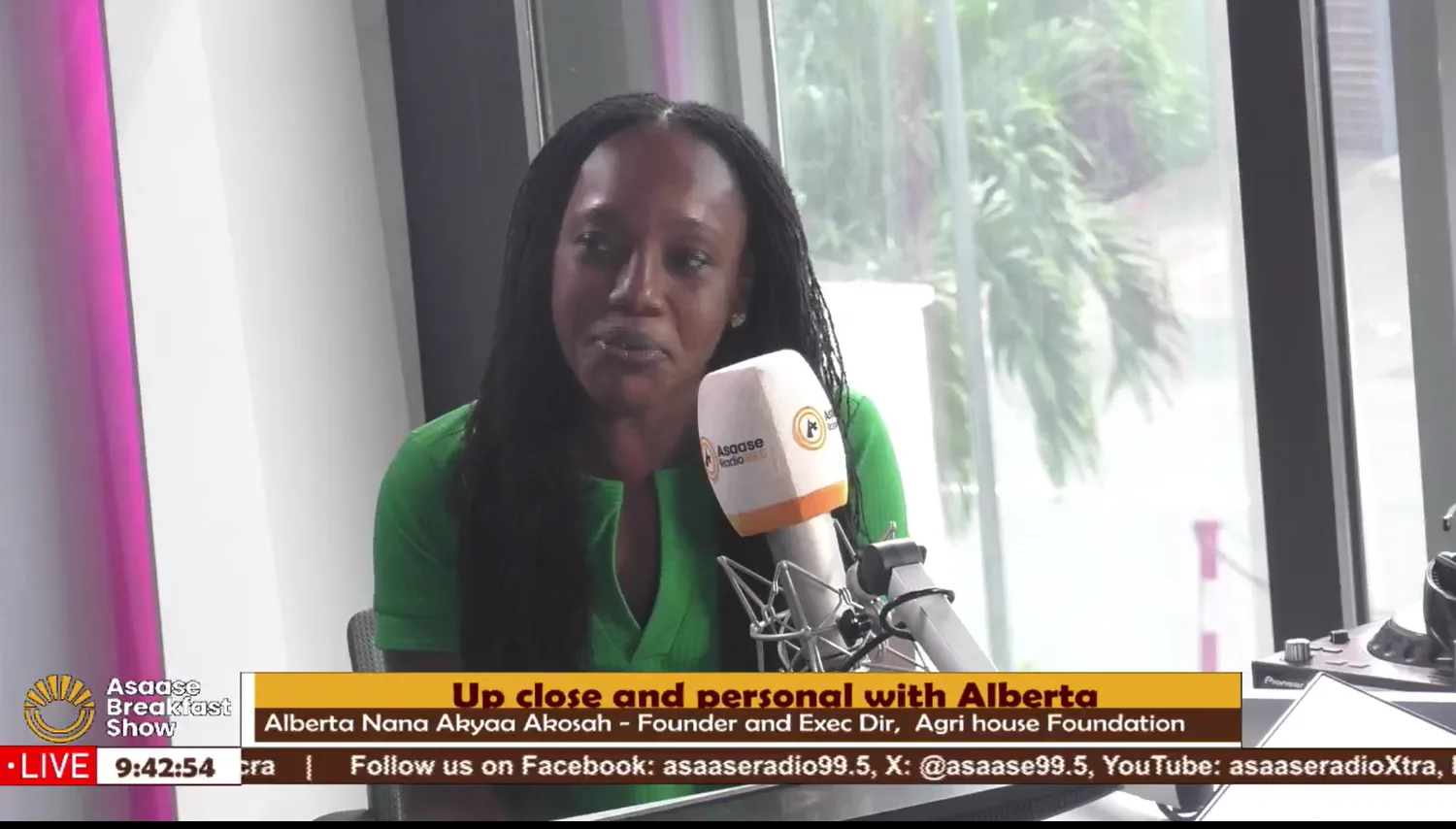
Ghanaian agribusiness advocateAlberta Nana Akyaa Akosah says failure, persistence and passion — rather than formal planning — have defined her journey building one of the country’s leading agricultural advocacy organisations.
Speaking on theAsaase Breakfast Show on Tuesday (2 June), the founder and executive director of AgriHouse Foundation described her rise as “organic”, driven more by purpose than ambition.
“It’s honestly all built out of passion. You don’t even realise how you’re navigating,” she said.
Akosah, who initially aspired to become a journalist, said her career path shifted after working in communications and event management, eventually leading her into agriculture through exposure to sector-wide programmes.
A difficult early experience organising a major agricultural event — where she admitted making “a lot of mistakes” — became a turning point.
“That falling was a rising for me,” she said.
Over the past decade, AgriHouse Foundation has grown into a platform supporting farmers, particularly women, through training, advocacy and development partnerships.
But Akosah said her journey has not been without resistance, especially as a young woman entering a male-dominated industry.
“There were a lot of negative perceptions… people thought I was being fronted,” she said, referring to persistent claims that a powerful figure was behind her work.
Despite the challenges, she said persistence proved critical.
“The most positive words anybody can tell me is that I can’t do it,” she said.
Akosah also highlighted structural barriers facing women in agriculture, including limited access to resources, confidence gaps and underrepresentation in decision-making spaces.
“Women are at the table, but still not fully at the table,” she said.
To address this, her organisation has launched initiatives such as “At the Table with Alberta”, a storytelling series amplifying the voices of women farmers, including those with disabilities.
The programme coincides with the International Year of the Woman Farmer and aims to highlight both the contributions and challenges of women across agricultural value chains.
Beyond advocacy, Akosah said she believes practitioners must lead by example, noting her own ventures into farming, including livestock.
Her advice to young women, particularly those outside formal education systems, is to focus on passion and continuous learning.
“Nothing should limit you — not age, not education,” she said. “Be focused on your passion.”
As AgriHouse marks a decade of operations, she said the organisation is still evolving.
“We are still making mistakes… but we are growing,” she added.