Africa must mobilise its own capital to drive transformation, AfDB chief says
Africa must do more to channel its vast domestic wealth into productive investment and reduce its dependence on external financing if it is to achieve economic transformation, African Development Bank (AfDB) President Sidi Ould Tah has said. Addressing the opening session of the AfDB’s annual meetings in Brazzaville on...
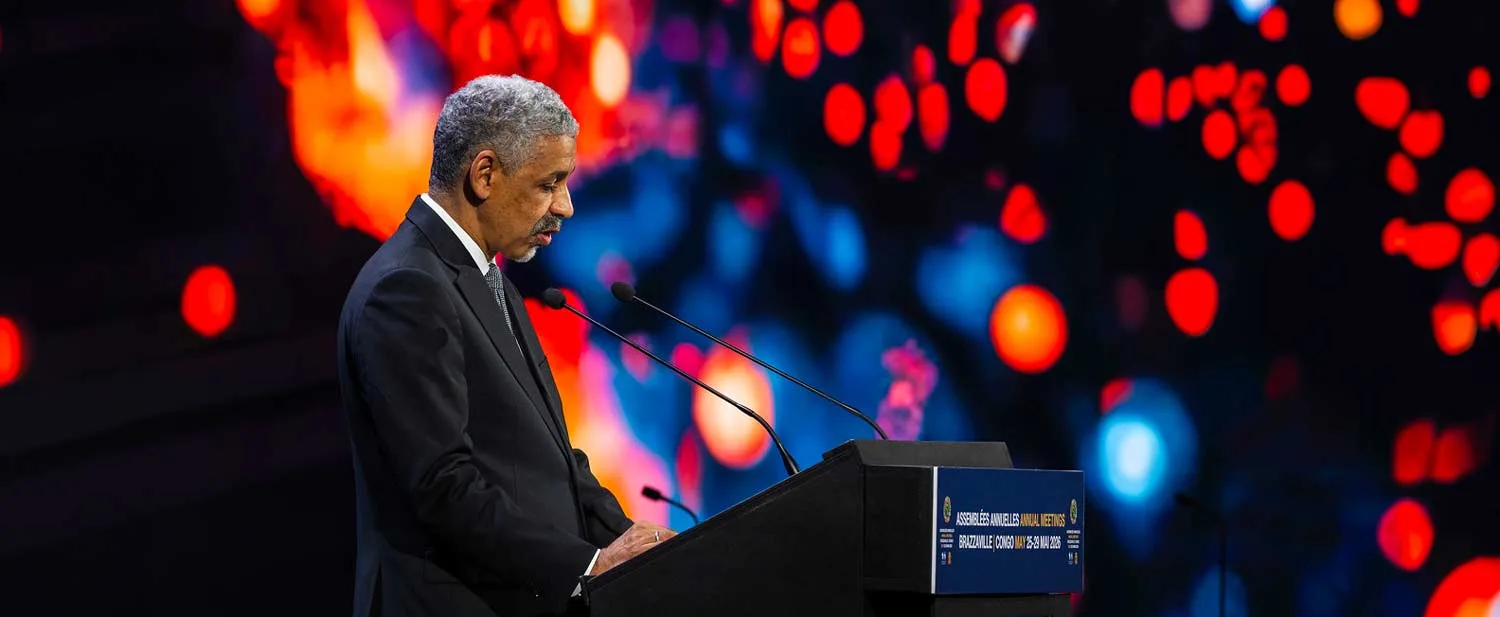
Africa must do more to channel its vast domestic wealth into productive investment and reduce its dependence on external financing if it is to achieve economic transformation, African Development Bank (AfDB) President Sidi Ould Tah has said.
Addressing the opening session of the AfDB’s annual meetings in Brazzaville on Tuesday (26 May), Tah said the continent’s ambitions were increasingly outpacing the financial systems available to support them.
“Africa’s ambitions have now outstripped the financial architecture available to support them,” he told heads of state, ministers, investors and development partners gathered in the Congolese capital.
Tah, who took office as president of the continental lender in 2025, said Africa faced a financing requirement of more than $400 billion annually to drive structural transformation, despite holding more than $4 trillion in domestic savings and financial assets.
“The problem today is not so much the availability of resources as our ability to channel them productively,” he said.
The Mauritanian economist argued that Africa’s economic influence remained disproportionately small relative to its population and natural resources, noting that the continent accounts for around 18 percent of the world’s population but only about three percent of global trade and between three and four percent of global GDP.
He called for stronger African financial institutions capable of mobilising domestic savings, reducing investment risks and attracting long-term capital.
Tah also unveiled what he described as the Bank’s new strategic direction, centred on mobilising more affordable capital, strengthening African financial systems, creating opportunities for young people and women, and supporting industrialisation and value addition across the continent.
“Africa cannot continue to export raw materials and import prosperity,” he said.
The AfDB chief said geopolitical shifts, supply chain disruptions, climate challenges and changing trade patterns had reinforced Africa’s strategic importance in the global economy, particularly in sectors such as critical minerals, energy and logistics.
He noted that despite global economic uncertainty, Africa continued to demonstrate resilience, with several economies posting strong growth and digital innovation helping to transform sectors ranging from agriculture to healthcare.
Tah also highlighted a record $11 billion replenishment of the African Development Fund, the Bank’s concessional financing arm, describing it as a sign of growing confidence in Africa’s development prospects.
For the first time, 24 African countries contributed to the fund’s replenishment, collectively providing about $183 million, he said.
“This reflects a deeper shift: Africa is gradually becoming not only a recipient of development finance, but also a co-investor in its own future,” Tah said.
The annual meetings, hosted by the Republic of Congo, brought together policymakers, financiers and development partners to discuss strategies for accelerating economic growth and investment across Africa.