Ghana mining firm run by president’s brother fails to comply with international court order over $100m gold mine
Engineers & Planners, the mining firm founded and headed by Ibrahim Mahama, brother of President John Dramani Mahama, is refusing to give up a $100 million gold project in northern Ghana even after an international tribunal and an English court ordered it to stop. The company has held its ground on the Black Volta and...
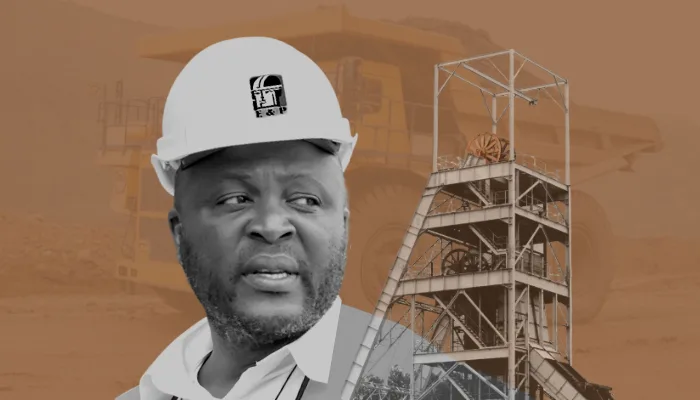
Engineers & Planners, the mining firm founded and headed by Ibrahim Mahama, brother of President John Dramani Mahama, is refusing to give up a $100 million gold project in northern Ghana even after an international tribunal and an English court ordered it to stop.
The company has held its ground on the Black Volta and Sankofa concessions in the Upper West Region through two rulings that went against it, setting up a test of whether a firm with ties to the presidency can be made to obey a foreign court on Ghanaian soil.
The International Chamber of Commerce’s arbitration tribunal in London ordered E&P last October to stop trespassing on the sites. That the company then ignored the order is set out in black and white in a High Court of Justice document in London dated 8 June and seen by JoyNews Research.
“The Defendant having failed to comply with the Interim Award,” the order reads, before the court granted E&P’s rivals permission to enforce the award as if it were a judgment of the English courts. E&P was also ordered to pay the other side’s costs of £33,309.86. It has instructed lawyers to have that order thrown out.
The dispute traces back to 2023, when, on E&P’s account, Azumah’s shareholders offered it the right to buy Black Volta for $100 million. Azumah’s backers tell it differently. They say any such right came with conditions E&P never satisfied, that no sale was ever properly authorised, and that the company took the site and forged signatures to move the shares. E&P denies all of it, and says it is neither occupying the mine nor running it.
Behind Azumah sits foreign money, chiefly the US private equity fund Ibaera Capital, whose James Wallbank says the courts have told E&P again and again to leave and hand the assets back. E&P, for its part, secured a $120 million loan from West Africa’s regional development bank last July, which it said would fund the acquisition. Bobby Banson, the company’s lawyer, has brushed off the London proceedings as theatre.
The tribunal is due to deliver a final ruling in September. Until then the mine sits idle, caught between a Ghanaian company that will not walk away and investors who say the law is plainly on their side.
The row is awkward for a government that has spent the past year tightening its grip on gold. In April, Accra stripped Gold Fields of the Damang mine and handed it to E&P, prompting questions about whether the president’s brother was being favoured. The government says Mahama recused himself from the Damang decision to avoid a conflict. It denies the opposition’s charge that the state is being captured for private gain.
Damang was only the start. Gold Fields is now waiting to learn whether it can keep Tarkwa, its cornerstone Ghanaian asset and one of West Africa’s largest open-pit mines, which produced about 427,000 ounces last year. Five of its leases expire in April 2027, and the Minerals Commission has made clear the renewal will not be routine. “It won’t be business as usual where we just automatically renew the lease,” its chief executive, Isaac Andrews Tandoh, has told the media. Gold Fields must now win over a technical committee and then ministers, on terms that weigh how much value it leaves behind in Ghana.
AngloGold Ashanti faces the same reckoning next door. Its Iduapriem mine, which sits alongside Tarkwa and was once slated to merge with it into what would have been Africa’s largest gold operation, runs on a lease that also lapses in 2027 and must clear the same tougher renewal test. Between them, the two mines and their neighbour Ghana Manganese anchor an enclave that paid roughly 5.1 billion cedis in taxes in 2024, giving the government both a reason to squeeze harder and a reason not to push either miner out.
Money is also being pulled onshore. From 1 July, every large producer, Gold Fields, Newmont and Zijin among them, must sell 30% of its gold to the state Gold Board inside Ghana, in raw form, paid in cedis rather than dollars, at a small discount. The metal is refined locally and delivered to the central bank as reserves. Mahama’s government wants 15 months of import cover by 2028 and an end to raw gold exports by 2030.
The tax regime has been rebuilt to match. Ghana threw out its flat 5% gold royalty for a sliding scale that climbs with the price, reaching 12% at the top, capturing more for the state as bullion trades near record highs. To take the edge off, the president cut the growth and sustainability levy on miners from 3% to 1% in March. The Chamber of Mines, which represents the majors, says that is not enough and wants the levy gone, warning that Ghana is pricing itself out.
For now, the E&P fight is the sharpest edge of the whole reset: a mine no court can seem to pry loose, an owner few in Accra will name aloud, and a government insisting the rule of law still holds while its own investors ask how a foreign judgment can go unenforced.