CJID CEO calls for journalism rethink as AI reshapes democracy in West Africa
The Chief Executive Officer of the Centre for Journalism Innovation and Development (CJID), Dapo Olorunyomi, has called for a fundamental rethinking of journalism in West Africa, arguing that traditional media development approaches are no longer sufficient to defend democracy in the digital age. Speaking at the inaugu...
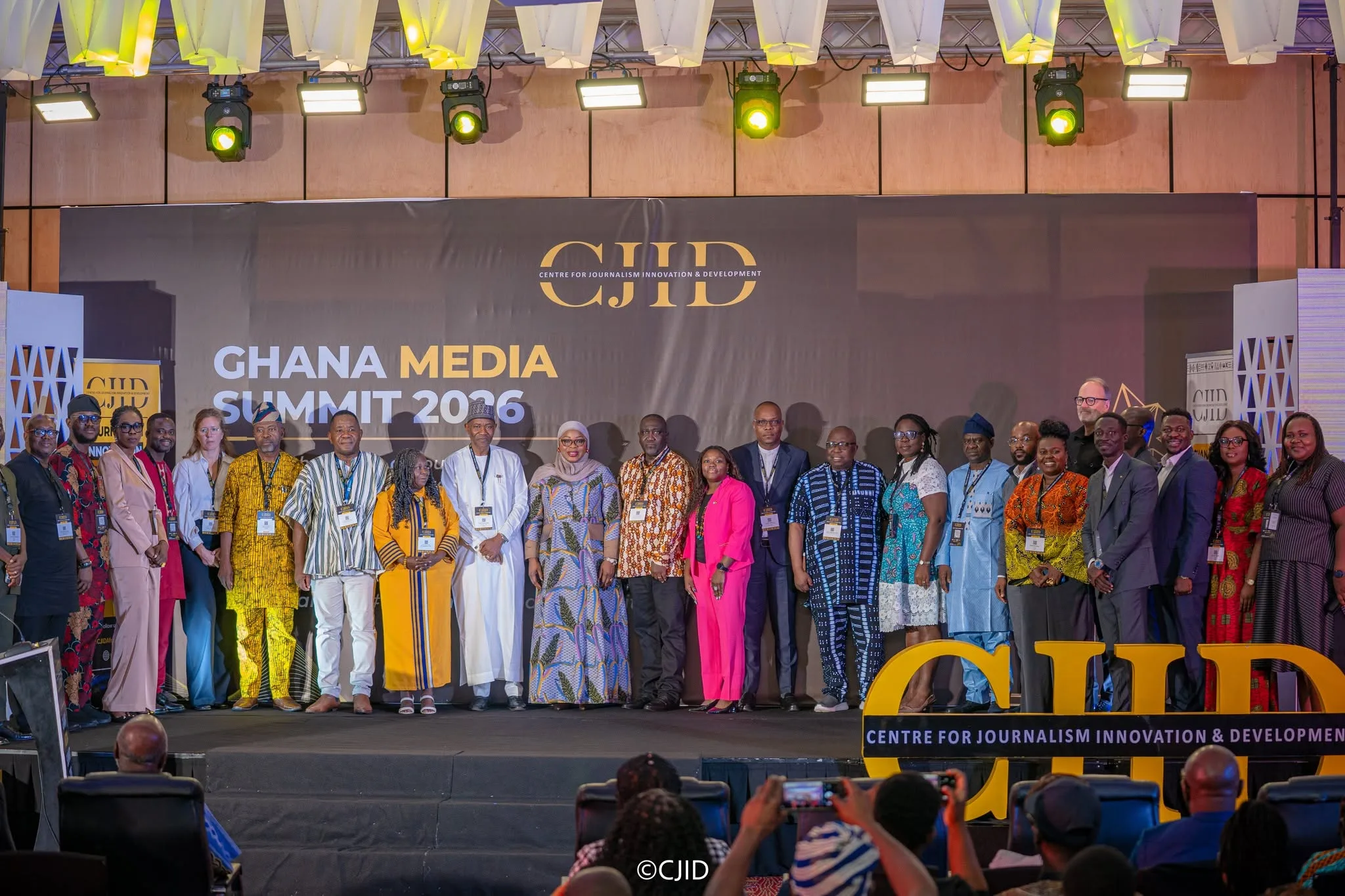
The Chief Executive Officer of the Centre for Journalism Innovation and Development (CJID), Dapo Olorunyomi, has called for a fundamental rethinking of journalism in West Africa, arguing that traditional media development approaches are no longer sufficient to defend democracy in the digital age.
Speaking at the inaugural CJID Ghana Media Summit in Accra on Thursday (9 July), Olorunyomi said journalism must be understood not simply as a profession but as an essential democratic institution whose primary purpose is to hold power accountable.
“The central purpose of journalism is to ensure democracy works,” he said. “If journalism is suffering, democracy is suffering.”
The summit, which marked seven years of DUBAWA Ghana, brought together journalists, policymakers, regulators and civil society leaders to discuss the future of media under the theme “Defending Democracy in West Africa: The Role of the Media.”
Olorunyomi said many journalism schools and media organisations continue to operate using models developed during the industrial age despite the emergence of artificial intelligence, digital platforms and algorithm-driven information ecosystems.
“The world has fundamentally moved into a digital age,” he said. “We cannot continue to understand journalism using principles designed for a different era.”
He argued that journalism should be recognised as a constitutional and legal instrument for strengthening democracy, pointing to Article 162(5) of Ghana’s Constitution, which assigns the media responsibility for holding government accountable.
He noted that similar constitutional provisions exist in Nigeria, Sierra Leone, Liberia and The Gambia, reflecting journalism’s central role in democratic governance across West Africa.
“Our constitutions do not see journalism as merely reporting events,” he said. “They see it as an accountability mechanism for making democracy effective.”
Olorunyomi warned that artificial intelligence, platform dominance and the spread of misinformation were transforming every aspect of journalism—from news gathering and distribution to newsroom sustainability and audience engagement.
He said journalism schools across the region must urgently incorporate computational journalism, artificial intelligence, data analysis and open-source intelligence into their curricula to prepare future reporters.
“The best stories today are in databases,” he said. “If journalists lack computational and data skills, they will struggle to remain relevant.”
Beyond newsroom training, Olorunyomi said media development organisations should shift their focus from strengthening individual newsrooms to building resilient democratic information ecosystems capable of withstanding disinformation and technological disruption.
“For decades, media development has focused on supporting individual news organisations, investigative reporting and press freedom,” he said. “The priority today is to build resilient information ecosystems if we want democracy to work.”
He outlined several strategic priorities for the next decade, including tackling misinformation and artificial intelligence, addressing the dominance of global digital platforms, improving newsroom business models, strengthening journalist safety, rebuilding local media, expanding climate and environmental journalism, and promoting cross-border collaboration.
Olorunyomi also urged West African governments and media organisations to work together on regulating global technology platforms, arguing that no single country in the region has sufficient leverage to negotiate effectively with multinational technology companies.
“One country confronting Big Tech alone is simply not going to work,” he said. “Regional cooperation is essential.”
He further called for stronger collaboration between Anglophone and Francophone media organisations, saying language barriers continue to limit cross-border reporting and regional understanding despite shared democratic and security challenges.
According to him, journalism must evolve alongside technological and societal change if it is to remain relevant.
“Our practice must be historically rooted but philosophically nurtured,” he said. “Traditional media development is no longer sufficient. If we want democracy to survive the next decade, we must build democratic information infrastructure that is resilient, innovative and prepared for the realities of the digital age.”