2026 mid-year budget: Ato Forson rejects Minority claims on expenditure, says gov’t has spent billions on key programmes
Finance Minister Dr Cassiel Ato Forson has rejected claims by the Minority in Parliament that the government has failed to spend on key expenditure areas, insisting that significant payments have been made to support critical sectors of the economy. Presenting the 2026 Mid-Year Fiscal Policy Review in Parliament on Thu...
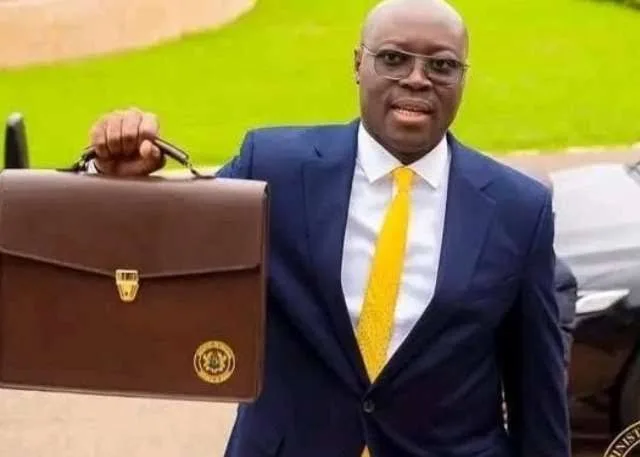
Finance Minister Dr Cassiel Ato Forson has rejected claims by the Minority in Parliament that the government has failed to spend on key expenditure areas, insisting that significant payments have been made to support critical sectors of the economy.
Presenting the 2026 Mid-Year Fiscal Policy Review in Parliament on Thursday, July 23, Dr Forson said government has remained committed to transparency and accountability by providing details of expenditure made so far in line with the approved 2026 Budget.
He told Parliament that GH¢48.8 billion has been paid as compensation for public sector workers, including GH¢4 billion in contributions to SSNIT and the Tier 2 Pension Scheme.
The Finance Minister also disclosed that government has paid GH¢21.5 billion in interest obligations and US$700 million towards Eurobond debt service and interest payments.
He said GH¢10 billion has been paid to domestic bondholders as part of efforts to restore confidence in Ghana’s financial system.
Dr Forson highlighted payments made across various sectors, including GH¢4.5 billion to the National Health Insurance Scheme (NHIS), GH¢1.1 billion to MahamaCares, GH¢4.2 billion to the Ghana Education Trust Fund (GETFund), and GH¢1.8 billion to support the Free Senior High School programme.
According to him, government has also paid GH¢7.1 billion to the energy sector to support stable power supply, GH¢11.5 billion in capital expenditure for infrastructure development, and GH¢6.5 billion towards the Big Push Infrastructure Programme.
On social interventions, Dr Forson said GH¢485 million has been paid to beneficiaries of the Livelihood Empowerment Against Poverty (LEAP) programme, while GH¢877 million has been released for the Ghana School Feeding Programme.
He added that GH¢537 million has been paid under the No Fees Stress Policy to reduce financial barriers to tertiary education, with additional payments made for teacher and nursing trainee allowances.
The Finance Minister also mentioned government’s support for agriculture, including GH¢1.1 billion allocated to the Ministry of Food and Agriculture for flagship programmes such as Feed Ghana, fertiliser and certified seed distribution, and irrigation projects.
He said GH¢551 million has also been placed in an escrow account to support the establishment of Farmer Service Centres aimed at modernising agriculture.
Dr Forson maintained that the expenditure demonstrates government’s commitment to moving the economy “from the emergency room to the wellness centre.”
“We have kept that promise. And I give this House my firm assurance: this economy will never return to the emergency room under our watch,” he said.
He added that the achievements recorded belong not only to government but to the people of Ghana.
2026 mid-year budget: Ghana set to exit IMF bailout programme as final review nears approval – Ato Forson
2026 mid-year budget: Govt to procure buses to improve urban mobility
2026 mid-year budget: Government records 17% rise in customs revenue through AI reforms – Ato Forson