Supreme Court upholds OSP Act but affirms AG’s power to discontinue prosecutions
The Supreme Court has unanimously upheld the constitutionality of the Office of the Special Prosecutor (OSP) Act, 2017 (Act 959), but ruled that the Attorney-General retains the constitutional authority to discontinue prosecutions initiated by the anti-corruption agency. The judgment settles a constitutional challenge...
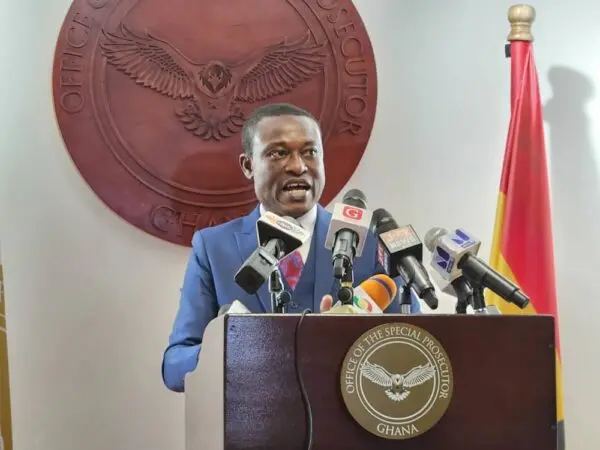
The Supreme Court has unanimously upheld the constitutionality of the Office of the Special Prosecutor (OSP) Act, 2017 (Act 959), but ruled that the Attorney-General retains the constitutional authority to discontinue prosecutions initiated by the anti-corruption agency.
The judgment settles a constitutional challenge filed by private legal practitioner Noah Adamtey, who questioned whether Parliament had the power to establish the OSP with independent prosecutorial authority.
Adamtey argued that the creation of the OSP under Act 959 conflicted with Article 88 of Ghana’s 1992 Constitution, which vests prosecutorial powers in the Attorney-General.
He contended that Parliament exceeded its authority by creating a separate institution with powers similar to those constitutionally assigned to the Attorney-General.
The Attorney-General supported the challenge, arguing that while prosecutorial powers could be delegated, such authority must remain subject to the supervision and control of the Attorney-General.
However, in a unanimous decision delivered on Wednesday, 29 July, the Supreme Court rejected the challenge and affirmed the legal foundation of the OSP.
The court held that Parliament acted within its constitutional mandate when it established the Office of the Special Prosecutor to investigate and prosecute corruption-related offences.
The ruling means the OSP can continue to exercise prosecutorial powers granted under Act 959.
However, the court also clarified that the Attorney-General’s constitutional powers under Article 88 remain intact, including the authority to discontinue criminal proceedings initiated by the OSP.
The decision effectively places the OSP’s prosecutorial mandate within the broader constitutional framework that recognises the Attorney-General as the principal legal officer of the state.
The case was closely watched by anti-corruption advocates and civil society groups, who argued that the independence of the OSP was critical to tackling corruption involving politically exposed persons and public officials.
The OSP, established in 2018, was created as an independent institution with a mandate to investigate and prosecute corruption and corruption-related offences, particularly cases involving public officials and politically exposed persons.
During proceedings, the OSP sought to join the case as an interested party, but the Supreme Court declined the application, holding that the constitutional issues could be determined between the plaintiff and the Attorney-General.
Several civil society organisations were, however, allowed to participate because of their interest in strengthening Ghana’s anti-corruption framework.
The ruling provides clarity on the relationship between the OSP and the Attorney-General, while preserving the legal basis for the continued operations of the anti-corruption office.