AI at basic level will give children head start — GNAT Gen. Secretary
The General Secretary of the Ghana National Association of Teachers (GNAT), Thomas Musah, has lauded the introduction of artificial intelligence (AI) into the revised kindergarten and primary school. That, he said, would help propel children into the future and, therefore, called for the provision of teaching and learn...
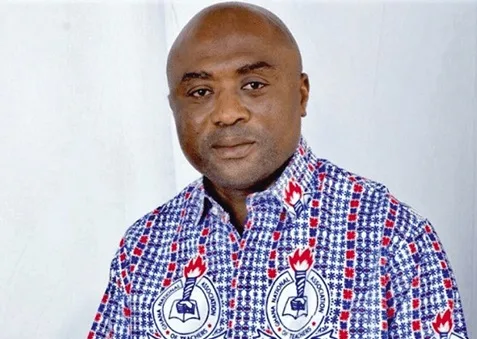
The General Secretary of the Ghana National Association of Teachers (GNAT), Thomas Musah, has lauded the introduction of artificial intelligence (AI) into the revised kindergarten and primary school.
That, he said, would help propel children into the future and, therefore, called for the provision of teaching and learning resources and a clear road map for the seamless implementation of the curriculum.
“So introducing AI at the basic level is an excellent thing because it helps them to appreciate what is ahead of them.
Now once you have done that, the resources must be skewed to get the needs of the curriculum done,” Mr Musah told the Daily Graphic last Wednesday.
He said it was incumbent upon the state to ensure that resources that were required to be used along the curriculum were provided to ensure its effective implementation.
“How will the structure of our classrooms be like - the KG classrooms and the others?
That is why we are saying let us invest more at the basic level by providing the resources needed for effective teaching and learning," he said, and underscored the need for “us to get our priorities right, in terms of sports, engineering and science, among others" with a clear direction of "where we want to be in the next 10 years or more”.
He commended the Ministry of Education and the National Council for Curriculum and Assessment (NaCCA) for the revised curriculum and expressed the hope that the necessary resources needed were provided.
“So once … we start with them, it means that these things must be in the curriculum that we have agreed on that in the next 10 years, our children should become gurus in issues of AI, designing and defining their own algorithm, writing AI programmes that will fit within the Ghanaian context.”
“Knowing our own background, we will not sit down for outsiders to come and do all those things for us,” he said.
The GNAT General Secretary said dedicated funding at the basic level was a necessity to improve the quality of education for Ghanaian children.
In the recent Auditor-General’s Report, he said there were three million children from 13 of the 16 regions studying under trees and all of that needed to be addressed with the coming of the curriculum.
Over 10,000 structures, he said, were required for those children.
Moreover, he said the Capitation Grant for basic schools also came late and that the dedicated funding was very important to quality education delivery.
In the past, Mr Musah said the curriculum did not come with the teaching and learning materials required for their effective implementation
That, he restated, was why dedicated funding for basic school was necessary to cater for the seamless implementation of the school curriculum.Curriculum, Mr Musah said, was like a compass that assisted a person to get to his/her destination, indicating what was needed, the kind of preparation to put in place and investment needed.
"Curriculum is like the compass that assists you to get to your destination. It tells you what you need, it tells you the kind of preparations you must make, it tells you where to invest in and the kinds of things you focus your strength and resources on to enable you to get to where you are going to.
"In designing a curriculum today, you look at where you are as a country and where you want to go and that becomes the benchmark.
The next question is what the state of the world is today.
So that becomes your aspirations and work towards that,” he emphasised.
In the corporate world, Mr Musah said such programmes were known as strategic plans, and at the national level, a national development plan
At the school level, he said it was called curriculum.
In the case of the curriculum, however, the focus was on the rudiments and the kind of skills to impact on the human capital to enable them to compete at the highest level wherever they found themselves across the world.
Unfortunately, the difficulty, he said, was that the curriculum developed in the past became unstable.
At the national level, he said the national development plan was not followed, with political parties coming on board with their manifestoes which had to be fulfilled.
Mr Musah stressed the need for the school curriculum to be aligned with industry and the national development plan.