Part 23: The price of silence – the currency of conscience
Setting: Cape Coast, Central Region / Accra, Greater Accra Region, Ghana Date: 14 September 2018 The phone call lasted only seven seconds. “Tell Adisa to stop looking.” Then the line went dead. Uncle Martey lowered the phone slowly. Adisa was watching him. For once, Uncle Martey had no answer. That evening, Henderson r...
Setting: Cape Coast, Central Region / Accra, Greater Accra Region, Ghana
Date: 14 September 2018
The phone call lasted only seven seconds.
“Tell Adisa to stop looking.”
Then the line went dead.
Uncle Martey lowered the phone slowly.
Adisa was watching him.
For once, Uncle Martey had no answer.
That evening, Henderson received an envelope with no sender.
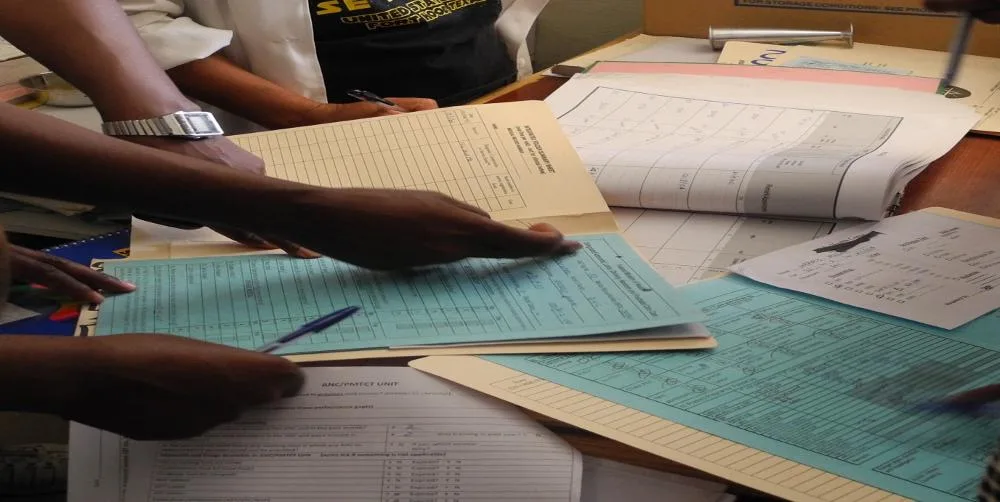
Inside were bank statements, school registers, payment schedules and a small notebook.
The notebook contained names, amounts and initials.
But the final page was different.
It listed senior officials, administrators, contractors and intermediaries.
Beside each name was an amount.
Millions had been divided among them.
Henderson stared at the figures.
“They created children who existed only on paper.”
Uncle Martey shook his head.
“No. They created ghosts.”
A child could disappear from a classroom.
But the payment attached to that child’s name could continue for years.
The longer the lie survived, the more profitable it became.
*THE BUSINESS OF CORRUPTION*
The investigators traced the money.
One account led to another.
A company led to a consultancy.
The consultancy led to a foundation.
The foundation led to private accounts.
The money had not disappeared.
It had been deliberately scattered.
“They made the system complicated,” Henderson said.
“To make the truth expensive to find.”
Uncle Martey was silent.
That was the genius of the corruption.
They had not hidden the money in one place.
They had hidden it beneath layers of paperwork, bureaucracy and silence.
*EVERYBODY WAS EATING*
The former accounts officer finally broke.
“I didn’t create the system,” he whispered.
“How many people knew?”
He looked at the floor.
“Everybody knew something.”
“Then why didn’t anyone speak?”
The man gave a bitter smile.
“Because everybody was eating.”
The words stayed with Henderson.
That was how corruption survived.
One person falsified a record.
Another approved it.
Another transferred the money.
Another took a commission.
Another looked away.
It is not my business.
The crime was no longer committed by one person.
It had become a chain.
And every link had a conscience.
The next day, Adisa was called into the headteacher’s office.
“Why are you still asking questions?”
“Because nobody has answered them.”
“You are a child. You don’t understand how complicated these things are.”
Adisa looked at him.
“Then why are adults afraid of my questions?”
The headteacher had no answer.
Later, Adisa noticed a man watching her from a parked car.
She memorised the number plate.
That evening, she gave it to Uncle Martey.
Henderson checked it.
“The vehicle belongs to a company connected to one of the people in the notebook.”
Silence filled the room.
The little girl who had simply wanted to know what happened to a missing child had become a threat.
*THE FILE MARKED KOJO*
Henderson reopened the file marked KOJO.
The records contradicted one another.
One said Kojo had transferred schools.
Another said he had died.
Another said he had left the country.
Yet payments continued.
Then Henderson discovered something horrifying.
The name KOJO had been used repeatedly.
“They used the name to keep the money flowing,” Henderson said.
Uncle Martey stared at him.
“So Kojo wasn’t one child?”
Henderson shook his head.
“Kojo was a doorway into the system.”
The evidence finally reached the public.
Radio stations interrupted programmes.
Television presenters demanded answers.
Parents brought out photographs of children.
Teachers opened old registers.
The question changed.
Who stole the money?
How many people knew?
The anger was no longer political.
People finally understood that corruption was not an abstract word.
A falsified signature.
Before dawn, Henderson returned to the oldest school records.
He found a hidden code beneath Kojo’s name.
The code opened an old database.
Thousands of names filled the screen.
ORIGINAL BENEFICIARIES — 1999
Uncle Martey stared at Henderson.
“This is older than we thought.”
Then he saw another heading:
SUCCESSION LIST — ACTIVE.
The corruption had survived administrations.
Survived investigations.
It had learned to reproduce itself.
It had become an inheritance.
Henderson scrolled down.
“What is it?” Uncle Martey asked.
Henderson turned the screen toward him.
There was a new payment.
BENEFICIARY: KOJO
STATUS: ACTIVE
PAYMENT DATE: 15 SEPTEMBER 2018
Uncle Martey’s face hardened.
“Who authorised it?”
The computer began displaying the name.
One letter appeared.
Henderson’s breathing stopped.
“Who is it?” Uncle Martey demanded.
Before Henderson could answer—
THE LIGHTS WENT OUT.
A car sped away into the darkness.
When the lights returned, the file had disappeared.
Only one sentence remained on the screen:
YOU FOUND THE SYSTEM.
Then another appeared:
NOW FIND WHO OWNS IT.
Uncle Martey looked at Henderson.
Henderson looked at Adisa.
The truth had finally escaped.
And somewhere in the shadows, the people who had built the machine were afraid.
Because they had discovered something corruption could never completely control:
a conscience that refused to remain silent.
Thanks for reading.
—
*Disclaimer*
———————–
The Currency of Conscience is a work of fiction. The characters, documents, investigations, political developments, institutions and events are fictional or fictionalised for literary purposes.
The story may draw thematic inspiration from publicly reported concerns about corruption, public accountability and the management of public funds. References to real institutions, public figures or allegations should not be interpreted as assertions of criminal conduct.
Allegations remain allegations unless established by a competent court.
The purpose of this series is to encourage reflection on integrity, accountability and the human cost of corruption.
Havillah Consultants
16/08/2026