FAWE Ghana offers 700 new opportunities for young people to pursue tertiary education
The Forum for African Women Educationalists (FAWE) Ghana Secretariat is offering 700 young people opportunities to pursue tertiary education through fully funded scholarships and a remedial programme aimed at students who narrowly miss university entry requirements. The opportunities form part of the second phase of th...
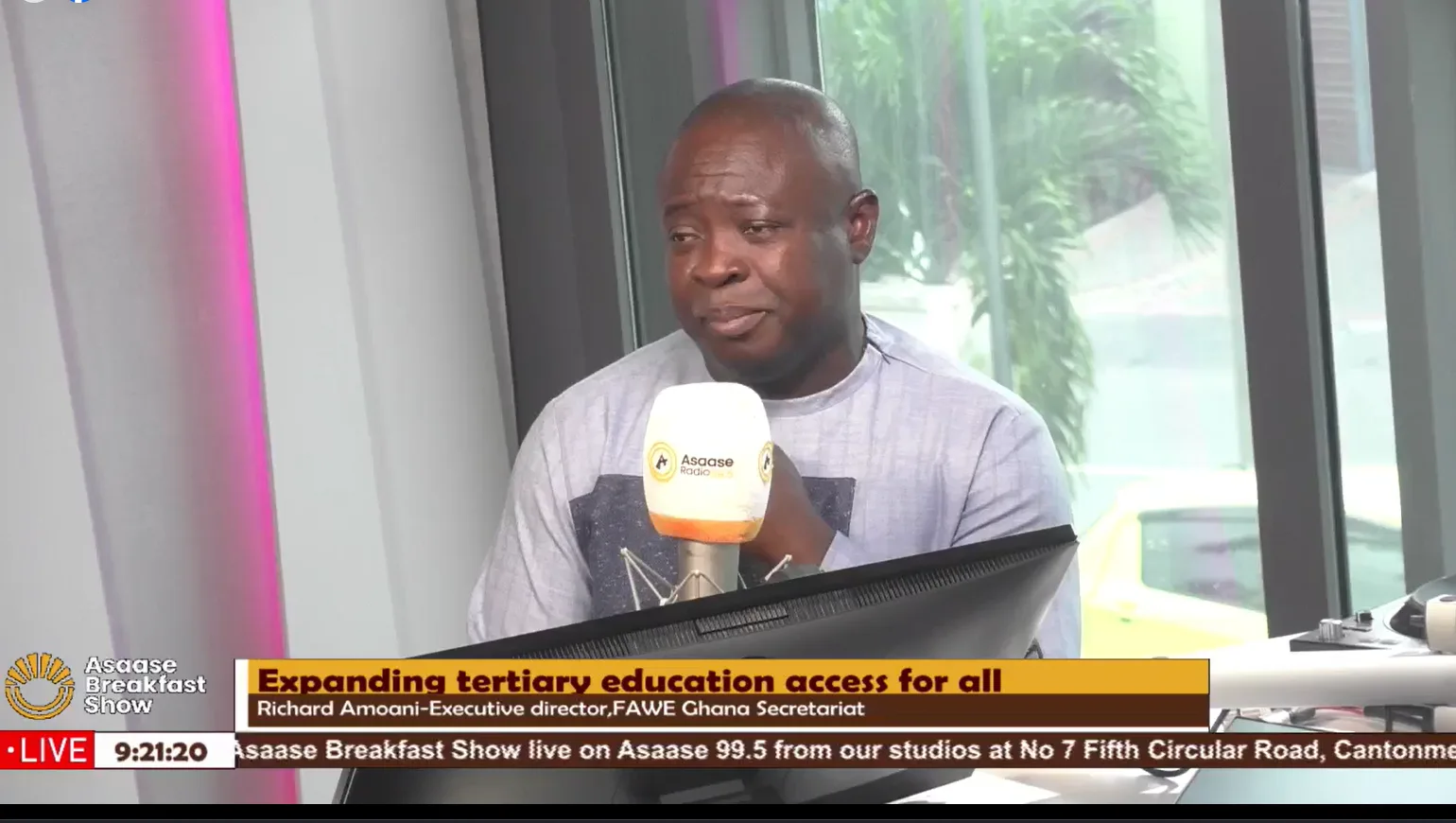
The Forum for African Women Educationalists (FAWE) Ghana Secretariat is offering 700 young people opportunities to pursue tertiary education through fully funded scholarships and a remedial programme aimed at students who narrowly miss university entry requirements.
The opportunities form part of the second phase of theFAWE-Mastercard Foundation programme, which targets young people from marginalised communities, including women, persons with disabilities, refugees and internally displaced persons.
Applications for the current intake close on 21 August.
Naomi Darko, communications and advocacy officer at FAWE Ghana, said 200 scholarships were available for young people aged 15 to 25 to pursue two-year diploma or Higher National Diploma (HND) programmes in science, technology, engineering and mathematics (STEM)at partner technical institutions.
The scholarships are comprehensive and cover tuition, accommodation, laptops, learning materials and other costs required for the beneficiaries’ studies.
“We are trying to eliminate all barriers,” Darko said on the Asaase Breakfast Show on Tuesday (18 August). “If there’s any limitation, there’s any hindrance that is preventing you from pursuing, we are trying to take away all those hindrances so that you can have full concentration on your education.”
The programme is particularly focused on increasing the participation of young women in STEM fields, which remain largely male dominated.
Applicants for the HND and diploma scholarships must already have admission to one of FAWE Ghana’s partner institutions and meet the programme’s eligibility requirements.
A second component of the programme provides a remedial pathway for 500 young people who have completed senior high school but narrowly missed the entry requirements for degree programmes.
 Richard Amoani, executive director of FAWE Ghana, said the remedial programme is intended to give a second chance to students who have passed most of their subjects but obtained a grade below the required threshold in one core subject.
Under Ghana’s tertiary education requirements, applicants generally need at least C6 in all relevant subjects to qualify for degree programmes. The FAWE programme targets students who otherwise demonstrate the ability to pursue tertiary education but have been excluded because of a weak result in one core subject.
“We are targeting students who have been able to pass all their papers but have missed one of the core subjects,” Amoani said.
He said such students could have been affected by wider weaknesses in the education system and should not necessarily be regarded as academically incapable.
Amoani cited his own experience of inadequate teaching during his basic education to illustrate how systemic challenges can affect students’ academic outcomes.
The remedial programme will provide additional preparation before successful participants transition to partner institutions to pursue STEM degree programmes.
FAWE Ghana said it has already supported two cohorts in Ghana, with the current intake constituting its third cohort. Amoani said 400 young people had benefited from the programme so far, with the new 200 scholarship places expected to bring the number of beneficiaries in that component to 600.
The organisation expects the remedial programme to add another 500 beneficiaries, bringing the projected total number of young people reached in Ghana to about 1,100.
Across the 10 African countries participating in the second phase of the programme, FAWE expects to support more than 10,000 young people.
The programme also reserves places for specific marginalised groups. Amoani said 80 percent of the remedial programme’s beneficiaries would be female and 20 percent male, while quotas would be allocated to refugees and internally displaced persons and persons with disabilities.
FAWE Ghana said support for beneficiaries with disabilities goes beyond financial assistance.
Students undergo assessments to determine the assistive support they require, with the programme providing equipment and services such as interpreters, guides and mobility aids where necessary.
The organisation also provides health insurance and psychosocial support throughout the programme.
“We make sure that we address that hindrance. We solve that problem so that you can focus fully on your academics,” Darko said.
FAWE Ghana said it has also introduced gender-responsive teaching methods at participating institutions, alongside extended orientation, mentorship and entrepreneurship programmes.
Amoani said the gender-responsive pedagogy model seeks to ensure that teaching approaches recognise the different experiences and needs of male and female students.
The organisation has trained staff at partner institutions in the approach and is also working with industry groups to align the programmes with labour-market needs.
Amoani said FAWE Ghana was working with technical institutions, the Ghana Education Service, Ghana Tertiary Education Commission, TVET stakeholders, the Association of Ghana Industries and other partners to improve the relevance of the training and provide internship opportunities.
He said the programme had already produced examples of beneficiaries overcoming significant social and economic barriers.
One beneficiary, he said, had spent about five years at home after completing secondary school despite achieving good grades, before gaining admission to Ho Technical University to study electrical engineering through the programme. He said she was now a first-class student.
Amoani also recounted the case of another beneficiary at Bolgatanga Technical University who faced pressure to leave school and marry. FAWE Ghana said it worked with other agencies to intervene after learning of the situation.
The organisation is seeking to expand access beyond major urban centres, where young people may have better access to information and reliable internet.
Amoani said FAWE Ghana had been working with district education offices, local assemblies, girls’ education coordinators and technical institutions to reach young people in hard-to-reach communities.
Applicants can apply through FAWE Ghana’s website and social media platforms or obtain assistance from girls’ education units at the district level.
The organisation stressed that applications are free and warned applicants against paying third parties to submit forms.
Amoani urged eligible young people not to be discouraged by financial difficulties, disability or disappointing examination results.
“There is a second chance for you,” he said. “Everything is a second chance. Don’t worry, there’s a second chance. Go in for that second chance.”
FAWE Ghana said the second phase of the programme is expected to run until 2030.