Part 25: The man behind the machine: The currency of conscience
Setting: Cape Coast, Central Region / Accra, Greater Accra Region, Ghana Date: 16 September 2018 The room remained silent. Adisa was still holding her phone. Henderson stared at Uncle Martey. The words hung heavily between them. “I was there when the system began.” Adisa slowly shook her head. Uncle Martey said nothing...
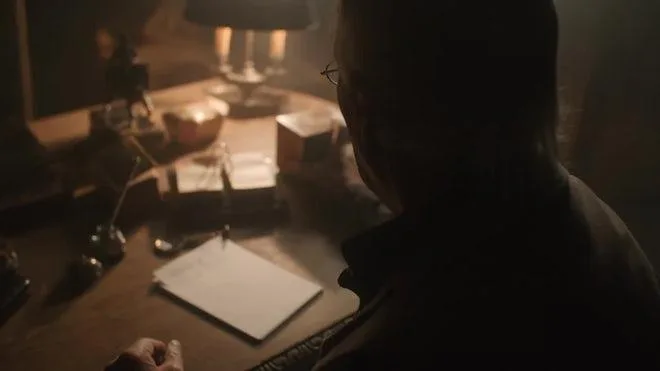
Setting: Cape Coast, Central Region / Accra, Greater Accra Region, Ghana
Date: 16 September 2018
The room remained silent.
Adisa was still holding her phone.
Henderson stared at Uncle Martey.
The words hung heavily between them.
“I was there when the system began.”
Adisa slowly shook her head.
Uncle Martey said nothing.
“You told me you were investigating them.”
“You told me you wanted justice for the children.”
“Then what does that mean?”
Uncle Martey lowered himself into a chair.
For the first time, he looked old.
Something inside him had finally collapsed.
Henderson quietly closed the door.
“Martey,” he said, “tell us everything.”
Uncle Martey looked at him.
“I was thirty-eight.”
“It started with a meeting.”
Uncle Martey hesitated.
“People who believed they could change the country.”
The room fell silent again.
“There was a programme designed to move money into communities—schools, clinics, scholarships, rural development.”
“That doesn’t sound like corruption.”
Uncle Martey paused.
He lowered his eyes.
“The first theft was small.”
“Small enough for everyone to convince themselves that it didn’t matter.”
A payment was diverted.
A contractor was overpaid.
A fictitious beneficiary was created.
Nobody was prosecuted.
Nobody even asked serious questions.
And that was when they discovered something terrifying:
The machine could be manipulated.
“They didn’t create corruption,” Uncle Martey said.
“They industrialised it.”
Henderson slowly sat down.
“The system was designed to move public money through layers of accountability.”
“Those layers became hiding places.”
“Schools became beneficiaries.
“Foundations became intermediaries.
“Companies became contractors.
“Consultants became middlemen.”
“Children became numbers.”
Adisa stared at him.
Uncle Martey closed his eyes.
Henderson opened the succession agreement.
Uncle Martey nodded.
“Because I thought I was protecting something bigger.”
Henderson’s voice hardened.
“You signed an agreement that allowed people to steal public money.”
“I didn’t know what it would become.”
Uncle Martey looked at him.
“Because by then, leaving wasn’t enough.”
THE PRICE OF LEAVING
“The first person who tried to expose the system disappeared from public life.”
“The second lost his business.”
“The third was arrested.”
Uncle Martey looked at Adisa.
“The fourth was found dead.”
Adisa covered her mouth.
Henderson stared at him.
“Because you were afraid?”
Uncle Martey nodded.
“I thought I could control it from inside.”
Henderson shook his head.
“You became part of it.”
Uncle Martey lowered his eyes.
Adisa stepped forward.
Uncle Martey looked at her.
“That was never supposed to happen.”
Uncle Martey struggled to answer.
“Because children were perfect.”
Henderson’s expression hardened.
“They had no political power. No access to the records. Their families often didn’t even know that money had been allocated in their names.”
Uncle Martey swallowed.
“So someone discovered that a child could exist on paper without ever receiving a single pesewa.”
Adisa’s eyes filled with tears.
“And you allowed it?”
Uncle Martey’s voice was barely audible.
THE NAME BEHIND KOJO
Henderson returned to the computer.
Uncle Martey stared at the screen.
“Kojo isn’t one person.”
“It is a name used by the system.”
“To hide the person giving the orders.”
“Then who gives the orders?”
Uncle Martey didn’t answer.
Henderson looked at the final signature.
Then, suddenly, he understood.
“The signature isn’t the real power.”
Uncle Martey nodded.
“The person behind the signature is.”
Henderson placed the document on the table.
“Who designed the machine?”
Uncle Martey looked at him.
Adisa stepped backward.
“I designed the first structure.”
“You built the system that destroyed those children’s lives?”
“I built a financial mechanism.”
“You built a machine.”
“And when you realised what it had become?”
“I tried to dismantle it.”
“They wouldn’t let me.”
Uncle Martey reached into an old leather bag.
He removed a small envelope.
“I kept this for sixteen years.”
Henderson opened it.
Inside was a handwritten page.
At the top was one sentence:
THE ARCHITECT MUST NEVER BE IDENTIFIED.
Beneath it were several names.
Most had been crossed out.
Adisa stared at the page.
“You were supposed to disappear?”
“I was supposed to take the blame if the system was ever exposed.”
Henderson looked at him.
“I thought I could protect the others.”
Uncle Martey looked at Adisa.
“The people who were trying to bring the machine down from inside.”
THE TRUTH ABOUT THE INVESTIGATION
Henderson suddenly remembered something.
“That’s why I was recruited.”
Uncle Martey nodded.
“You weren’t investigating the system by accident.”
Henderson stepped back.
“I needed someone I could trust.”
“I never intended for her to become involved.”
Adisa’s voice trembled.
“You brought me into this?”
“Then why did they photograph me?”
“Because they discovered who you were.”
Uncle Martey looked at her.
“You are the reason I stayed alive.”
THE GIRL IN THE FILE
Uncle Martey opened another folder.
Inside was a photograph.
A hospital wristband still visible around her tiny wrist.
Adisa stared at the photograph.
Uncle Martey whispered:
Adisa stopped breathing.
Henderson looked at him.
“Fifteen years ago, your father discovered the first diversion.”
Adisa’s eyes widened.
“He tried to expose it.”
“What happened to him?”
The room fell silent.
“Your mother disappeared soon afterwards.”
Adisa’s voice broke.
“Then who raised me?”
Uncle Martey looked at her.
Henderson leaned forward sharply.
“Wait. You said he discovered it. How?”
Uncle Martey hesitated.
“He was auditing a rural development account. A routine check.”
Adisa’s breathing became unsteady.
“He noticed a pattern. Funds meant for children in multiple districts were being redirected through the same invisible channel.”
Henderson narrowed his eyes.
“And that was the first diversion?”
Uncle Martey nodded slowly.
“Fifteen years ago.”
“So my father didn’t just stumble upon corruption…”
Uncle Martey shook his head.
“He stumbled upon the machine itself.”
THE FINAL CONFESSION
Adisa stared at him.
“When my father died?”
“You knew everything?”
“And you never told me?”
“I wanted you to have a life untouched by this.”
“You also protected the system.”
Uncle Martey looked away.
Adisa wiped away her tears.
“Then what am I supposed to call you?”
Uncle Martey looked at her.
“Whatever you need to call me.”
Suddenly, Henderson’s computer received an alert.
SYSTEM ACCESS DETECTED.
Then another message appeared.
ARCHITECT IDENTIFIED.
Henderson stared at Uncle Martey.
The lights went out.
Outside, a car engine roared.
Henderson moved toward the window.
Uncle Martey grabbed his arm.
“They’re watching the house.”
A loud knock came at the door.
Then a voice came from outside.
Uncle Martey’s face went pale.
Henderson whispered:
Uncle Martey answered:
“The man who taught me everything.”
The knocking came again.
Adisa moved closer to Henderson.
Uncle Martey looked toward the door.
“He is the reason the machine survived.”
Henderson whispered:
“The person who taught them how to steal?”
Uncle Martey nodded.
“And the person who taught me how to hide it.”
The door handle moved.
A piece of paper slipped underneath the door.
Henderson picked it up.
There were only four words:
YOU WERE NEVER THE ARCHITECT.
He looked at Uncle Martey.
“What does this mean?”
Uncle Martey read the message.
His hands began to shake.
“Because there was someone before me.”
Henderson stared at him.
Uncle Martey looked at Adisa.
“My father knew who?”
“The real architect.”
Uncle Martey’s eyes filled with tears.
“He was the man who created the original machine.”
“Why didn’t my father expose him?”
Uncle Martey paused.
Henderson’s eyes narrowed.
“Then why did the system survive?”
Uncle Martey looked toward the burning horizon outside.
“Because your father didn’t destroy the machine.”
Henderson stared at him.
“Changed it into what?”
Uncle Martey answered:
The computer suddenly came alive.
A video began playing.
Adisa’s father appeared on the screen.
His voice was barely audible.
“If you are watching this, then the machine has survived.”
Her father’s face filled the screen.
“I failed to destroy it.”
“But I discovered something.”
A document appeared behind him.
“The system was never designed to steal money.”
Henderson leaned forward.
“Then what was it designed to do?”
Adisa’s father looked directly into the camera.
“It was designed to control people.”
Henderson’s face tightened.
The screen went black.
A final sentence appeared:
THE MONEY WAS NEVER THE OBJECTIVE.
Then another line appeared:
A final message appeared beneath it:
AND THE PERSON WHO CONTROLS THE MACHINE IS STILL ALIVE.
The room fell into darkness.
Outside, a car door slammed.
Uncle Martey whispered:
Adisa held his hand.
Uncle Martey looked at her.
And for the first time, there was no mystery in his voice.
“The man who owns the country without ever being elected.”
Havillah Consultants
18 August 2026
*Disclaimer*
———————-
The Currency of Conscience is a work of fiction. The characters, documents, investigations, institutions, political developments and events portrayed in this series are fictional or fictionalised for literary purposes.
The story may draw thematic inspiration from publicly reported concerns about corruption, public accountability and the management of public funds. References to real institutions, public figures or allegations should not be interpreted as assertions of criminal conduct or factual claims about any individual or institution.
Allegations remain allegations unless established by a competent court of law.
The purpose of this series is to encourage reflection on integrity, accountability, justice and the human cost of corruption.